
Restaurant POS System in Fargo, ND
Restaurants in Fargo charge 7.75% in sales tax on meals and pay at least $7.25 an hour. Here is what that means for your POS setup.
FARGO RESTAURANT NUMBERS
Checked 11/18/2026 against official sources
What these rules mean for Fargo restaurants
Inside city limits Fargo charges 7.75%: 5% state, 2.25% city and 0.5% Cass County, and the state applies that rate to restaurants and food trucks. Part of the city rate has an end date, so check the rate again each year.
Combined sales tax on restaurant meals: ND Tax Commissioner, City of Fargo notice.
Minimum wage: US Department of Labor, state tipped wage table.
Tipped minimum cash wage: US Department of Labor, state tipped wage table.
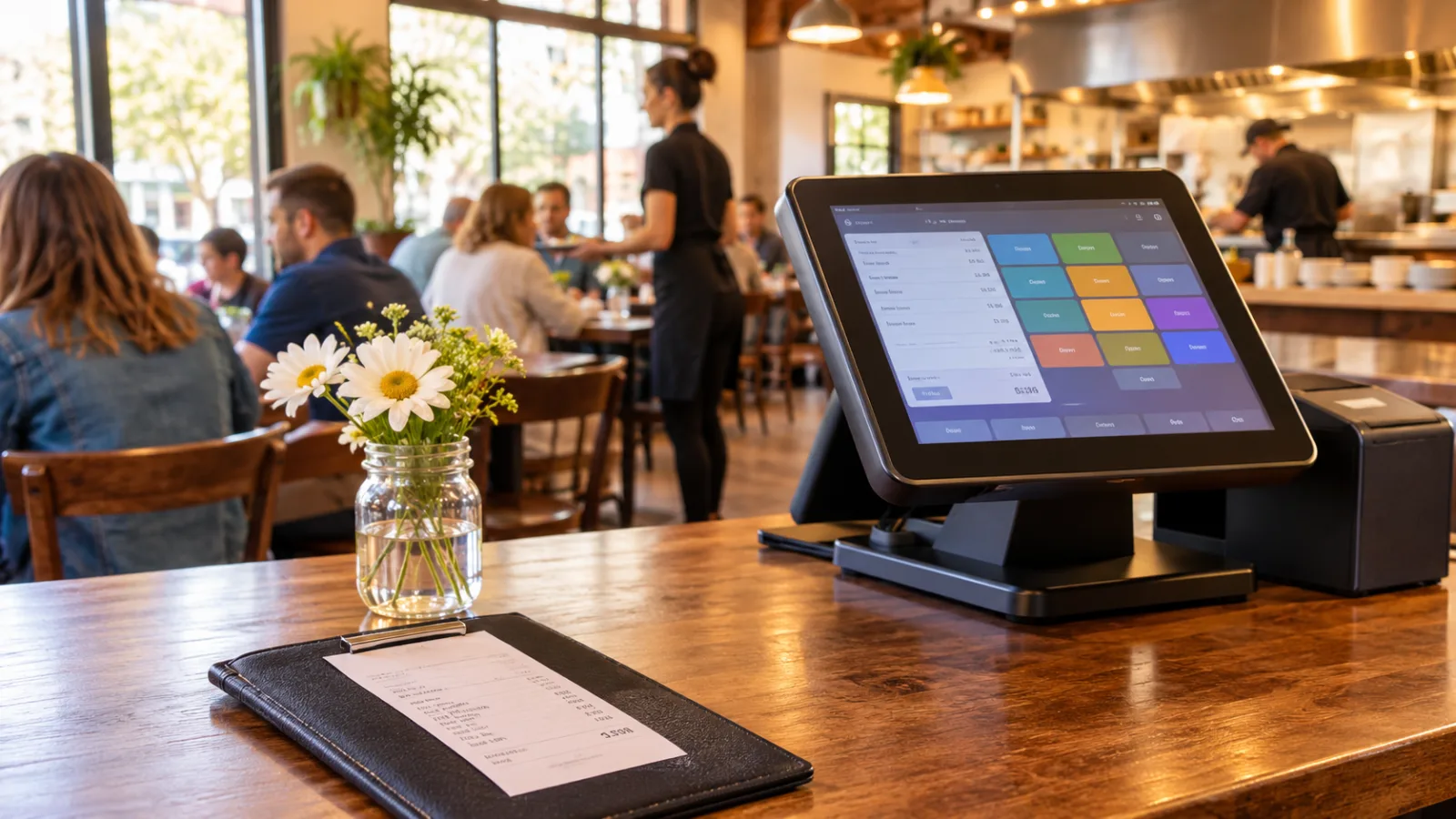
Fargo Restaurant POS System Guide: Follow Every Dollar from the Guest Check to the Bank Deposit
Every restaurant sale starts with a guest deciding to order, but the work is not finished when the payment is approved. A good restaurant POS system in Fargo should document every dollar from the table, through taxes and tips, into daily reports that make bank deposits and bookkeeping easier.
Start with one guest check, not the end-of-day totals
Daily sales reports can hide small mistakes. Following one check from beginning to end is a practical way to evaluate whether your operating procedures and POS system support accurate records.
Imagine a guest orders food totaling $48.00 before tax. This is a hypothetical example.
Inside Fargo city limits, restaurant meals are subject to a 7.75% combined sales tax, made up of 5% state, 2.25% city, and 0.5% Cass County. The state applies that rate to restaurants and food trucks. Part of the city rate has an end date, so check the rate again each year.
Using that verified rate:
- Food subtotal: $48.00
- Sales tax: $3.72
- Total due: $51.72
This hypothetical example produces the exact result:
- $48.00 food check
- $3.72 sales tax
- $51.72 total due
The important point is that the restaurant does not earn the sales tax. The POS should clearly separate food sales from tax collected so accounting records stay accurate.
The payment method changes the path, not the numbers
Whether the guest pays with cash or a card, the check should follow the same accounting path.
A complete transaction generally records:
- The ordered items.
- Any adjustments before payment.
- The taxable subtotal.
- The sales tax collected.
- The payment method.
- Any gratuity.
- The completed transaction.
The payment method changes how money arrives in the business, but it should not change how sales tax and food revenue are recorded.
Restaurants often serve guests who arrive during busy lunch periods, evening service, or after traveling through the region during different seasons. Consistent records become especially valuable when business volume changes throughout the year.
Sales tax belongs in its own category
Sales tax can create confusion when operators review revenue.
Looking again at the hypothetical check:
- Food sales: $48.00
- Sales tax collected: $3.72
The restaurant generated $48.00 in taxable food sales while collecting $3.72 on behalf of the taxing authorities.
A POS should report these separately so operators can prepare tax filings without manually separating every transaction.
If sales tax becomes mixed into reported sales, financial reports become harder to reconcile later.
Tips should follow their own path
Tips also need their own record.
Whether a guest leaves cash or adds a gratuity electronically, the POS should distinguish between:
- Restaurant sales
- Sales tax
- Employee tips
Keeping these amounts separate reduces confusion during shift reconciliation and payroll preparation.
Managers should be able to answer questions like:
- How much did guests spend on food?
- How much sales tax was collected?
- How much went to employees as tips?
These are different categories of money, even though they may appear together on one receipt.
Every payment should reach the daily deposit
At the end of the day, the goal is simple:
The money recorded by the POS should match the money that reaches the bank, allowing for normal timing differences between payment methods.
A typical reconciliation compares:
- Total food sales
- Sales tax collected
- Cash received
- Card payments
- Tips
- Cash remaining in drawers
- Deposits prepared
If those figures disagree, operators have a starting point for finding missing entries or recording errors.
Following every dollar from the original guest check makes these investigations much easier.
Labor starts with the clock-in
Sales are only one side of restaurant operations.
Labor records begin when employees clock in.
For example, one employee working a 6-hour shift at the verified $7.25 minimum wage has the following hypothetical base wage:
- 6 hours × $7.25 = $43.50
That employee therefore costs $43.50 in base wages before payroll taxes.
Even a simple calculation like this becomes easier when the POS or related system keeps accurate clock-in and clock-out records.
Understand the verified wage rules
For restaurants in Fargo, the verified figures are:
- Minimum wage: $7.25
- Tipped minimum cash wage: $4.86
Accurate time records matter regardless of staffing size.
Managers should confirm current labor rules with the appropriate government agency or a qualified payroll professional before making employment decisions.
One shift creates several kinds of records
A single shift generates much more than sales.
During one day the business may record:
- Employee time
- Menu sales
- Taxable sales
- Sales tax
- Payment methods
- Tips
- Refunds or adjustments
- End-of-shift reconciliation
A good POS keeps these records connected.
Instead of maintaining separate spreadsheets for every task, operators can review one transaction and understand how it affected sales, payroll support, and accounting.
Cash handling deserves the same attention as ordering
Restaurants handling cash should establish consistent procedures.
For example, managers often compare:
- Opening cash
- Cash received
- Paid-outs or other approved drawer activity
- Closing drawer balance
- Deposit prepared
The POS should document these activities so that every movement of cash has a corresponding record.
The objective is not simply balancing the drawer. It is creating documentation that explains why the drawer balanced.
Seasonal operations make consistency more valuable
Fargo experiences changing seasons that can affect customer traffic and staffing patterns.
Busy periods are easier to manage when the POS continues producing consistent records regardless of whether the dining room is quiet or full.
Processes should stay the same on every shift:
- Enter orders consistently.
- Record payments accurately.
- Capture taxes separately.
- Track employee time.
- Reconcile drawers before closing.
- Prepare deposits using documented totals.
Consistency matters more than complexity.
Questions to ask before choosing a restaurant POS system in Fargo
When evaluating a restaurant POS system in Fargo, ask practical operational questions.
Can it:
- Record the 7.75% combined sales tax accurately?
- Separate taxable sales from tax collected?
- Produce clear shift reports?
- Track employee time?
- Record tips separately from sales?
- Keep payment methods organized?
- Support straightforward end-of-day reconciliation?
- Make accounting records easy to review later?
These questions focus on daily restaurant operations rather than software features that may never be used.
A brief example of available operational features
CounterChef allows you to enter the combined sales tax rate with up to three decimals and set different rates by category. Delivery areas use ZIP codes with their own fee and estimated time, employees clock in on a tablet or computer, tips can be shared by percentage or by hours worked, and it runs on iPad, Android tablet, iPhone and computer.
Good records make deposits predictable
The best daily close is uneventful.
When sales, taxes, labor records, and payment totals all agree, preparing the bank deposit becomes a confirmation instead of an investigation.
Following one guest check from the first order to the completed deposit is a useful way to evaluate whether your procedures, and your restaurant POS system in Fargo, support accurate operations every day.
Always confirm current sales tax rates, labor rules, and payroll requirements with the appropriate official agency or a qualified accounting or payroll professional before making business decisions.
Fargo restaurant questions
How much sales tax applies to restaurant meals in Fargo?
Inside Fargo city limits, the verified combined sales tax on restaurant meals is 7.75%, consisting of 5% state, 2.25% city, and 0.5% Cass County. Part of the city rate has an end date, so confirm the current rate each year with the appropriate official agency.
Why should sales tax be reported separately from food sales?
Sales tax is collected from guests but is not restaurant revenue. Keeping tax separate from food sales simplifies reconciliation, accounting, and tax reporting.
Why is tracking tips separately important?
Separating tips from restaurant sales helps produce clearer payroll records, simplifies reporting, and makes end-of-day reconciliation easier.
What should I verify before selecting a restaurant POS system in Fargo?
Look for a system that accurately records the applicable sales tax, separates sales from taxes and tips, tracks employee time, organizes payment methods, and produces reports that make daily reconciliation and bank deposits easier. Always verify current tax rates and labor requirements with the appropriate official agency or a qualified professional before configuring your system.
How to set this up in CounterChef
Enter your tax rate
Set 7.75% in Settings, under Tax, then ring a test item and check the receipt. Confirm the rate for your exact address first.
Read about restaurant posPrice delivery by ZIP code
Create areas for the Fargo ZIP codes you can reach well, each with its own fee and estimated time.
Read about zones and fees by zipRun delivery yourself
Keep your own menu and drivers in one system, from the order to the driver settlement.
Read about delivery overviewMore for Fargo restaurant owners
Running a restaurant in Fargo?
Tell us how your restaurant runs. We will walk you through the parts that matter to you.