
Restaurant POS System in Billings, MT
Restaurants in Billings charge no sales tax on meals and pay at least $10.85 an hour. Here is what that means for your POS setup.
BILLINGS RESTAURANT NUMBERS
Checked 11/18/2026 against official sources
What these rules mean for Billings restaurants
Montana does not have a general sales tax, so a Billings receipt carries no sales tax. Montana requires the full minimum wage before tips for businesses with sales over $110,000.
Combined sales tax on restaurant meals: Montana Department of Revenue, general sales tax.
Minimum wage: US Department of Labor, state tipped wage table.
Tipped minimum cash wage: US Department of Labor, state tipped wage table.
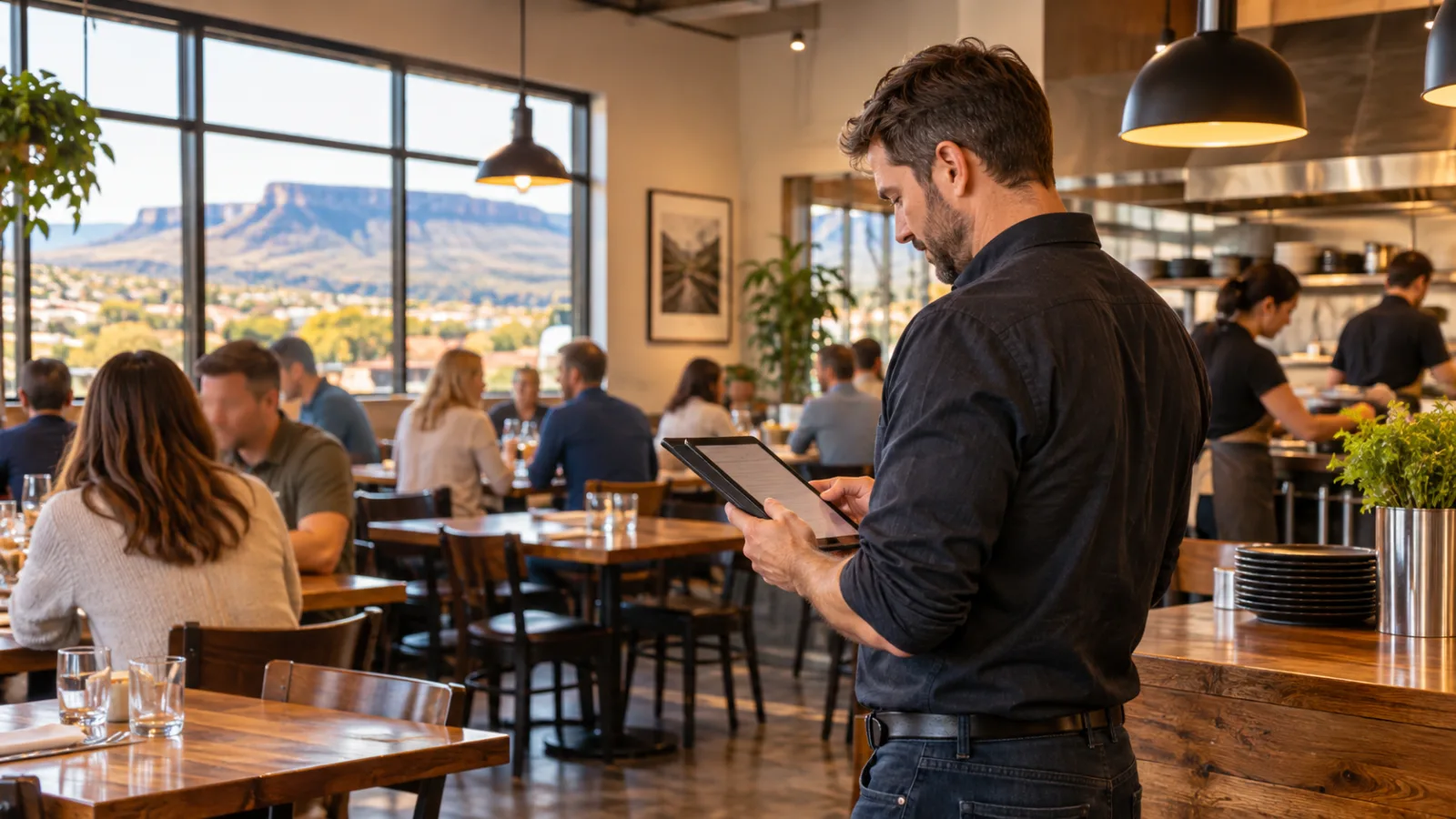
Growing a Restaurant in Billings, MT: When to Expand and What Your POS System Should Tell You
Growing a restaurant in Billings is not just about having a busy dining room or seeing more orders come through the door. The decision to add a second location or extend operating hours should come from repeatable performance, reliable staffing, and numbers that show the business can absorb the change without putting the original operation at risk.
A busy restaurant is not necessarily ready to expand
There is a difference between a restaurant that has a good week and one that has a business model worth repeating. A full dining room on a Friday night can be encouraging, but expansion requires consistency across quieter periods, staffing schedules, food purchasing, cash flow, and customer service.
Before considering a second location, look at how the current restaurant performs when you are not personally supervising every decision. If the kitchen can maintain ticket times, staff can handle routine problems, and closing procedures are completed correctly without constant owner intervention, you are beginning to build an operation that can scale.
The owner should be able to step away for a day without the restaurant losing control of its service. If every void, scheduling problem, supplier decision, customer complaint, or inventory discrepancy still requires your involvement, another location may multiply those problems rather than solve them.
Billings has seasonal shifts in activity and a mix of local dining demand and visitors passing through the area. Rather than assuming that a strong period will continue indefinitely, use your restaurant's own sales history to identify which periods are dependable and which are temporary spikes.
Expansion is a decision about repeatability, not excitement.
Look for the operational signs that justify another location
A second restaurant makes sense when the first restaurant has demonstrated a stable operating pattern. These are the signals worth tracking.
- Consistent sales across comparable periods: Revenue should be predictable enough that you can build a budget around ordinary weeks, not just your strongest days.
- Repeatable food costs: Purchasing, portion sizes, waste, recipes, and inventory counts should be under control. A second kitchen introduces more opportunities for inconsistent execution.
- Reliable managers: Someone should be capable of running the current restaurant without depending on you to solve every problem.
- Stable service: Orders should reach the kitchen correctly, staff should know their responsibilities, and customer complaints should be manageable.
- Documented procedures: Opening, closing, food preparation, cleaning, cash handling, ordering, and scheduling should be documented and consistently followed.
- Cash reserves: You should have money available for the expansion itself and for the unexpected expenses that follow opening.
The most important test is whether the existing restaurant can continue operating well while your attention is divided. If the answer is no, improving the first location is probably the better investment.
Calculate whether extending hours would actually be profitable
Extending hours is often a smaller commitment than opening another location, but it still creates new labor, food, utility, and management costs. More operating time does not automatically mean more profit.
Start by looking at the hours you are considering adding. If you are thinking about opening earlier, closing later, or adding another day, use the POS reports to examine what customers already buy around those times.
If the restaurant currently closes at a particular hour, review the last hour of service over comparable days. Look at transaction counts, average check, item mix, voids, discounts, and whether the orders are coming from customers who would otherwise have purchased earlier.
A useful starting point is to calculate the contribution from the proposed hours:
Additional sales minus variable costs and additional operating costs.
Variable costs include ingredients, packaging, and other expenses that increase with sales. Additional operating costs may include employee wages, payroll-related costs, utilities, cleaning, and other expenses associated with keeping the restaurant open.
Do not count the entire sales amount as money available to cover expansion. A restaurant can generate substantial revenue during an extended shift and still lose money once the shift's costs are accounted for.
Worked example: an additional employee shift
Hypothetical example
One employee working a 6-hour shift at $10.85 per hour costs $65.10 in base wages before payroll taxes.
That is only the base wage calculation. The actual cost of adding a shift should also account for applicable payroll taxes, other employer obligations, scheduling considerations, and any additional operating costs.
If you are considering extending hours, compare the expected contribution from those hours with the complete cost of keeping the operation open. Repeat the calculation for different days and seasons rather than assuming every additional shift will perform equally.
Use the sales reports to find opportunities you might be missing
A POS system should help you identify the parts of the business that deserve more attention. When growth is the goal, reports should support decisions instead of simply recording transactions.
Start with these reports:
- Sales by hour: Identify periods with consistent demand and periods when sales barely justify the existing staffing.
- Sales by day: Compare weekday and weekend patterns and determine whether a schedule change has a reasonable basis.
- Sales by category: Understand whether your main revenue comes from entrees, beverages, appetizers, desserts, or other categories.
- Average check: Track whether customers are spending more, less, or about the same over comparable periods.
- Item-level sales: Identify bestsellers, slow-moving items, and products that may be unnecessarily complicating the menu.
- Discounts and voids: Look for patterns that deserve review before they become recurring problems.
- Labor hours against sales: Understand whether the staffing schedule is appropriate for the demand throughout the day.
Reports are most useful when you review them regularly. A weekly review can help you adjust staffing and purchasing, while a longer monthly review can reveal broader trends. Keep the comparison periods consistent, and avoid making decisions from a single unusual week.
Understand the tax and labor numbers before building a budget
Billings restaurants have an important accounting distinction to understand: Montana does not have a general sales tax. A restaurant receipt therefore carries no general sales tax on the meal.
Hypothetical example
A $48.00 food check carries no sales tax, so the total stays $48.00.
That simplifies the sales-tax calculation for a standard food transaction, but restaurant owners should still verify whether any particular transaction or activity falls under a different tax obligation. Confirm the applicable rules with the official agency or a qualified tax professional.
Labor costs deserve equal attention. Montana's minimum wage is $10.85, and the tipped minimum cash wage is also $10.85, with no tip credit. Employers cannot reduce the required base wage because an employee receives tips.
Montana requires the full minimum wage before tips for businesses with sales over $110,000. Owners should verify how the applicable coverage rules, exceptions, and wage requirements apply to their own operation.
These figures matter when estimating the financial requirements of a second location. A spreadsheet that assumes tip income offsets the required wage, or that uses an incorrect wage rate, can make a proposed expansion look more profitable than it really is.
Confirm current rates, wage requirements, and labor rules with the official agency or a professional before relying on them in an expansion budget.
Build the second-location budget before signing anything
The first restaurant may provide a useful blueprint, but the new location needs its own budget. Do not simply copy the original restaurant's expenses and assume the same performance.
Create a budget that includes:
- Lease-related expenses and occupancy costs.
- Renovation, equipment, furniture, and kitchen setup.
- Initial inventory and supplies.
- Hiring, training, and payroll before revenue stabilizes.
- Utilities, maintenance, cleaning, and operating expenses.
- Marketing and customer acquisition.
- Administrative, accounting, and operational expenses.
- A reserve for unexpected costs and slower-than-expected sales.
Then build three projections: a conservative scenario, a realistic scenario, and a stronger scenario. The conservative scenario should be particularly useful because it tests whether you can survive if the opening takes longer to establish itself or sales fall short of expectations.
Estimate how much cash the business will need before it reaches a sustainable operating level. Do not assume the second restaurant will immediately contribute money to the first.
Your expansion plan should also account for the time you will spend managing the new location. Owner time is a real constraint. If the new restaurant requires you to be present every day, determine how the existing restaurant will be managed in your absence.
Compare the new location with the existing restaurant
Before committing, compare the proposed restaurant's assumptions with the actual performance of your current operation.
| Metric | What to check |
|---|---|
| Sales | What sales level is necessary to cover expenses? |
| Average check | Is the expected customer spending realistic? |
| Food cost | Can recipes, portions, purchasing, and waste be controlled? |
| Labor | What staffing levels are required for each shift? |
| Operating hours | Which hours are likely to generate enough contribution? |
| Cash flow | How much cash is needed before the business stabilizes? |
| Management | Who is responsible for the operation every day? |
| Break-even | What sales level covers all recurring costs? |
Use the actual numbers from your current restaurant wherever possible. If you have not been tracking food costs, labor hours, inventory, or sales by hour accurately, spend time improving that reporting before expanding.
A second location should be evaluated as a separate business with its own financial assumptions, not simply as an extension of the first restaurant.
Choose a POS system that can support a multi-location operation
When evaluating a restaurant POS system in Billings, think beyond the checkout screen. A system that works for a single restaurant should also make it easier to monitor operations, organize employees, and understand performance as the business grows.
Look for practical capabilities such as:
- Sales reporting that helps you compare operating periods.
- Menu management that makes pricing and item changes manageable.
- Employee time tracking that supports accurate payroll records.
- Tip management that follows your restaurant's policies.
- Order management that keeps the kitchen and front of house organized.
- Reporting that makes it easier to identify operational issues.
- Compatibility with the devices your staff already use or can comfortably learn.
A restaurant POS system should reduce administrative work rather than introduce another complicated process. If the owner has to manually combine sales reports, reconstruct employee hours, or repeatedly correct orders, those problems can become more difficult when the operation grows.
CounterChef supports entering a combined sales tax rate with up to three decimals and setting different rates by category; delivery areas use ZIP codes with their own fee and estimated time; employees clock in on a tablet or computer; tips can be shared by percentage or by hours worked; and it runs on iPad, Android tablet, iPhone and computer.
Billings restaurant questions
When is a restaurant in Billings ready for a second location?
When the original restaurant demonstrates consistent performance, reliable management, controlled food and labor costs, documented procedures, and enough financial reserves to support expansion. The owner should also be able to step away from the first location without disrupting service.
Is extending restaurant hours usually easier than opening another location?
It generally involves a smaller commitment, but it still requires a financial analysis. Additional hours can introduce new labor and operating expenses. Review sales by hour and calculate the contribution after the additional costs rather than relying on gross sales alone.
What should restaurant owners review before choosing a POS system?
Review sales reporting, labor tracking, menu management, tip handling, order management, device compatibility, and the system's ability to support future growth. The system should help you make operating decisions, not just process payments.
Does Montana charge general sales tax on restaurant meals, and can tips reduce minimum wage?
Montana does not have a general sales tax, so standard restaurant food checks carry no general sales tax. Montana also does not allow a tip credit against the minimum wage. Confirm rates, tax obligations, and labor rules with the official agency or a professional before making financial or employment decisions.
How to set this up in CounterChef
Enter your tax rate
Leave the sales tax rate empty in Settings, under Tax, then ring a test item and check the receipt.
Read about restaurant posPrice delivery by ZIP code
Create areas for the Billings ZIP codes you can reach well, each with its own fee and estimated time.
Read about zones and fees by zipRun delivery yourself
Keep your own menu and drivers in one system, from the order to the driver settlement.
Read about delivery overviewMore for Billings restaurant owners
Running a restaurant in Billings?
Tell us how your restaurant runs. We will walk you through the parts that matter to you.