
Restaurant Employee Onboarding: A Ten-Shift Training Plan for Servers and Line Cooks
Restaurant employee onboarding should teach a new hire how to work safely, consistently, and confidently, not simply show them where things are and put them on the schedule. A structured first ten shifts gives servers and line cooks clear expectations, supervised practice, and sign-offs that tell managers whether someone is ready to work independently or needs another round of coaching.
Why onboarding should be organized around shifts, not just days
A new employee can sit through an orientation, read a handbook, and still be unprepared for the first rush. The real test is whether they can perform the job in the environment where it happens: with tickets coming in, guests asking questions, coworkers communicating, equipment running, and priorities changing.
Build onboarding around three stages:
- First shift: Understand the workplace, safety expectations, and basic tools.
- First week: Practice the core job under supervision and learn the restaurant's operating rhythm.
- Second week: Demonstrate the ability to handle assigned responsibilities with less intervention.
The schedule below uses ten shifts, not necessarily ten consecutive calendar days. If an employee works fewer shifts per week, the training period will take longer. Adjust the pace for your concept, menu, staffing, and the employee's prior experience.
Every shift should have four parts: a short pre-shift briefing, one or two specific learning goals, hands-on practice, and a sign-off conversation.
A sign-off means the trainer observed the employee perform the task correctly. It should not mean the trainer explained it once or the employee said they understood.
What every new employee should learn before working a station
Before role-specific training begins, all new hires need a common foundation.
- Where to enter, store belongings, clock in, and find their schedule.
- Who is the manager on duty and who is their designated trainer?
- What to wear, including footwear, uniform, hair restraints, and any required protective equipment.
- Where handwashing stations, first-aid supplies, fire extinguishers, exits, and emergency procedures are located.
- How to report an injury, illness, unsafe condition, harassment, guest incident, or equipment problem.
- The restaurant's attendance, break, communication, and shift-change expectations.
- Basic food safety, cleaning chemicals, sanitation procedures, and allergen escalation.
- How to ask for help without guessing.
Do not bury important safety information in a handbook. Show the physical location, demonstrate the procedure, and ask the employee to explain or demonstrate it back.
Food safety, employment paperwork, pay practices, breaks, and other labor requirements vary by state and city. Confirm applicable requirements with your local authorities or qualified professionals. Training time, paperwork, and required certifications should be handled according to applicable rules.
The first ten shifts for a new server
The server's training progression should move from observation to small responsibilities, then to a section with direct support, and finally to a supervised independent service.
Server training plan
| Shift | Focus | Practice and sign-off |
|---|---|---|
| 1 | Orientation and observation | Walk the restaurant, learn table numbers, observe a full guest interaction, locate emergency and sanitation supplies. |
| 2 | Menu and hospitality | Explain menu sections, ingredients, modifications, specials, and the greeting. Trainer signs off on basic menu knowledge. |
| 3 | POS and order entry | Enter mock orders, modifiers, seat positions, courses, and check splits. Complete a practice transaction. |
| 4 | Service sequence | Shadow a trainer through greeting, beverage service, order taking, food delivery, check presentation, and table reset. |
| 5 | Small assigned workload | Handle a limited number of tables with trainer nearby. Practice communicating with kitchen and support staff. |
| 6 | Guest questions and problem solving | Role-play allergies, missing items, delays, incorrect orders, complaints, and manager escalation. |
| 7 | Full section with direct supervision | Manage a defined section; trainer checks pacing, accuracy, table touches, and payment handling. |
| 8 | Busy-period practice | Work during a busier service with trainer observing communication, prioritization, and recovery from mistakes. |
| 9 | Independent service simulation | Run assigned tables with trainer observing quietly and intervening only when needed for safety or service. |
| 10 | Final assessment | Demonstrate the complete service cycle, review gaps, and receive manager approval or a targeted extension plan. |
Shift 1: Learn the room before learning the tables
Walk the new server through the guest entrance, host area, dining room, restrooms, server station, beverage area, dish return, kitchen pass, and staff areas.
Give them a printed floor map and ask them to identify table numbers without prompting. Explain the chain of communication: when to ask another server, when to speak with the kitchen, and when to involve the manager.
Sign-off: Employee can locate essential areas, identify their trainer and manager, and explain basic safety and reporting procedures.
Shift 2: Learn the menu well enough to answer honestly
Do not ask a server to memorize every description at once. Start with the menu structure, major ingredients, common modifications, portion descriptions, and items that are unavailable or seasonal.
Have the employee describe a few dishes in their own words. They should know when they do not know an answer and how to confirm it.
Allergen questions require special care. A server should never promise that a dish is allergen-free based on memory or assume a modification makes it safe. Teach the restaurant's verification and escalation process.
Sign-off: Trainer checks menu basics, specials, ingredient questions, and the correct response to an allergen inquiry.
Shift 3: Practice the POS without guests waiting
Use mock tickets. Create orders with modifiers, separate checks, seat assignments, course timing, voids, and corrections using the restaurant's approved procedure.
Explain which actions require manager authorization. Practice checking the ticket before sending it, rather than correcting preventable mistakes after the kitchen has started.
Sign-off: Employee completes a set of practice transactions accurately and explains how to handle a mistake.
Shift 4: Shadow the entire service sequence
The employee follows a trainer through an entire table cycle. They should watch how the server times greetings, notices drinks running low, communicates delays, checks satisfaction, and avoids interrupting guests unnecessarily.
Use a short observation sheet. Ask the employee to identify what happened at each stage rather than simply standing nearby.
Sign-off: Employee can describe the service sequence and explain what the trainer did when a table needed attention.
Shift 5: Take responsibility for a few tables
Give the new server a small workload appropriate to the restaurant's pace. The trainer stays close, checks orders before they are sent, and helps with timing.
The goal is not speed. It is accurate execution of the sequence without missing guests, forgetting orders, or disappearing from the section.
Sign-off: Employee successfully manages assigned tables with prompts documented for any missed steps.
Shift 6: Handle the situations that create stress
Practice realistic scenarios before they occur during service:
- A guest says their meal is wrong.
- A dish is delayed.
- A guest asks about an ingredient the server cannot verify.
- A payment is declined.
- Two tables need attention at once.
- A guest requests something outside restaurant policy.
Teach a simple recovery pattern: acknowledge, clarify, communicate, resolve within authority, and follow up. Make clear that the server should never argue, make promises they cannot fulfill, or hide a problem.
Sign-off: Employee completes role-play scenarios and identifies when a manager must be involved.
Shift 7: Run a section with direct supervision
Assign a manageable section. The trainer observes order accuracy, pacing, table awareness, teamwork, check handling, and closing duties.
Review mistakes privately and specifically. "You forgot to ring in the side" is useful; "you need to be more organized" is not.
Sign-off: Trainer records what the server handled independently and what required intervention.
Shift 8: Work a busy service
Expose the employee to the actual pace of a busy shift, with an appropriate workload and support. Teach prioritization: safety and urgent guest needs first, order accuracy next, then routine tasks organized by timing.
Use a quick pre-shift scenario: three tables need attention, one order is ready at the pass, and another guest is waiting to pay. Ask the employee what they would do and why.
Sign-off: Trainer observes communication, prioritization, and whether the employee asks for help early enough.
Shift 9: Demonstrate independent service
The server runs an assigned section while the trainer observes without taking over unnecessarily. The trainer intervenes if a guest experience, safety, payment, or operational issue requires it.
Afterward, review the shift using actual examples. Identify one skill to maintain and one skill to improve.
Sign-off: Trainer recommends independent work, continued supervised practice, or specific remediation.
Shift 10: Complete the server assessment
Have the employee demonstrate the full cycle from opening the section to final table reset. Include a menu question, a mock modification, a payment situation, and a guest recovery scenario.
The manager reviews all previous sign-offs. Approval should be based on demonstrated performance, not simply the number of shifts completed.
Sign-off: Manager records readiness, remaining restrictions, and the next coaching date.
The first ten shifts for a new line cook
Line cook training should be station-specific. A cook who is comfortable on a sauté station may still need substantial training on the grill, fry station, pantry, or expo. Keep the employee on one primary station long enough to develop consistent habits before cross-training.
Line cook training plan
| Shift | Focus | Practice and sign-off |
|---|---|---|
| 1 | Kitchen orientation and safety | Learn stations, handwashing, sanitation, emergency procedures, equipment, and storage areas. |
| 2 | Prep standards and recipes | Review prep lists, recipe cards, portion sizes, labels, and storage procedures. |
| 3 | Station setup | Set up a station, organize tools, check ingredients, and prepare for service. |
| 4 | Cooking fundamentals | Practice temperatures, timing, equipment use, and basic techniques under supervision. |
| 5 | Ticket reading | Read tickets, understand modifiers, identify priorities, and practice mock orders. |
| 6 | Controlled service participation | Cook selected items during service with trainer checking every plate. |
| 7 | Station execution | Handle a limited range of tickets, maintain organization, and communicate shortages. |
| 8 | Busy service and recovery | Work through a higher-volume period, practice timing and quality checks, and recover from errors. |
| 9 | Supervised station ownership | Run the station with trainer monitoring food quality, safety, ticket flow, and restocking. |
| 10 | Station assessment | Complete setup, service, cleanup, and closing procedures; receive manager sign-off or a retraining plan. |
Shift 1: Learn the kitchen and its safety rules
Walk through receiving, storage, prep areas, cooking stations, dishwashing, chemical storage, waste handling, and emergency exits.
Demonstrate safe knife handling, handwashing, cleaning and sanitizing, equipment startup and shutdown, and the restaurant's procedures for burns, cuts, and other injuries. Explain what equipment the employee is not authorized to use without additional instruction.
Sign-off: Employee identifies key equipment and safety locations, demonstrates handwashing, and explains how to report a hazard.
Shift 2: Learn the recipes and prep standards
Use actual recipe cards, prep sheets, and photos of finished products. Teach ingredient identification, portion sizes, cutting specifications, labeling, storage, and how to distinguish acceptable prep from product that must be redone.
Have the cook complete a small prep task. Weigh or measure the output against the restaurant's standard instead of relying on "looks about right."
Sign-off: Trainer checks prep quality, portions, labeling, and storage.
Shift 3: Set up the station correctly
Teach the employee how to read the station's prep list, gather ingredients, arrange tools, verify product quality, check equipment, and prepare the station before service.
Explain what must be stocked, what should be kept refrigerated, what needs replenishment, and how to avoid over-prepping items that spoil.
Sign-off: Employee sets up the station using a checklist, with the trainer verifying each critical item.
Shift 4: Practice cooking fundamentals
Train the cook on the actual equipment and dishes assigned to the station. Demonstrate timing, temperature checks, cooking methods, safe handling, finishing, and plating.
Have them cook sample portions. Taste and inspect the results together. Correct one issue at a time, such as seasoning, texture, doneness, or plating.
Sign-off: Employee produces approved sample dishes to the restaurant's standards.
Shift 5: Learn how tickets drive the station
Use mock tickets to explain modifiers, firing instructions, course timing, priorities, and communication with other stations.
Teach the cook to read the entire ticket before beginning, confirm unclear instructions, and communicate when an item is delayed or unavailable.
Sign-off: Employee correctly interprets mock tickets and describes the order of work.
Shift 6: Cook during a controlled service
Assign a limited selection of menu items. The trainer verifies tickets, checks every plate, and helps manage timing.
The cook should focus on accuracy and repeatable quality rather than trying to handle the entire station.
Sign-off: Trainer records ticket accuracy, product quality, timing, safe habits, and communication.
Shift 7: Handle more of the station
Expand the employee's responsibilities. They should handle a broader range of menu items, keep the station organized, maintain required temperatures and sanitation, and anticipate basic restocking needs.
Teach a reset habit: after a rush or lull, restore the station before the next wave rather than waiting until the end of service.
Sign-off: Employee maintains station standards through a service period without repeated reminders.
Shift 8: Practice during a busy service
The trainer observes how the cook reacts when several tickets arrive together. Coach ticket sequencing, batch management where appropriate, communication, and maintaining quality when pressure increases.
If a plate is wrong, teach the employee to remake it correctly and tell the appropriate person, not to send it out hoping nobody notices.
Sign-off: Trainer observes consistent quality, safe execution, and appropriate communication during higher-volume service.
Shift 9: Run the station under observation
The cook performs setup, service, restocking, station maintenance, and closing responsibilities with the trainer nearby.
The trainer should avoid silently fixing every mistake. Let the employee recognize problems, explain the correction, and perform it, as long as doing so is safe.
Sign-off: Trainer recommends station readiness or identifies specific tasks requiring additional practice.
Shift 10: Complete the line cook assessment
Evaluate a complete station cycle: opening setup, prep verification, ticket execution, plate inspection, restocking, sanitation, waste handling, and closing.
Include a mock allergy ticket or special request. The cook should know how to stop and verify rather than improvise when the request raises a safety concern.
Sign-off: Manager approves the station, documents remaining training, and establishes a follow-up observation.
How to make the sign-offs meaningful
A training checklist can become useless if trainers check boxes to get through paperwork. Use three performance levels:
- Observed: Trainer demonstrated the task; employee watched and asked questions.
- Practiced: Employee performed the task with coaching or prompts.
- Verified: Employee performed the task correctly without prompting, and the trainer observed it.
Only verified tasks should count toward independent-work approval.
Use initials and dates for every sign-off. If a task is not verified, document what the employee needs to practice and who will observe it next. Never use a completed checklist to override an unresolved safety issue.
What owners can improve this week that most onboarding plans overlook
1. Create a "where things live" map
New hires waste time asking where basic items are. Make a one-page map or photo guide covering common supplies, backup stock, cleaning tools, employee items, and station equipment.
Take photos of correctly stocked stations and label the locations. When someone moves an item, update the guide or return the item to its designated place.
2. Assign one trainer per shift
A new hire should not receive conflicting instructions from five different employees. Assign one primary trainer for each shift and identify a backup if that person is unavailable.
Trainers should agree on the restaurant's standards before teaching: portion sizes, table sequence, recipe execution, side work, and what requires manager approval. The manager should resolve differences rather than asking the new hire to choose which coworker is right.
3. Keep a "mistakes we can prevent" log
Record recurring onboarding mistakes without turning the log into a list of employee names and blame. Examples include forgotten modifiers, missing prep labels, incorrect table numbers, and incomplete closing tasks.
At the weekly manager meeting, choose one recurring mistake and fix the process behind it. Perhaps the recipe card is unclear, the POS modifier is buried, or the station setup has no designated location for a tool.
4. Teach the handoff, not just the job
Restaurants rely on handoffs between servers, cooks, hosts, dishwashers, managers, and closing staff. New employees should practice what information must be passed along, when, and to whom.
For example, a server should know how to communicate an allergy concern, a delayed dish, or a guest issue to the kitchen and manager. A line cook should know how to report a low-stock item before the next shift discovers it.
5. Schedule a five-minute review before the employee leaves
The trainer asks three questions:
- What went well today?
- What was difficult or unclear?
- What is one thing you'll practice next shift?
Record the answer to the third question. Begin the next shift by checking whether that specific skill improved. This turns training into a continuous loop rather than ten disconnected shifts.
A ready-to-copy onboarding sign-off sheet
Use this checklist for each employee. Make a copy for the server or cook, assign a trainer, and keep it with your onboarding records.
Restaurant Employee Training Record
Employee: ______________________
Role: __________________________
Primary trainer: ________________
Start date: _____________________
Every shift
- Pre-shift goal explained
- Task demonstrated
- Employee practiced
- Feedback provided
- Next shift's focus recorded
Core readiness
- Safety and emergency procedures
- Food safety and sanitation
- Equipment and station orientation
- Menu or recipe knowledge
- POS or ticket system
- Communication and escalation
- Opening responsibilities
- Service or production execution
- Closing responsibilities
- Manager final assessment
Shift sign-off
| Shift | Skill verified | Trainer initials | Employee initials |
|---|---|---|---|
| 1 | __________ | ______ | ______ |
| 2 | __________ | ______ | ______ |
| 3 | __________ | ______ | ______ |
| 4 | __________ | ______ | ______ |
| 5 | __________ | ______ | ______ |
| 6 | __________ | ______ | ______ |
| 7 | __________ | ______ | ______ |
| 8 | __________ | ______ | ______ |
| 9 | __________ | ______ | ______ |
| 10 | __________ | ______ | ______ |
Final decision
- Ready for assigned duties
- Ready with specified limitations
- Additional supervised training required
Remaining skills: __________________________
Follow-up date: ____________________________
Manager signature: _________________________
How much does onboarding actually cost the restaurant?
Training has a labor cost, even when the new employee is doing useful work. The trainer's time is partly devoted to teaching, correcting, and checking instead of operating at full capacity.
Consider this hypothetical example, using US dollars and explicitly assumed figures.
Hypothetical example, not actual restaurant data:
- New employee training: 10 shifts × 5 hours = 50 hours.
- New employee wage: $16 per hour.
- Trainer time: 10 shifts × 2 hours of dedicated coaching = 20 hours.
- Trainer wage: $20 per hour.
- Additional training materials and food used for practice: $40.
New employee wages: 50 hours × $16 = $800.
Dedicated trainer wages: 20 hours × $20 = $400.
Training materials and practice food: $40.
Total direct training cost: $1,240
That figure excludes payroll taxes, other employment costs, and any additional time spent by managers. It is not a universal onboarding cost; the actual amount depends on the restaurant, role, schedule, and wage rates.
This is why structured training matters. If you spend the time, make sure the employee learns the tasks that reduce preventable mistakes, improve service, protect food safety, and allow the team to operate reliably.
How onboarding tools can support daily operations
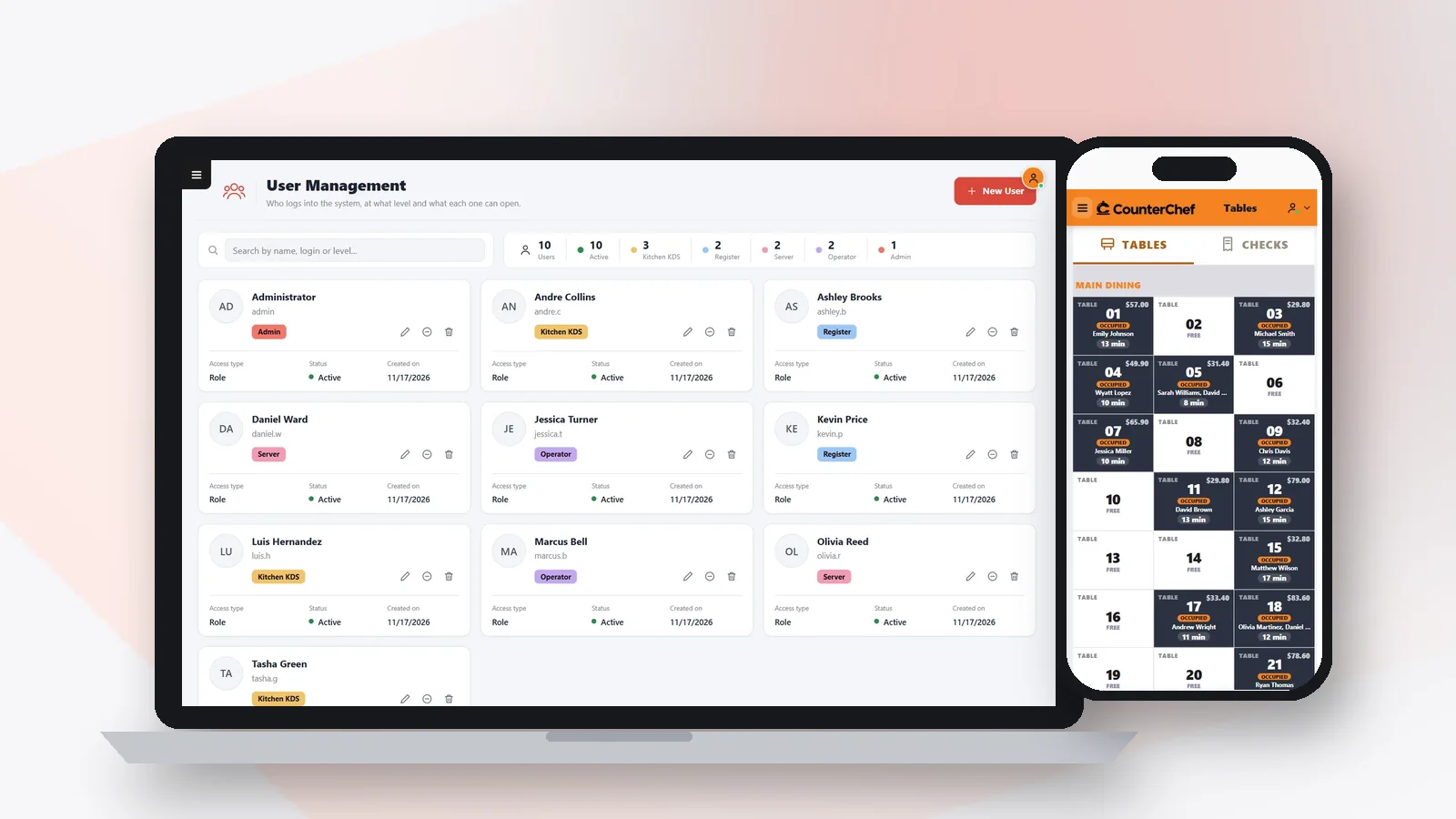
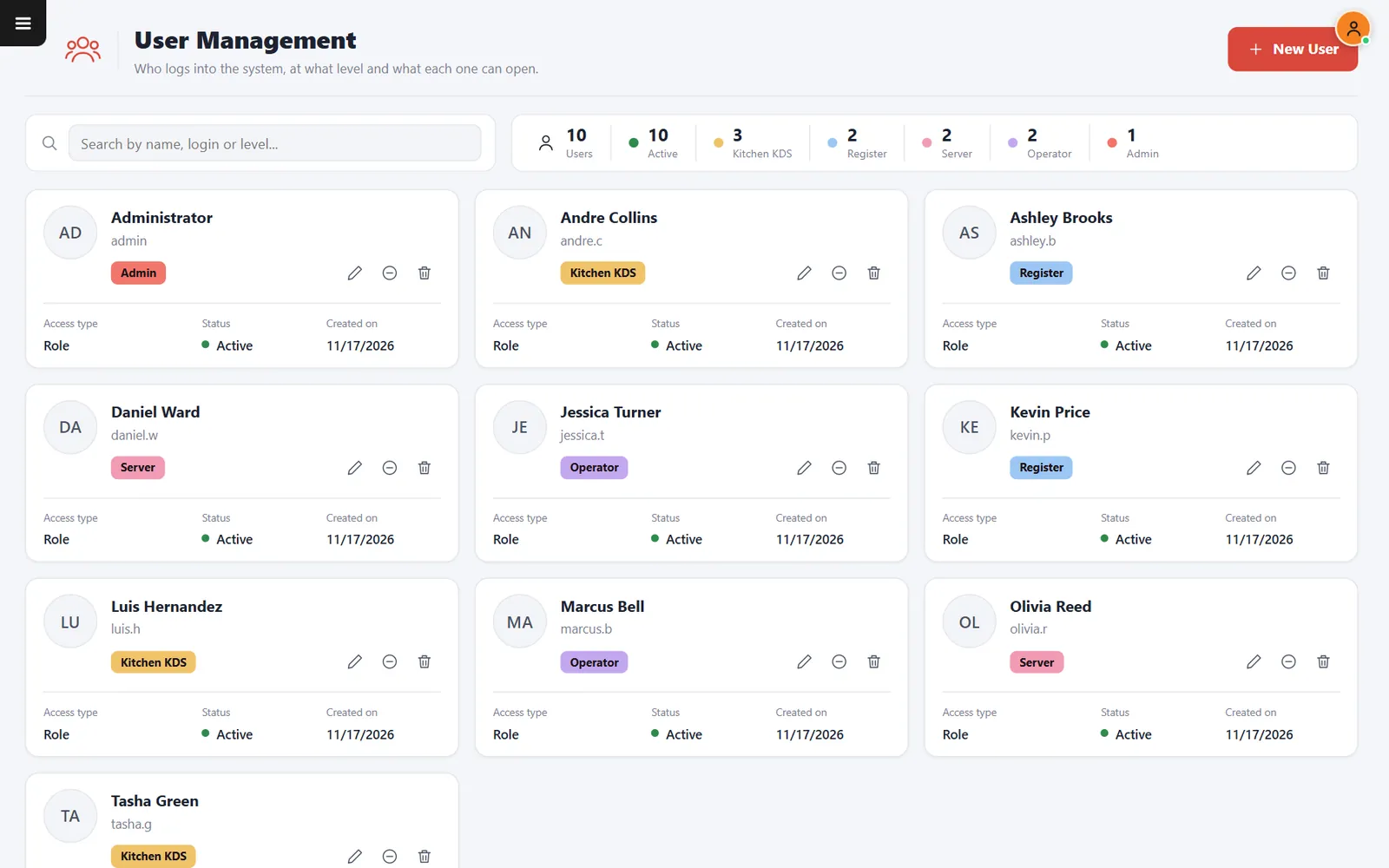
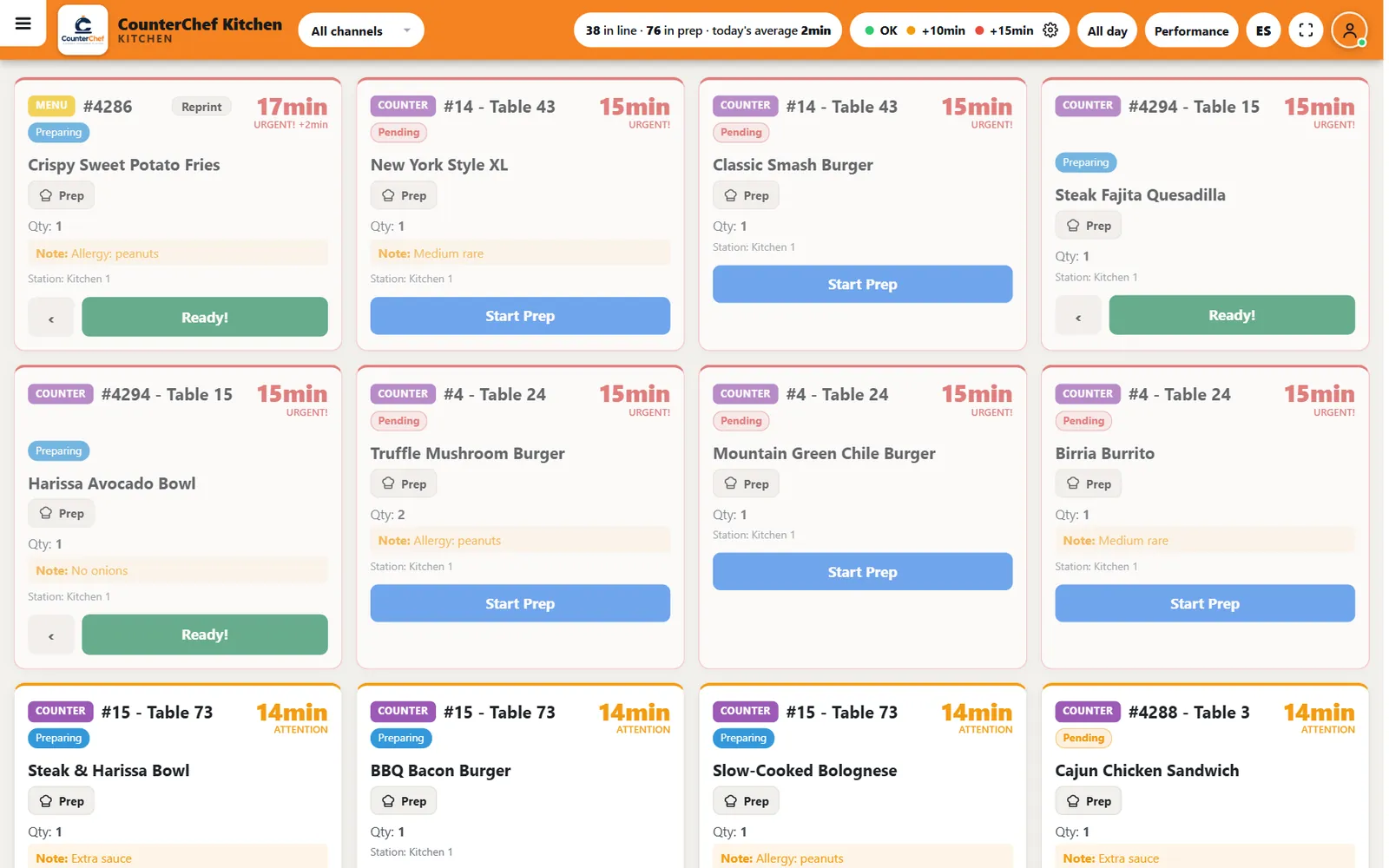
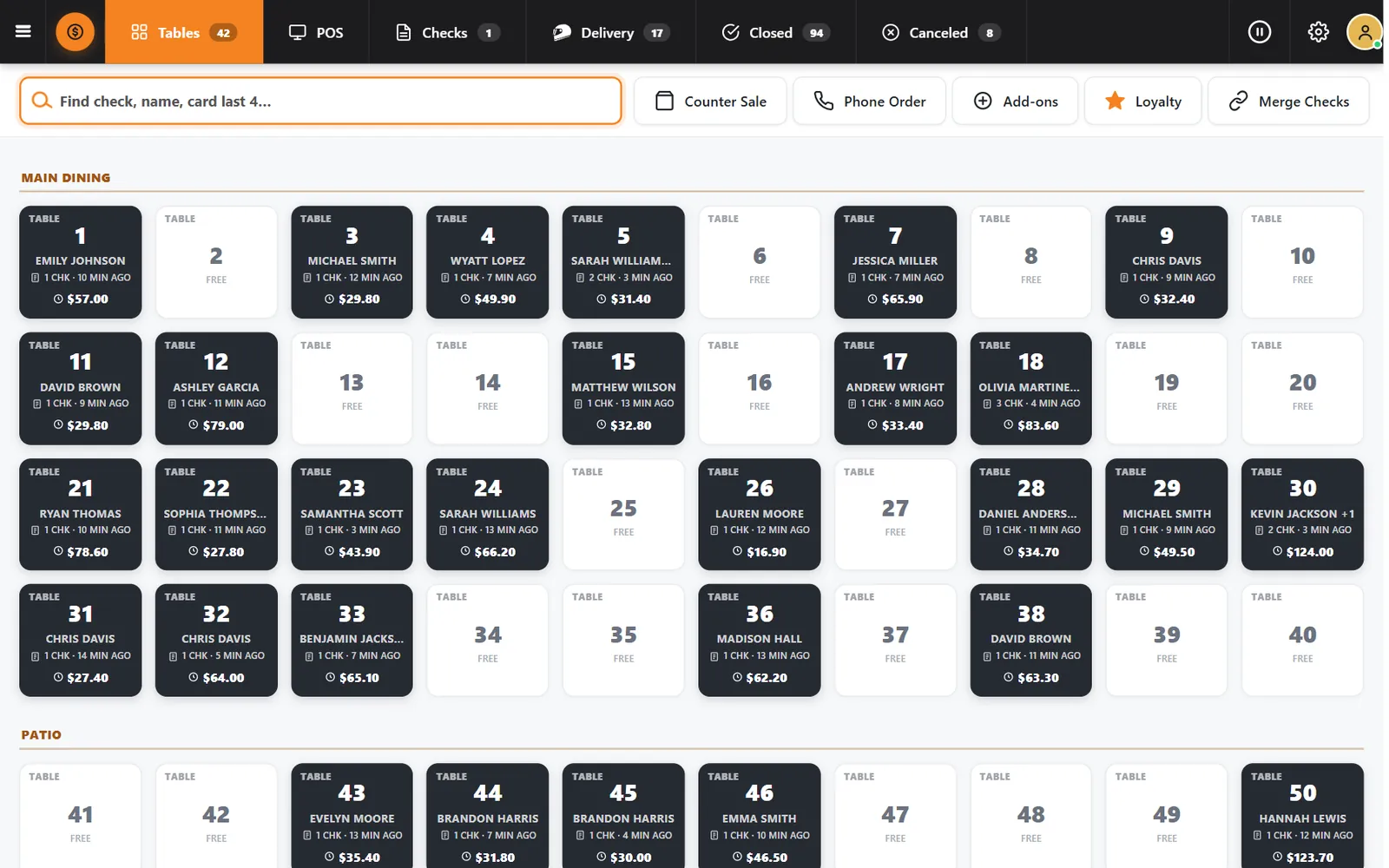
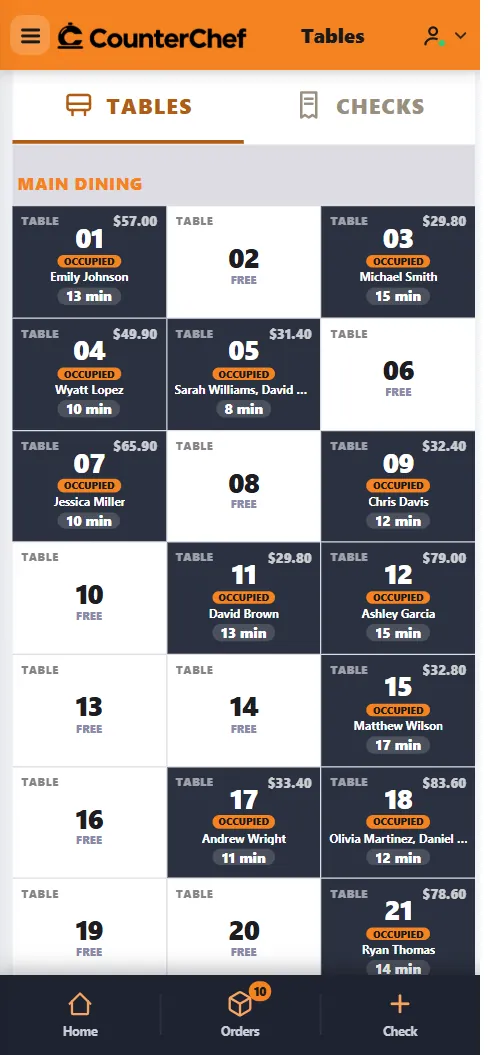
CounterChef runs on iPad, Android tablet, iPhone and computer. It includes schedules and employee clock-ins on a tablet or computer, a kitchen display with ticket timers, a table map and server phones for dine-in, tip sharing by percentage or hours worked, inventory and recipe costing, online pickup and delivery menus with ZIP-code-specific fees and estimated times, loyalty points and gift cards, sales tax rates with up to three decimals and by category, and reports by day, item and employee.