
Food That Travels Well for Takeout: Build a Menu That Survives the 20-Minute Ride
A dish that sells well in your dining room is not automatically a good takeout dish: steam, movement, temperature changes, and a sealed container can turn a crisp entrée into a soggy mess before it reaches the guest. The best takeout menus are engineered around the trip, not just the recipe, by testing each dish, adjusting its components, choosing the right packaging, and setting realistic expectations for how it will arrive.
Start by judging every dish as a 20-minute delivery, not as a plated meal
A useful takeout test is simple: prepare the dish exactly as you would during a normal service, pack it using the packaging you intend to use, and let it sit for 20 minutes before opening it.
Twenty minutes is a planning scenario, not a universal delivery time. Some orders take less time; others take considerably longer. Your goal is to establish whether the dish still meets your restaurant's quality standard after a realistic delay.
Evaluate five things:
- Texture: Is the crisp component still crisp? Is the rice dry, the pasta gummy, or the bread soggy?
- Temperature: Is the food acceptably hot, cold, or properly chilled for the type of dish?
- Moisture: Has condensation accumulated? Is liquid pooling at the bottom?
- Structure: Has the food shifted, collapsed, leaked, or been crushed?
- Flavor: Has the sauce soaked into the food, become overly concentrated, or lost its balance?
Don't just taste the first bite. Inspect the bottom of the container, the corners, the lid, the garnish, and the way the food looks after you open it.
A practical scoring system is to rate each category from 1 to 5. A dish with excellent flavor but a score of 1 for structure may need redesigning before it belongs on your delivery menu.
Identify the dishes that naturally travel well
Some foods are forgiving because their texture, moisture, and structure remain stable during transport. Others need a different preparation method or a separate container for certain components.
Usually strong takeout candidates
- Braised meats, stews, curries, chili, and slow-cooked dishes.
- Rice bowls with sauces that can be portioned separately.
- Roasted vegetables, potatoes, grain bowls, and hearty salads.
- Sandwiches made with sturdy bread and controlled moisture.
- Pasta shapes that hold their structure and sauces that remain stable.
- Baked goods, cookies, brownies, and desserts that do not require delicate plating.
Potentially difficult candidates
- Delicate fried seafood, thin fries, tempura, and battered vegetables.
- Soufflés, crisp-skinned fish, and dishes dependent on immediate plating.
- Ice cream beside hot food.
- Delicate leafy salads dressed in advance.
- Tall burgers, stacked sandwiches, and dishes with fragile garnishes.
- Emulsified sauces that split when held or reheated improperly.
These aren't permanent yes-or-no categories. A fried chicken sandwich might perform beautifully with a vented box, separate sauce, and a sturdy bun, while a braised short rib might arrive poorly if the container leaks or the sauce is packed too hot.
The recipe and the packaging must work together.
Fix soggy food by controlling steam, moisture, and contact
Sogginess is often a packaging problem disguised as a recipe problem. Hot food releases steam. When that vapor condenses against the lid and sides, moisture returns to the food, softening breading, crusts, and toasted surfaces.
Fried chicken, fries, and crispy appetizers
Failure: The crust softens and loses its crunch.
Fix
- Use a vented container designed to release excess steam.
- Avoid sealing crispy food in an airtight plastic container immediately.
- Drain fried food properly before packing.
- Use a paper liner that absorbs some excess oil without trapping moisture.
- Pack sauces separately.
- Avoid piling hot fried pieces on top of one another when possible.
A vented package is not a miracle solution. It may allow more heat to escape, so test the balance between crispness and temperature. The correct choice depends on the food, portion size, packaging material, and delivery conditions.
Burgers and sandwiches
Failure: The bottom bun becomes wet, lettuce wilts, and the sandwich collapses.
Fix
- Grill or crisp the cut surfaces of the bread.
- Put wet ingredients between ingredients that provide a moisture barrier.
- Use thicker, less watery sauces.
- Pack tomato, pickles, or particularly wet toppings separately if necessary.
- Use a box with enough clearance to prevent crushing.
One useful experiment is to compare three burger builds: your normal build, a build with toasted buns, and a build with wet toppings packed separately. Taste each after 20 minutes. The best version may be the one that needs less assembly at the kitchen pass, not the one with the most complicated modification.
Salads
Failure: Greens wilt, croutons soften, and dressing pools at the bottom.
Fix: Pack dressing separately, keep crunchy toppings dry, and avoid cutting delicate greens too far in advance. Use a container wide enough to prevent compression. For salads with substantial ingredients such as grains, roasted vegetables, or beans, keep components in sections where possible.
Fix cold food by separating temperature-sensitive components
Cold food can travel well, but a container should not be expected to preserve every component equally.
Consider a grain bowl containing warm rice, roasted vegetables, cold cucumber, greens, dressing, and grilled chicken. Packing everything together can produce a dish that is lukewarm, soggy, and texturally confused.
Instead, test a layout in which:
- Rice and hot components occupy one section.
- Cold greens and cucumber are kept away from hot ingredients.
- Dressing is sealed in a separate cup.
- Crunchy toppings are packed dry.
- The lid does not compress the ingredients.
For dishes intended to be cold, keep them cold through proper food handling and storage. For dishes intended to be hot, use packaging and holding procedures appropriate for maintaining temperature. Follow applicable food-safety requirements rather than relying on a delivery time as a safety guarantee.
A practical improvement is to establish a packing temperature decision for every menu item: whether it is assembled hot, assembled cold, or packed with components separated. Make that instruction visible to the packing team.
Fix spills by changing the container, portion, and packing sequence
Spills don't always mean you bought bad containers. The source may be an overfilled sauce cup, a lid that doesn't lock, a container that bends under weight, or a bag packed in the wrong order.
Soups, curries, gravy, and liquid-heavy dishes
Failure: Liquid escapes, the bag gets wet, or the sauce leaks into other food.
Fix
- Choose containers with secure, compatible lids.
- Leave enough headspace for movement.
- Avoid containers that flex excessively when lifted.
- Test the lid by handling the filled container the way a driver might.
- Keep liquids upright in the bag.
- Use secondary containment where the menu item warrants it.
Don't fill every container to the brim just because the portion fits. The remaining space is part of the packaging design.
A packing sequence that reduces accidents
Try this order at the packing station:
- Inspect the container and lid.
- Portion the food without exceeding the container's practical capacity.
- Close the container and check the seal.
- Place liquid items upright.
- Keep heavy containers at the bottom of the bag.
- Put delicate items on top.
- Keep cold drinks and hot food separated.
- Check the bag for movement before handing it off.
An inexpensive practical test is to pack an order, lift the bag, move it through the same motions your staff uses during pickup, and set it down several times. Don't deliberately throw or abuse the package; simulate ordinary handling.
Fix separated sauces by redesigning the recipe for holding
A sauce that looks perfect on the plate can become greasy, watery, grainy, or broken in a container.
Common failures and fixes
| Failure | Likely cause | Practical fix |
|---|---|---|
| Oil pools on top | Emulsion breaks during holding | Review emulsion stability, temperature, and mixing |
| Cream sauce turns grainy | Heat or holding conditions affect the sauce | Adjust preparation and holding; test reheating |
| Dressing becomes watery | Moisture released by ingredients | Pack separately; drain ingredients thoroughly |
| Sauce thickens excessively | Continued absorption or cooling | Adjust consistency and portion sauce separately |
| Herb sauce loses freshness | Heat, oxidation, or extended exposure | Add delicate herbs later or pack separately |
| Cheese sauce becomes stiff | Cooling and formulation | Test the sauce at the expected serving temperature |
Don't automatically add more liquid to every sauce. A thinner sauce may travel better in one dish and ruin another by soaking through the base.
Test sauce consistency at packing and again after 20 minutes. If a sauce is intended to be poured, it should still pour. If it is intended to coat, it should coat without forming a heavy paste.
Fix crushed food by controlling container geometry
Some takeout failures are caused by the shape of the package rather than the food itself.
A tall sandwich in a shallow clamshell gets compressed. A soft pastry placed under a heavy entrée loses its shape. A delicate garnish gets pushed into the lid.
Fixes worth testing
- Choose containers with more height for burgers and sandwiches.
- Pack fragile desserts in rigid containers.
- Use dividers to prevent side-to-side movement.
- Place flat, sturdy items beneath fragile ones.
- Avoid stacking orders in the bag when the package cannot support the weight.
- Reduce garnish that has no meaningful contribution after transport.
A restaurant doesn't have to preserve every detail of its dine-in presentation. It needs to preserve the dish's identity, appearance, and eating experience.
For example, a carefully stacked restaurant burger may become a more practical takeout burger with the same ingredients arranged in a lower, more stable build. That is an adaptation, not a compromise in quality.
Adapt recipes without creating a second kitchen
Takeout modifications should be repeatable during a busy service. If every delivery order requires a special cooking sequence, the menu may be too complicated for the volume you're trying to handle.
Start with changes that can be standardized:
- Slightly adjust sauce quantity or consistency.
- Change the order in which ingredients are assembled.
- Use a sturdier bread or pasta shape.
- Hold delicate garnish until the last step.
- Separate a component that loses texture.
- Adjust cut sizes to improve consistency.
- Change the container before changing the recipe.
Write these adjustments into the recipe or station instructions. A verbal instruction such as "make the delivery one a little drier" is not reliable.
For each modified dish, record the ingredient quantities, packing instructions, container, and result. If the dish performs better, the whole team should be able to reproduce it.
Build a delivery menu around operational fit, not popularity alone
A menu item may be popular but still be a poor delivery product if it creates excessive assembly work, uses packaging you don't stock consistently, or requires the cook to stop other production.
Consider four factors:
- Travel quality: Does it arrive in good condition?
- Preparation burden: Can it be made without disrupting dine-in service?
- Packaging burden: Does it require special containers, multiple cups, or unusual handling?
- Contribution: Does the item make enough money after ingredients, packaging, labor, and other applicable costs?
A practical starting point is to organize dishes into three groups:
| Menu group | Action |
|---|---|
| Travels well with standard packaging | Keep and promote |
| Travels well with one simple modification | Keep, document the modification |
| Fails after testing or creates excessive operational burden | Redesign, limit, or remove from delivery |
Don't assume a dish should stay on the delivery menu because it is a bestseller in the dining room. If it consistently arrives in poor condition, it may be hurting the guest's impression of your restaurant.
Use a dish-by-dish 20-minute test before changing the menu
Run the test with your existing staff, ingredients, and containers. Use the same portion sizes and preparation method as normal service.
For a meaningful comparison, prepare multiple versions of the same dish when you're testing different packaging or recipe adjustments. Label them clearly, but don't let the person tasting them know which version is supposed to be the improved one if you can avoid it.
Ready-to-copy takeout testing checklist
Dish name: ____________________
Date: ____________________
Recipe version: ____________________
Container and size: ____________________
Test duration: 20 minutes
- Prepare using normal service procedure.
- Pack using the intended delivery packaging.
- Label the start time.
- Keep the package in the intended transport conditions.
- Open after 20 minutes.
- Check texture, temperature, moisture, structure, and flavor.
- Inspect for leaks, condensation, and crushed components.
- Record the failure, if any.
- Make one change at a time.
- Retest the revised dish.
Texture score (1-5): _____
Temperature score (1-5): _____
Moisture score (1-5): _____
Structure score (1-5): _____
Flavor score (1-5): _____
Main failure: ____________________
Change tested: ____________________
Result: ____________________
Final decision: Keep / Modify / Remove from delivery
One change at a time matters. If you change the recipe, container, sauce portion, and packing method simultaneously, you won't know which change actually solved the problem.
Work through a hypothetical takeout redesign in dollars
Imagine an independent restaurant selling a grilled chicken bowl for takeout.
All figures below are hypothetical and are for illustration only.
Original version
| Item | Hypothetical cost |
|---|---|
| Chicken | $3.20 |
| Rice | $0.65 |
| Vegetables | $1.10 |
| Sauce | $0.55 |
| Standard container | $0.45 |
| Bag and utensils | $0.25 |
| Total direct food and packaging cost | $6.20 |
| Menu price | $16.00 |
| Contribution before labor and other operating costs | $9.80 |
The original bowl arrives with hot rice, chicken, cold cucumber, greens, sauce, and crunchy topping mixed together. After 20 minutes, the greens are wilted, the topping is soft, and the sauce has pooled.
The restaurant tests a redesign:
- Keep the chicken, rice, and roasted vegetables together.
- Put cucumber and greens in a separate compartment.
- Pack sauce in a sealed cup.
- Pack crunchy topping separately.
- Use a container with an appropriate divider.
Revised hypothetical version
| Item | Hypothetical cost |
|---|---|
| Chicken | $3.20 |
| Rice | $0.65 |
| Vegetables | $1.10 |
| Sauce | $0.55 |
| Divided container | $0.65 |
| Sauce cup | $0.12 |
| Bag and utensils | $0.25 |
| Total direct food and packaging cost | $6.52 |
| Menu price | $16.00 |
| Contribution before labor and other operating costs | $9.48 |
The redesigned version costs an additional hypothetical $0.32 per order. The restaurant must determine whether the improvement in quality is worth that additional cost and whether the new packaging slows the packing station.
If the redesign is successful, the owner can consider whether the dish deserves delivery-menu promotion. If the test fails, try another layout rather than automatically increasing the menu price.
This calculation excludes delivery commissions, incremental labor, waste, overhead, taxes, and other costs. It is not a full profitability calculation.
Try three improvements this week that most operators overlook
1. Create a packaging library with actual dish examples
Instead of storing containers by size alone, label shelves by the foods they serve best: crispy items, bowls, sandwiches, sauces, desserts, and cold foods.
Keep one sample of each container assembled with its intended dish or a photo of the correct packing layout. A new employee should be able to identify the correct package without asking the manager.
This prevents the common mistake of using whichever container is closest during a rush.
2. Run a packaging swap test without changing the recipe
Choose one dish that regularly receives complaints about texture or appearance. Prepare identical portions using two different containers.
Test both after 20 minutes. Keep the recipe identical.
This isolates packaging as a variable and may solve the problem without changing food cost, prep procedures, or menu descriptions.
3. Record the five most common takeout failures for one week
Ask the packing station to record every problem using five simple categories:
- Soggy
- Cold
- Spilled
- Separated
- Crushed
Include the dish name and a brief note. Don't make staff write a paragraph during service.
At the end of the week, look for patterns. If the same sauce leaks on several dishes, you have a packaging or portioning issue. If only one dish repeatedly arrives soggy, you have a dish-specific issue.
4. Test your menu during the actual rush
A dish that performs well in a quiet kitchen may fail when the cook is handling dine-in tickets, delivery orders, and pickup orders simultaneously.
Have a manager test the packing workflow during a real busy period. Observe whether staff skip separating sauces, overfill containers, forget venting, or stack fragile food under heavy items.
A menu that travels well only when the chef has unlimited time isn't operationally ready.
Keep delivery packaging and food safety in the same conversation
Packaging is not a substitute for safe food handling. Hot and cold foods need appropriate handling, storage, holding, and transport procedures.
Review the applicable food-safety requirements with your local health department and make sure your packing and delivery process supports them. Requirements may vary by jurisdiction and type of operation.
Keep allergen communication accurate, especially when sauces, garnishes, or components are packed separately. Separate packaging does not automatically prevent cross-contact.
Make delivery menu changes easier to manage with your restaurant systems
When you revise a delivery menu, you also need to keep online ordering, prices, availability, recipes, and kitchen instructions aligned.
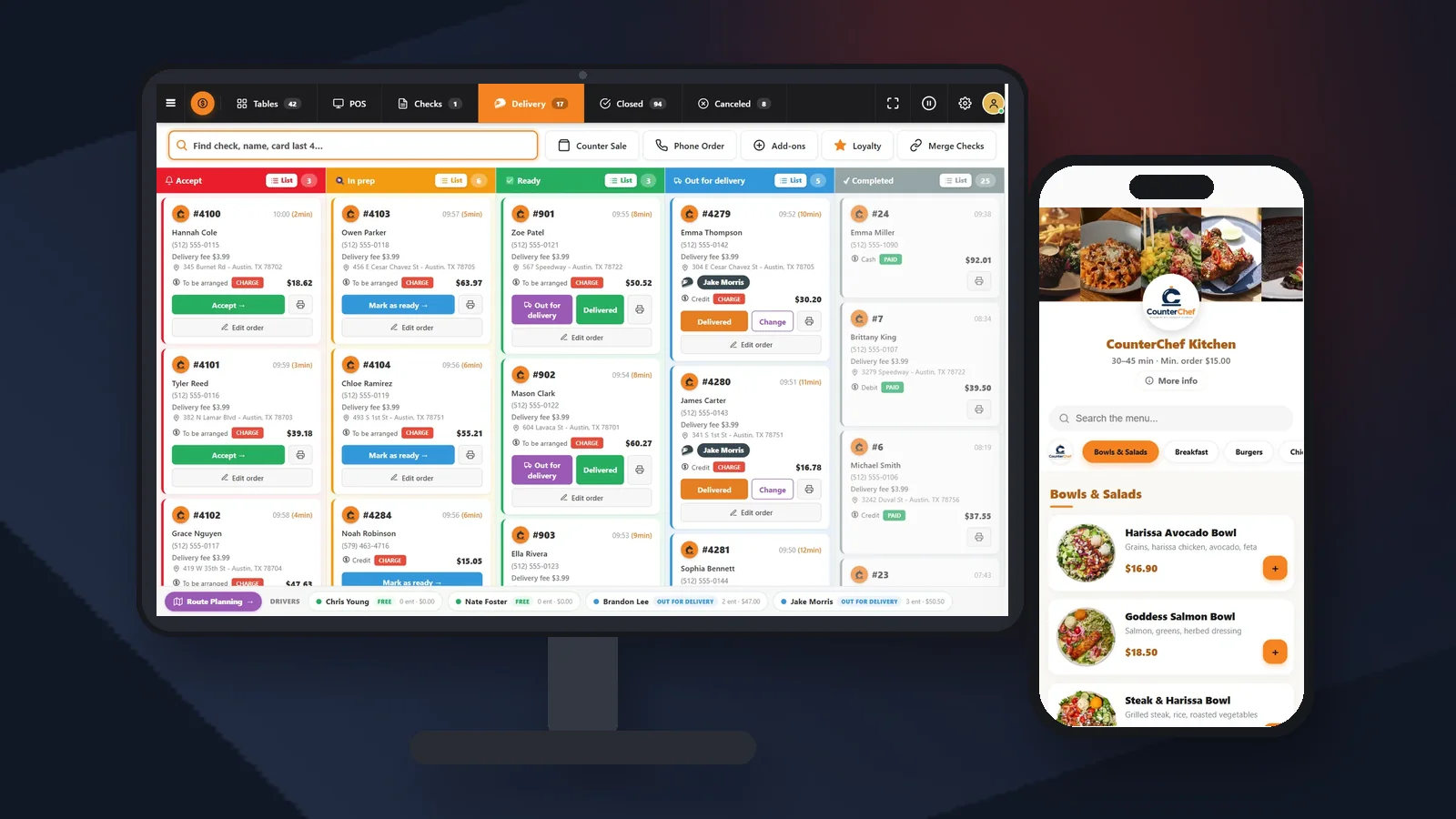
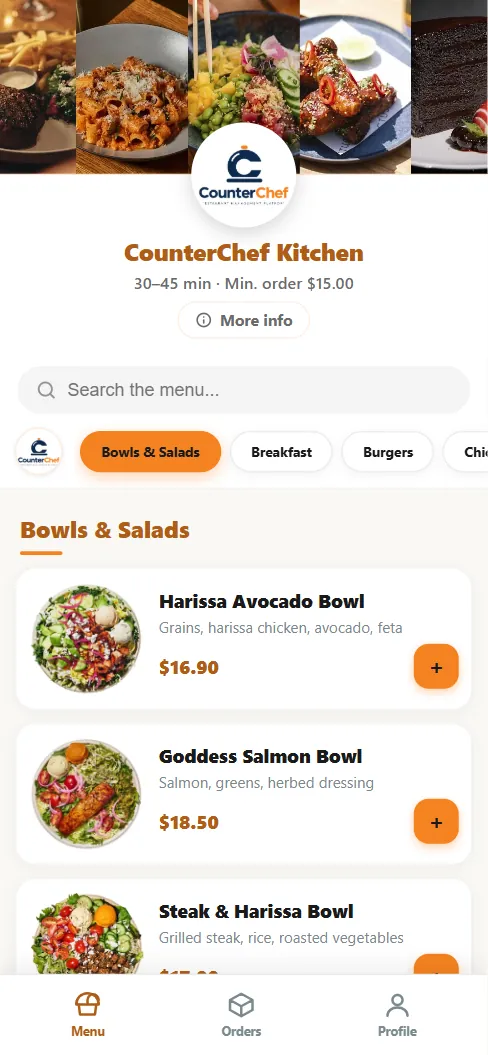
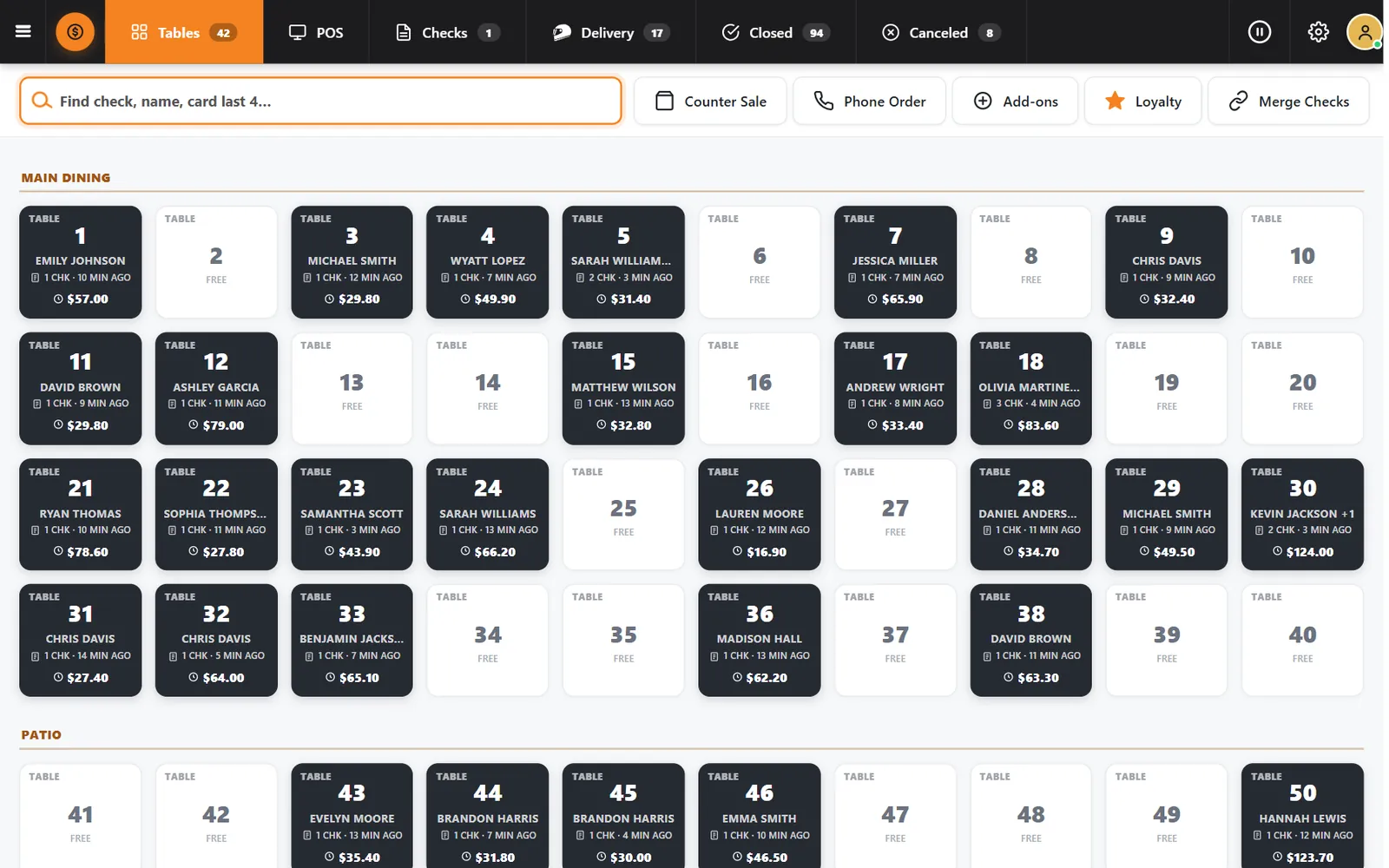
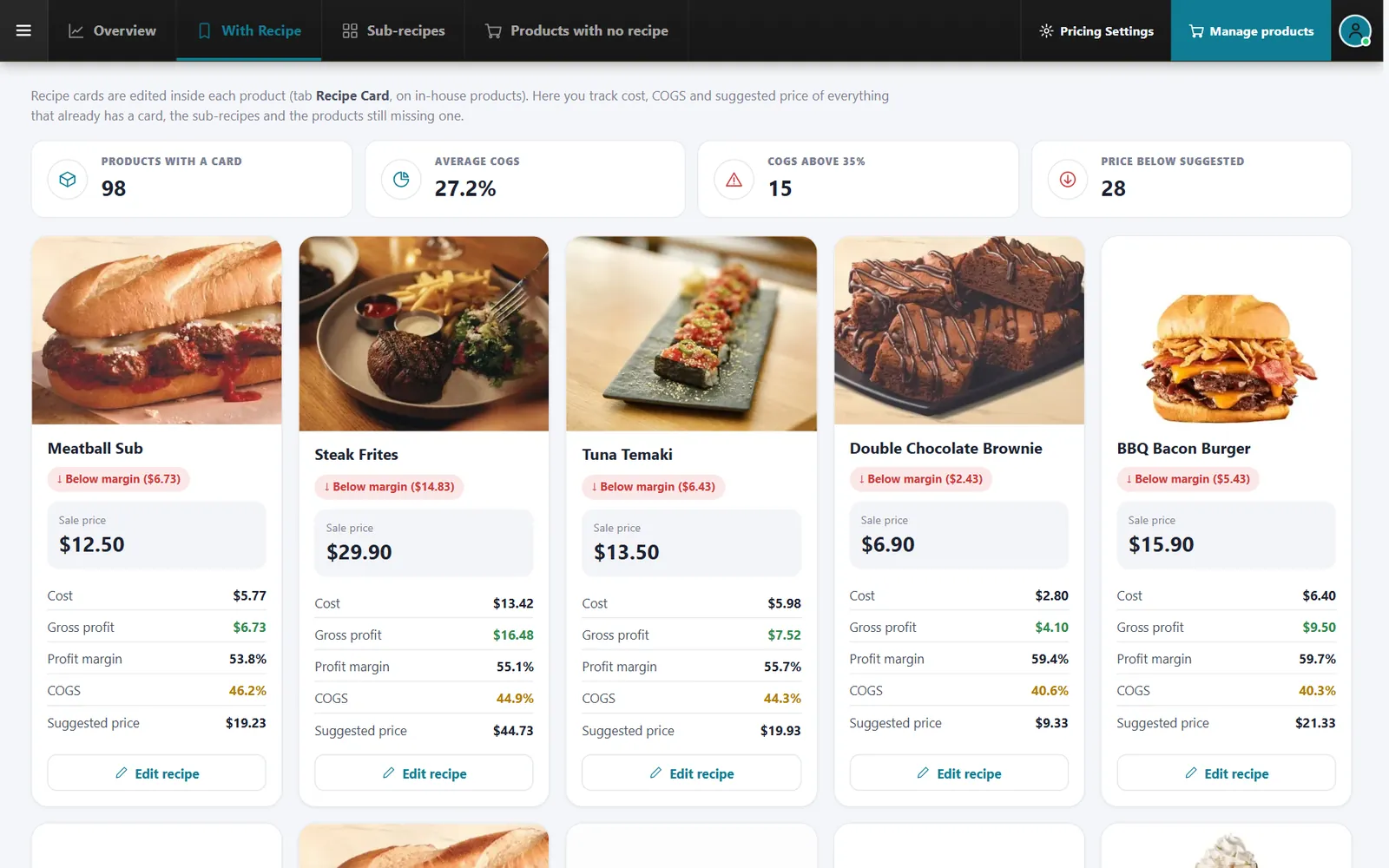
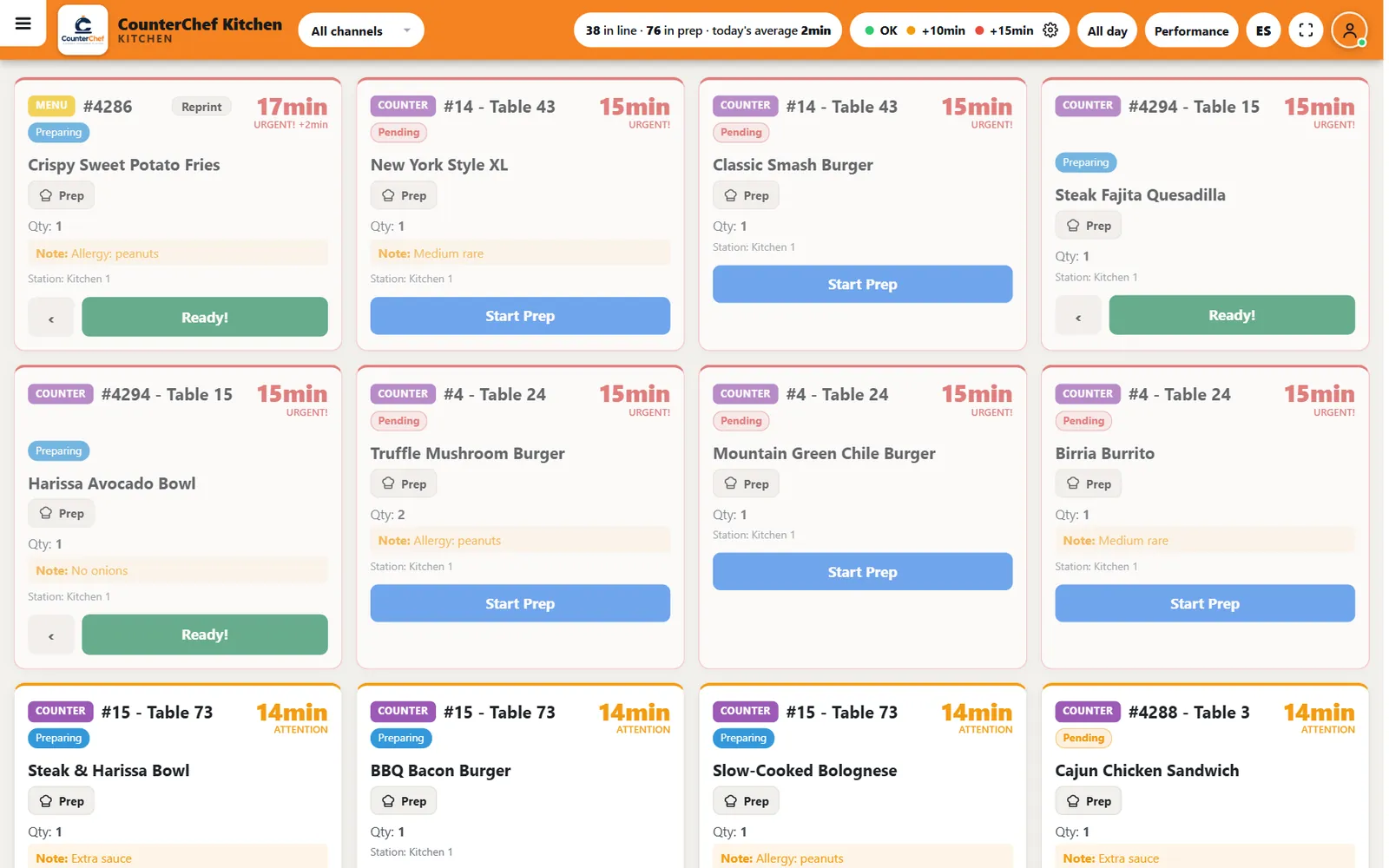
CounterChef runs on iPad, Android tablet, iPhone and computer. It offers your own online menu for pickup and delivery, with delivery areas by ZIP code, each with its own fee and estimated time; a kitchen display with ticket timers; a table map and server phones for dine-in; employee clock-ins on a tablet or computer and schedules built in the system; tips shared by percentage or hours worked; inventory and recipe costing showing the cost of each dish; loyalty points and gift cards; sales tax rates with up to three decimals and by category; and reports by day, item and employee.
Use your operating records to review whether delivery-menu changes are actually improving sales, food cost, and workflow. The packaging test tells you whether the food arrives better; your operating review tells you whether the revised menu makes sense for the business.