
Restaurant Tip Pooling: How to Split Tips Fairly, Legally, and Without Creating Team Resentment
Restaurant tip pooling can make service more collaborative, reward the people who support the guest experience behind the scenes, and reduce the tension that comes from one server having a busy section while another has a slow one. But a tip pool only works when the rules are clear, legally compliant, easy to calculate, and trusted by the people contributing to it.
The best policy isn't necessarily the one that produces the most equal payouts. It's the one your team understands before the shift, can verify after the shift, and believes reflects the work that actually happened.
Start with the legal rules before choosing a split
Before deciding who receives tips or how much each person gets, establish who is legally eligible to participate. Federal law, state law, and local rules can differ, especially when a restaurant uses a tip credit.
Under federal rules, employees who regularly receive tips may generally participate in a tip pool with other eligible tipped employees. When an employer pays the full minimum wage without taking a tip credit, a broader pool may be permitted to include employees who do not customarily receive tips, subject to applicable requirements. Managers and supervisors generally cannot keep employees' tips or receive distributions from employee tip pools, except in limited circumstances involving tips they receive directly for service they personally provide and without participating in the pool.
State and local rules may be stricter. Some jurisdictions have different minimum wage requirements, tip-credit rules, disclosure requirements, restrictions on eligible roles, or requirements about how tips are distributed.
Before implementing your restaurant tip pooling policy, verify:
- Which employees are legally eligible to receive pooled tips.
- Whether your restaurant takes a tip credit or pays the full applicable minimum wage.
- Whether managers, shift leaders, owners, or supervisors are excluded.
- Whether mandatory service charges are treated differently from voluntary tips.
- Whether credit-card processing fees can legally be deducted from tips in your jurisdiction.
- When pooled tips must be paid and how the distribution must be documented.
- Whether your state or city requires written notice of the tip-pooling policy.
Do not assume that a policy that works at another restaurant is automatically legal for yours. Confirm the details with your state labor department, local authority, or employment professional.
Decide which roles contribute and which roles receive tips
The first practical decision is not the percentage. It is the list of positions included in the pool.
A typical full-service restaurant may have servers, bartenders, bussers, food runners, hosts, and kitchen staff. Their contribution to the guest experience is different, and their legal eligibility may also be different.
A policy should name positions rather than leave the decision to the manager at the end of each shift.
For example, a restaurant might establish a pool involving:
- Servers, who take orders, maintain guest relationships, and manage the table experience.
- Bartenders, who prepare beverages and support both bar guests and dining-room service.
- Bussers, who reset tables, replenish supplies, and help maintain service pace.
- Food runners, who deliver dishes, coordinate timing, and help correct mistakes quickly.
- Other eligible support positions, where legally permitted and clearly defined.
A position-based policy is more reliable than deciding who "worked hard" on a particular night. Personal judgments about effort create arguments that are difficult to resolve objectively.
Separate eligibility from performance
An employee should not have to win a popularity contest to receive their share.
If a person is scheduled in an eligible role and works the qualifying shift, the policy should explain how that person's share is calculated. If performance issues need to be addressed, use coaching and performance management rather than quietly reducing their tips.
Tip pooling is a compensation system, not a disciplinary tool.

Choose the split method based on the kind of service you operate
There are several ways to distribute pooled tips. The right method depends on staffing, service style, the degree of shared work, and the amount of variation between shifts.
The following methods are easiest to compare using one hypothetical Saturday night.
One hypothetical Saturday night, three different payout methods
Every number in this example is hypothetical and is intended only to illustrate the math, not to establish a legal wage or tip-pooling standard.
Hypothetical shift details:
- Total tips collected: $1,200
- Servers: 3 employees
- Bartenders: 1 employee
- Bussers: 2 employees
- Food runners: 2 employees
- Total eligible employees: 8
- All eight employees are assumed eligible under the applicable rules for this hypothetical example.
Method 1: Equal shares by position-independent headcount
The restaurant divides the pool equally among all eligible employees.
| Role | Employees | Per-person share | Role total |
|---|---|---|---|
| Servers | 3 | $150 | $450 |
| Bartender | 1 | $150 | $150 |
| Bussers | 2 | $150 | $300 |
| Food runners | 2 | $150 | $300 |
| Total | 8 | $1,200 |
Calculation: $1,200 ÷ 8 = $150 per employee.
This method is extremely simple. Every eligible person receives the same amount, regardless of position or hours.
It can work for small restaurants with short, relatively consistent shifts where everyone contributes similarly. However, it can feel unfair if a server works a long dinner service while another employee works only a short closing shift.
Method 2: Percentage-based distribution by role
The restaurant assigns a fixed percentage of the pool to each role group.
For this hypothetical example:
- Servers: 55%
- Bartender: 15%
- Bussers: 20%
- Food runners: 10%
| Role | Pool percentage | Role allocation | Employees | Per-person payout |
|---|---|---|---|---|
| Servers | 55% | $660 | 3 | $220 |
| Bartender | 15% | $180 | 1 | $180 |
| Bussers | 20% | $240 | 2 | $120 |
| Food runners | 10% | $120 | 2 | $60 |
| Total | 100% | $1,200 | 8 |
Calculation example for servers: $1,200 × 55% = $660, then $660 ÷ 3 = $220 per server.
This approach recognizes different responsibilities. Servers receive a larger share because they handle the tables and guest interaction, while support staff receive a defined portion for helping the whole dining room.
The weakness is that percentages alone do not account for hours. If a busser works a four-hour shift and another works eight hours, they would receive the same payout unless the percentage allocation is further adjusted.
Method 3: Weighted points multiplied by hours worked
This method combines role responsibility and time on the clock.
For the hypothetical Saturday, the restaurant assigns the following point values:
- Server: 1.00 point per hour
- Bartender: 1.00 point per hour
- Busser: 0.75 point per hour
- Food runner: 0.50 point per hour
Hypothetical hours worked:
| Employee | Role | Hours | Points per hour | Total points |
|---|---|---|---|---|
| Server A | Server | 8 | 1.00 | 8.00 |
| Server B | Server | 6 | 1.00 | 6.00 |
| Server C | Server | 5 | 1.00 | 5.00 |
| Bartender | Bartender | 7 | 1.00 | 7.00 |
| Busser A | Busser | 8 | 0.75 | 6.00 |
| Busser B | Busser | 4 | 0.75 | 3.00 |
| Runner A | Food runner | 6 | 0.50 | 3.00 |
| Runner B | Food runner | 3 | 0.50 | 1.50 |
| Total | 47 | 39.50 |
The hypothetical tip value per point is:
$1,200 ÷ 39.50 = $30.3797 per point.
| Employee | Total points | Hypothetical payout |
|---|---|---|
| Server A | 8.00 | $243.04 |
| Server B | 6.00 | $182.28 |
| Server C | 5.00 | $151.90 |
| Bartender | 7.00 | $212.66 |
| Busser A | 6.00 | $182.28 |
| Busser B | 3.00 | $91.14 |
| Runner A | 3.00 | $91.14 |
| Runner B | 1.50 | $45.56 |
| Total | 39.50 points | $1,200.00 |
The final cent is adjusted to the employee with the largest fractional remainder so the payout reconciles exactly to the pool.
This method rewards both time and position. It is often useful when the team has staggered shifts and responsibilities differ substantially. However, it requires accurate clock-in and clock-out records and a team that understands the point system.
The weights shown here are hypothetical examples, not recommended industry standards. Your actual allocation should reflect the work, your concept, and legal requirements.
What the three methods reveal about fairness
Same Saturday, different outcomes
| Employee | Equal shares | Role percentages | Weighted hours |
|---|---|---|---|
| Server A | $150 | $220 | $243.04 |
| Server B | $150 | $220 | $182.28 |
| Server C | $150 | $220 | $151.90 |
| Bartender | $150 | $180 | $212.66 |
| Busser A | $150 | $120 | $182.28 |
| Busser B | $150 | $120 | $91.14 |
| Runner A | $150 | $60 | $91.14 |
| Runner B | $150 | $60 | $45.56 |
Equal shares favor simplicity. Role percentages favor position responsibility. Weighted hours favor a combination of role and time.
Notice the difference between Busser A and Busser B in the weighted method. Both have the same role, but one worked twice as many hours and therefore receives twice the points. That's a useful distinction when a restaurant's schedule includes early prep, short support shifts, and late closers.
Before choosing a method, ask the team to evaluate it using real shift patterns. A policy can appear fair on paper but produce a surprising result when an employee works a partial shift, covers a station, or arrives late.
Decide how tips from different service areas enter the pool
A restaurant with a dining room, bar, patio, private dining room, and takeout operation may need more than one pool.
A single pool encourages employees to help across the operation. But it can also create frustration when a role's workload is concentrated in one area.
For example, bartenders may handle a large volume of bar guests while also making drinks for dining-room tables. A patio server may spend substantial time walking, while a food runner spends the night delivering dishes to both the patio and dining room.
There are three practical ways to handle this:
- One restaurant-wide pool: All eligible tips go into a common pool and are distributed using the same rules.
- Separate service-area pools: Tips are pooled within a defined area, such as a bar or private dining room, when legally permitted and operationally justified.
- Shared pool with a defined allocation: The restaurant combines tips but uses a documented formula to account for the work of specific roles or service areas.
Avoid making separate pools merely because one area generates higher tips. Separate pools should have a clear operational reason and comply with applicable law.
Handle partial shifts, call-outs, and station changes before they become disputes
The policy should answer the situations that managers face every week.
What happens when someone leaves two hours early? When a server helps behind the bar? When a busser covers food running? When an employee is asked to clock in early because the restaurant is understaffed?
Do not wait until payroll closes to invent the rule.
For a weighted-hours pool, define whether hours are counted:
- From actual clock-in to clock-out.
- By role assignment during the shift.
- By a documented role change.
- With or without unpaid breaks, according to the applicable rules and actual time records.
If an employee changes roles during the night, record the time of the change. A server who spends two hours supporting the bar should not have their entire shift categorized by whichever station they started in if the written policy says role-specific hours matter.
A manager should be able to explain the calculation using the time record, not memory.
Make the tip calculation auditable at the end of every shift
Tip pooling loses credibility when employees cannot verify the numbers.
At the close of service, the manager or designated employee should reconcile:
- Cash tips reported or collected.
- Credit-card tips recorded.
- Any legally permitted adjustments.
- The total amount entering the pool.
- The eligible employee list.
- Hours or points used in the calculation.
- The allocation for each employee.
- The final distribution and any rounding adjustment.
Keep the records according to applicable retention rules and payroll requirements.
If cash is distributed at the end of the shift, employees should receive a clear record of the payout. If tips are paid through payroll, the records should reconcile with the payroll reporting process.
Do not use pooled tips to cover cash shortages, broken equipment, walkouts, mistakes, or other business expenses. Any deduction from tips must be legally permitted, and the restaurant should not use the pool as a shortcut for settling operational losses.
Three improvements you can test this week
1. Run a fairness audit using three recent shifts
Choose a slow weekday, a busy weekend, and a shift with unusual staffing.
Recalculate the payouts under your current policy and one alternative. Look for the people who consistently receive the smallest shares, and ask why.
The goal is not to guarantee everyone the same payout. It is to determine whether the formula unintentionally penalizes employees who work closing shifts, shorter shifts, or support positions that are essential to the operation.
2. Create a "role-change timestamp" rule
Whenever someone changes stations, the shift manager records the time and new role on the shift sheet.
This takes seconds and prevents arguments later. It also creates useful information about how often your restaurant moves people between stations because of staffing shortages or demand.
3. Publish a weekly anonymous payout comparison
Show the team a simple summary of the previous week:
- Total pool by shift.
- Total hours or points.
- Average payout per role.
- Number of shifts worked by role.
- Any rounding adjustments.
Do not publish sensitive payroll information or expose employees' personal compensation details unnecessarily. A transparent summary of how the formula works can build confidence without turning the workplace into a competition.
4. Review the policy after a schedule change
If you add lunch service, extend the patio, change closing hours, or introduce a new support position, revisit the tip allocation.
A formula designed for a five-person dinner team may not work when you have ten people, staggered shifts, and a dedicated runner. Changes to the staffing model can change the fairness of the pool even when the percentages remain the same.
Use this ready-to-copy closing checklist
Use the checklist below before your next shift begins and whenever you update your tip-pooling policy.
Tip Pool Setup & Closing Checklist
Before the shift
- Eligible roles are listed in writing.
- The pool method is documented.
- Percentages or point weights add up correctly.
- Employees understand how partial shifts are counted.
- Role changes will be recorded.
- The policy has been checked against applicable labor rules.
At closing
- Cash and credit-card tips are reconciled.
- The pool total is verified.
- Actual hours and role assignments are checked.
- Each employee's calculation is verified.
- Rounding differences are documented.
- The distribution total matches the pool total.
Weekly review
- Compare payouts across different shift types.
- Review staffing changes and partial shifts.
- Ask whether the team understands the formula.
- Investigate recurring discrepancies.
- Review the policy if operations have changed.
Explain the policy before the first dollar is pooled
The best time to introduce tip pooling is before employees experience their first payout under the new system.
Hold a short team meeting, walk through a sample shift, and let employees ask questions. If you are changing an existing system, explain why the change is happening, what will be different, and when it takes effect.
You can use this script:
Team tip-pooling policy explanation
Starting on [effective date], our restaurant will use [pooling method] for eligible employees working [qualifying shifts or service areas].
Tips included in the pool will be distributed according to [percentage, points, or hours]. Eligible positions are [list positions]. The calculation will use [actual hours worked / role assignments / defined method], and any role changes during the shift will be recorded.
At the end of each shift, we will reconcile the tip total and calculate each employee's share. You will be able to review the calculation and ask questions about discrepancies.
This policy is intended to reward the shared work that makes service successful while keeping the distribution consistent and transparent. It will not be changed informally from shift to shift.
If you have a question about your payout, bring it to [manager or designated contact]. We will review the records and explain the calculation.
We will review this policy on [review date] and make any necessary changes in accordance with applicable law.
A written policy should be available to employees, not just stored in the manager's office. Give new hires a copy during onboarding and make sure existing employees receive a copy whenever the rules change.
Keep the operational records and calculations in one place
The fewer separate spreadsheets, handwritten notes, and disconnected time records you use, the easier it is to reconcile tips.
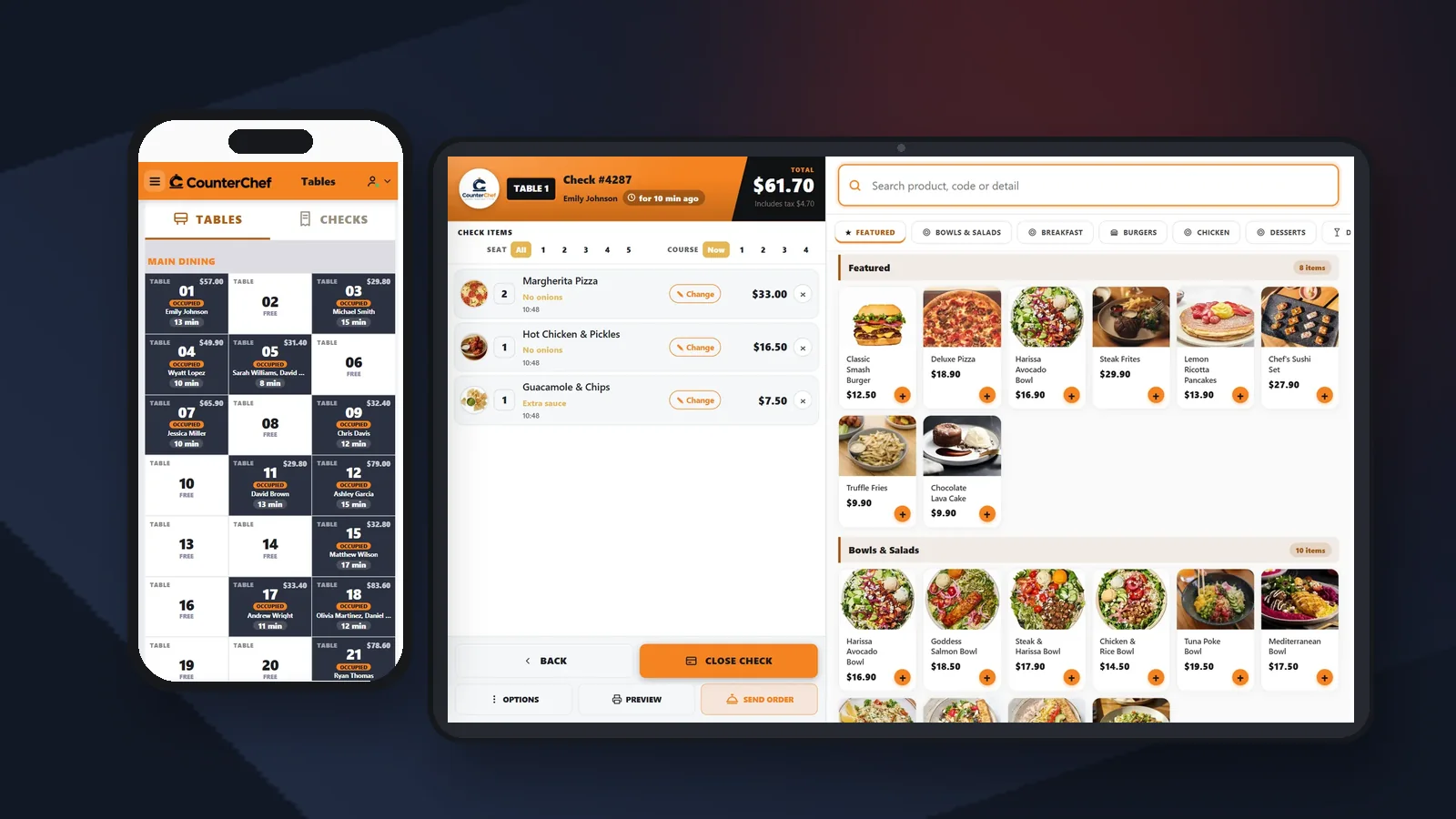
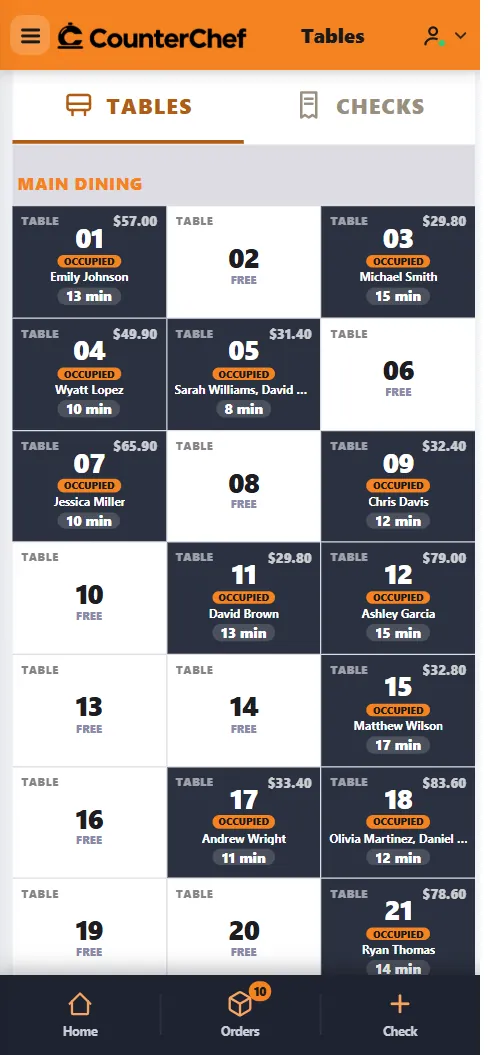
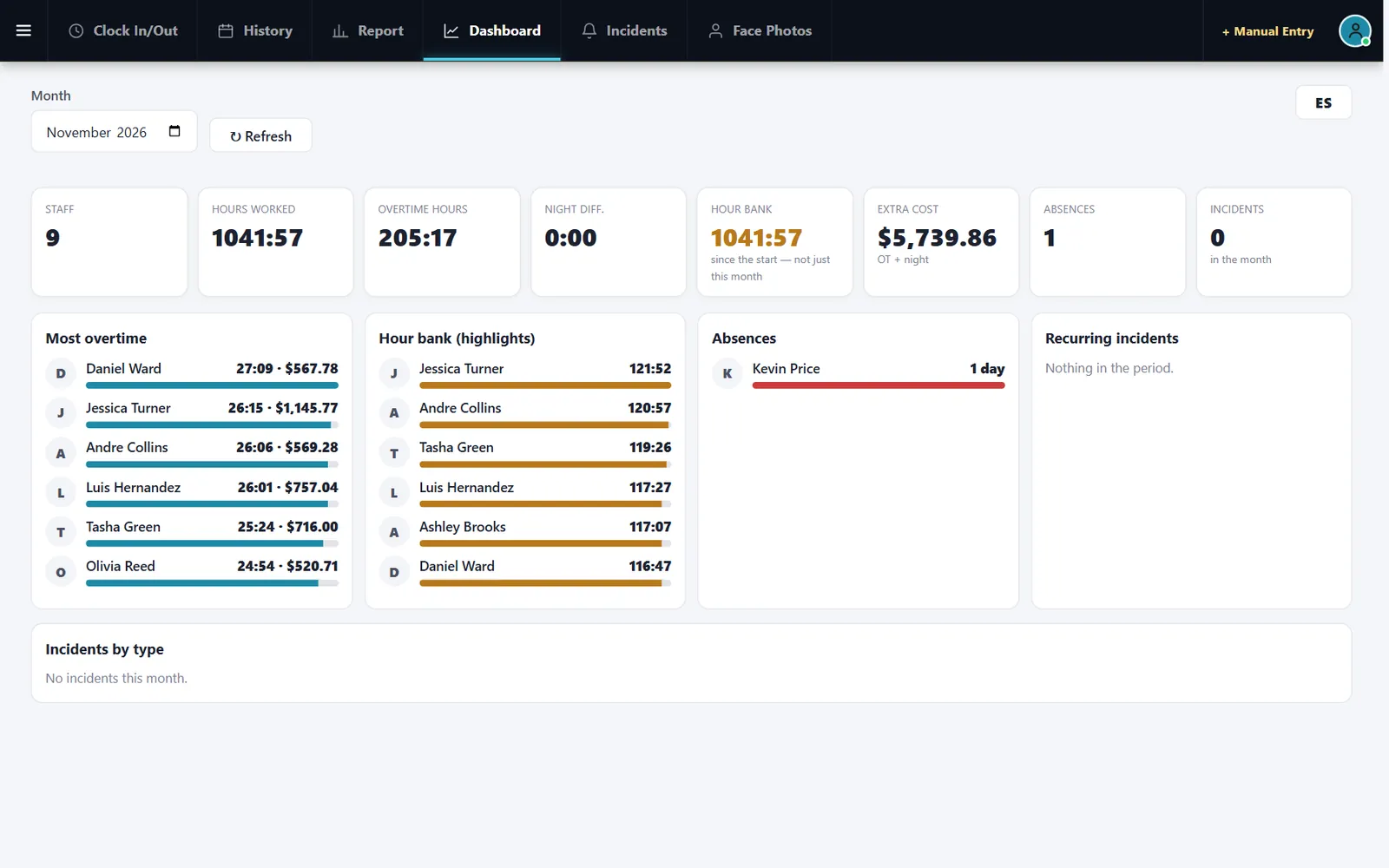
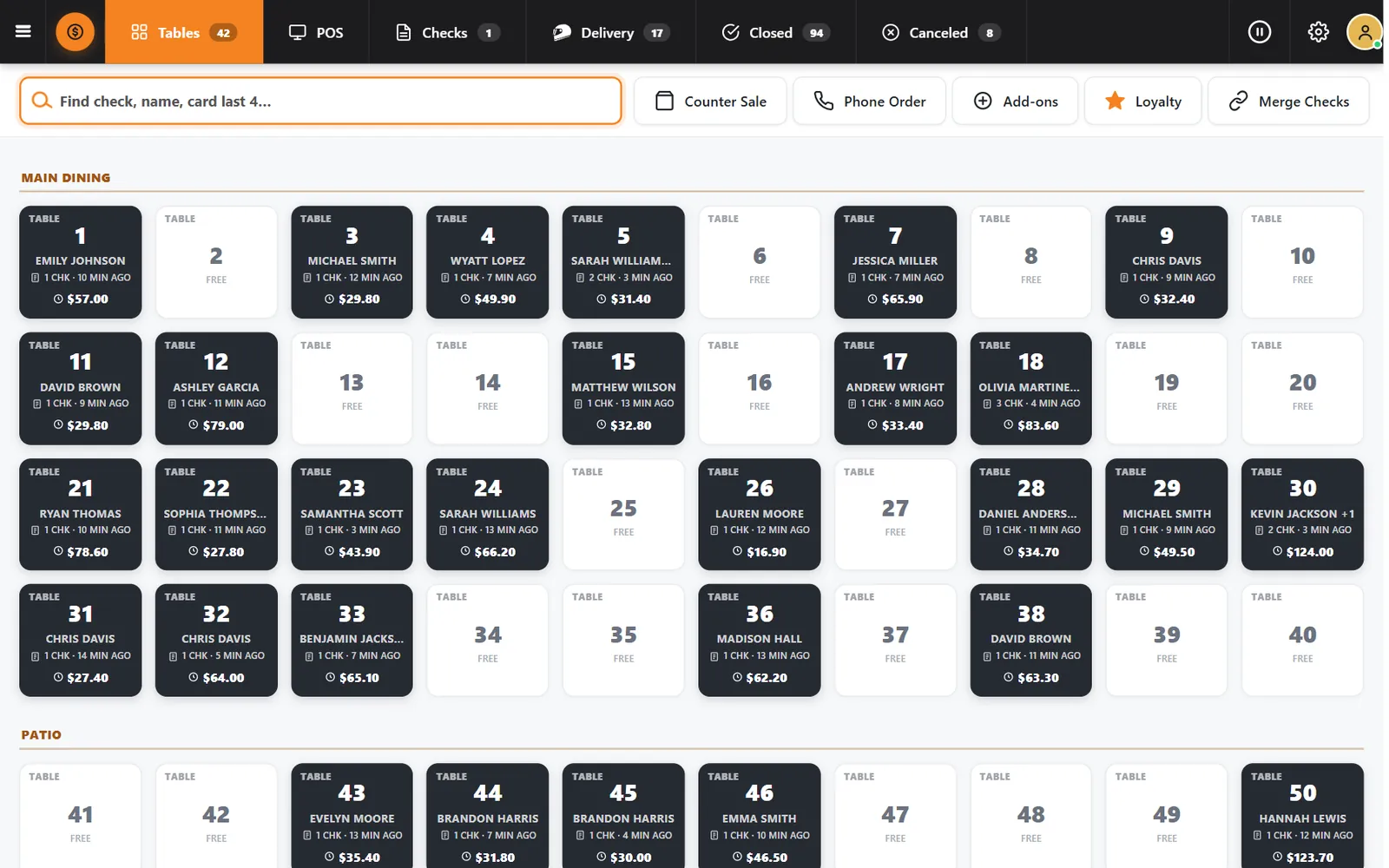
CounterChef runs on iPad, Android tablet, iPhone, and computer. It includes employee clock-ins on a tablet or computer, built-in scheduling, tip sharing by percentage or hours worked, server phones and a table map for dine-in, and reports by day, item, and employee.