
Restaurant Prime Cost: Make Monday the Day You Catch Margin Problems
Restaurant prime cost is the combined cost of the food and beverages you sell and the labor you pay to produce, serve, and sell them. Instead of waiting for month-end financial statements to reveal a problem, build a Monday routine around two numbers, your weekly sales and your weekly prime-cost dollars, and use the result to make small operational corrections before they become expensive habits.

Prime cost includes food, beverage, and the labor required to operate
Prime cost is the sum of two major operating expense categories:
- Cost of goods sold (COGS): Food, beverage, and other consumable ingredients used to generate sales.
- Labor cost: Wages and related employer labor expenses, depending on how your restaurant defines and tracks them.
The simplest formula is:
And the percentage formula is:
Use net sales consistently. For many restaurants, net sales means sales after discounts and refunds, excluding sales tax and tips collected for employees. Confirm your accounting treatment and keep the same definition from week to week.
What belongs in food and beverage cost?
Your food cost should account for ingredients consumed, not merely invoices paid that week. That distinction matters when you receive a large delivery on Thursday but still have much of it in the walk-in on Sunday.
A standard inventory calculation is:
Include the categories relevant to your menu:
- Food ingredients, including produce, meat, seafood, dairy, bakery items, and dry goods.
- Beverage ingredients and products, including coffee, soda, juices, beer, wine, and spirits where applicable.
- Condiments, cooking oils, garnishes, and other ingredients that are actually consumed.
- Consumables treated as cost of goods under your accounting policy, such as certain paper products.
Separate food and beverage if you can. A blended number can conceal a problem. A bar may be performing well while an expensive entrée is quietly losing margin.
What belongs in labor?
Labor is broader than the hourly wage printed on a schedule.
Depending on your reporting definition, labor may include:
- Hourly kitchen and front-of-house wages.
- Salaries for managers and working supervisors.
- Overtime.
- Employer payroll taxes.
- Workers' compensation and other employer-paid labor costs.
- Paid leave and benefits, if included in your chosen labor calculation.
Be consistent. If you compare a labor percentage that includes payroll taxes this week with one that excludes them next week, you haven't measured an improvement, you changed the measuring stick.
Tips paid by customers are generally not treated as restaurant labor expense in the same way as wages, but tip accounting and payroll treatment can vary. Confirm your approach with your payroll provider or accountant.
The Monday ritual starts with two numbers
The goal isn't to build a complicated accounting exercise every Monday morning. It is to create a repeatable snapshot of the week that just ended.
Pull these two figures first:
- Net sales for the previous Monday through Sunday.
- Total prime-cost dollars for that same period.
Prime-cost dollars are the actual combined amount spent or accrued for food and beverage consumed plus labor incurred during the period.
If you're using inventory counts, your food-cost calculation should reflect the inventory consumed, not simply the amount of invoices entered. If your inventory process isn't yet weekly, use your best consistent estimate and label it clearly. Don't pretend an estimate is an exact count.
Calculate the percentage, compare it with the previous week, and compare it with your own operating target.
Then ask one question: What changed?
A two-point increase doesn't automatically mean the restaurant is in trouble. A catered event, a holiday, a short week, a weather disruption, or a change in sales mix can affect the result. The percentage is a signal to investigate, not a verdict on your staff.
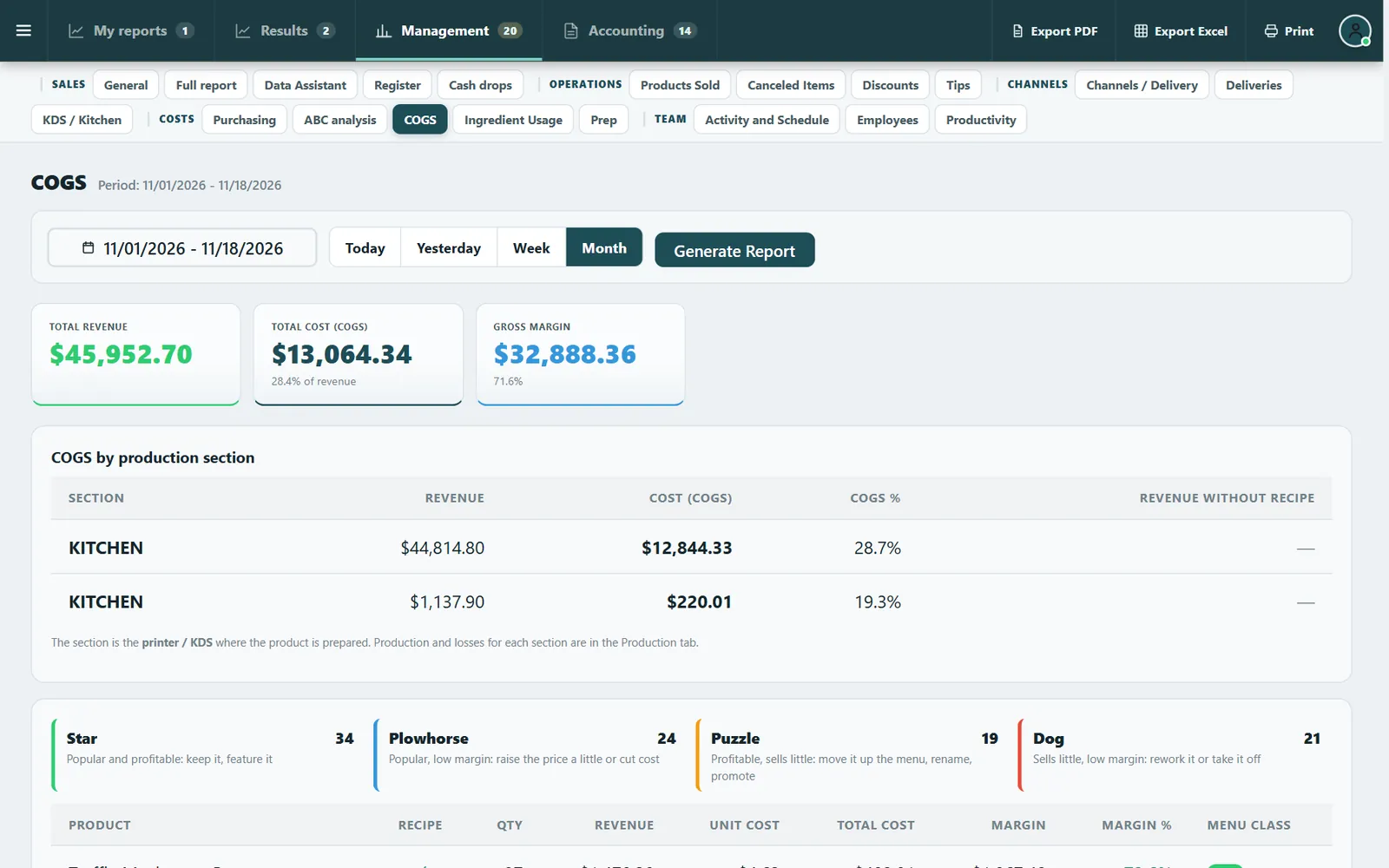
A worked example shows what a two-point drift actually costs
Every number in this example is hypothetical. It represents an imaginary independent restaurant with a weekly reporting period from Monday through Sunday.
Hypothetical baseline week
| Item | Hypothetical amount |
|---|---|
| Net sales | $40,000 |
| Food and beverage cost | $12,000 |
| Labor cost | $12,800 |
| Total prime cost | $24,800 |
| Prime cost percentage | 62.00% |
Calculation:
- Food and beverage: $12,000 ÷ $40,000 = 30.00%
- Labor: $12,800 ÷ $40,000 = 32.00%
- Prime cost: $24,800 ÷ $40,000 = 62.00%
Now imagine the following week, sales are unchanged but both categories drift upward.
Hypothetical drift week
| Item | Hypothetical amount |
|---|---|
| Net sales | $40,000 |
| Food and beverage cost | $12,400 |
| Labor cost | $13,200 |
| Total prime cost | $25,600 |
| Prime cost percentage | 64.00% |
The restaurant has moved from 62.00% to 64.00% prime cost.
The difference:
- Prime-cost dollars increased by $800.
- Prime-cost percentage increased by 2 percentage points.
- At the same $40,000 sales level, every additional percentage point represents $400.
- Two percentage points represent $800.
If that hypothetical $800 increase happened every week for four weeks, it would equal $3,200 in additional monthly prime-cost dollars, assuming the same weekly pattern.
That is why Monday matters. A small weekly drift can become a material expense before the owner notices it in the bank balance.
When prime cost rises one point, look for the source before cutting
One point is worth calculating in dollars before making any decisions.
Use this simple conversion:
For the hypothetical $40,000 sales week, one point equals $400.
If prime cost rises by one point, investigate whether it came from food, labor, or both.
If food cost moved, inspect what actually left the kitchen
Start with high-volume and high-cost ingredients. Don't begin by reviewing every SKU in the storeroom.
Ask:
- Did portion sizes change?
- Did a product arrive at a different price?
- Did the kitchen prep more than it sold?
- Were staff meals, comps, voids, or remakes recorded consistently?
- Did a dish become more popular without a recipe adjustment?
- Was there a stock count error or an unusual delivery timing issue?
A useful exercise is to choose the three ingredients with the largest dollar impact and physically inspect their portioning. Watch the line during service rather than relying only on recipe cards.
If the recipe calls for six ounces of protein but the actual plate consistently receives seven ounces, the issue isn't necessarily employee carelessness. The portion tool may be wrong, the plating standard may be unclear, or the station may be designed in a way that makes consistency difficult.
Fix the system before blaming the person.
If labor moved, look at demand by hour
Labor cost can rise while total weekly sales stay flat because the sales arrived at different times.
For example, a restaurant may have a slow Tuesday lunch, a busy Friday dinner, and a weak Sunday evening. A schedule built around average daily sales can leave the restaurant overstaffed in one period and understaffed in another.
Review sales by hour against the actual clock-in and clock-out times.
Look for:
- Employees clocking in well before their stations are ready.
- Overlapping shifts that aren't justified by prep or service demand.
- A manager staying late because closing duties aren't divided clearly.
- A slow day with the same staffing pattern as a busy day.
- Overtime caused by an avoidable scheduling pattern.
The answer isn't to remove a person from a busy shift simply because the labor percentage looks high. The answer is to put the right number of people in the right hours and make sure the workload is realistic.
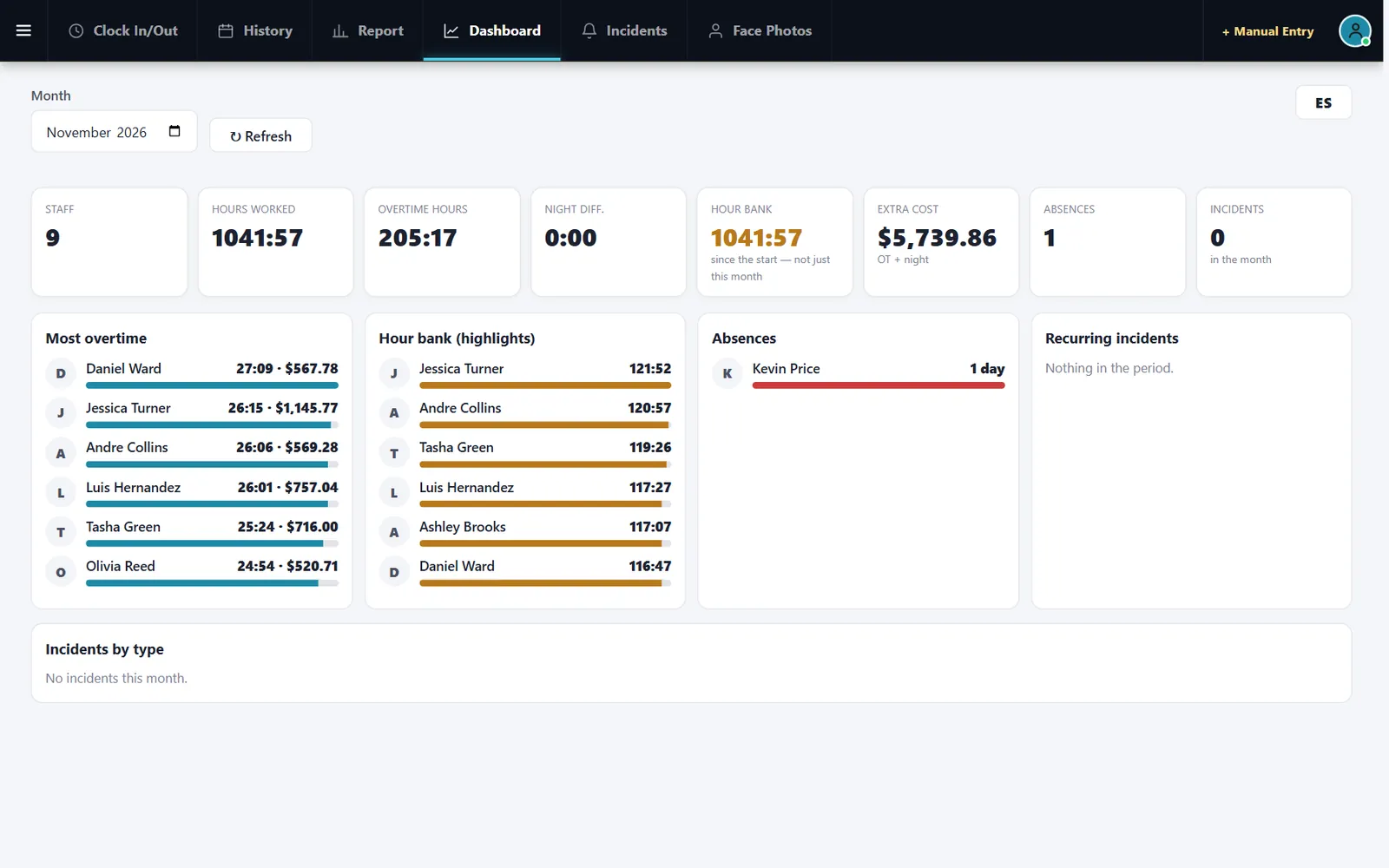
When prime cost rises two points, don't attack both sides at once
A two-point jump deserves a structured review. If food cost and labor both moved, the owner needs to know which change is responsible for the biggest dollar impact.
Using the hypothetical drift week:
- Food cost increased by $400, from $12,000 to $12,400.
- Labor increased by $400, from $12,800 to $13,200.
- The combined increase was $800.
Make two separate action lists. Food actions belong with the kitchen lead; labor actions belong with the scheduling manager. Give each action an owner and a date to review it.
For example, a food action might be to weigh the protein portion of one popular entrée during three services. A labor action might be to move a scheduled start time 30 minutes later on a historically slow day, while preserving adequate prep time and coverage.
Don't make five changes at once. If you cut portions, change vendors, reduce prep, and cut shifts in the same week, you won't know which change helped or which created a new problem.
Four practical experiments you can run this week
These are small operating tests, not permanent changes to the menu or staffing model. Each one can be evaluated over a few shifts.
1. Run a "three plates, three weights" portion check
Pick three dishes with expensive ingredients or high sales volume. During a normal service, weigh the finished portion of each dish three times.
Record the recipe standard, the actual weights, and the difference. If the results vary, have the station lead demonstrate the correct portion and repeat the test during the next service.
The point is not to turn the kitchen into a laboratory. It is to make the standard easy to reproduce with the tools already on the station.
A scale, a portion scoop, or a clearly marked container may solve the problem more reliably than a new written rule.
2. Create a 15-minute "prep-to-sales" reconciliation
At the end of a busy service, compare the prep quantity of one item with the number of portions sold and the quantity remaining.
Choose an item where prep is relatively easy to count, such as soup, a batch of sauce, or a popular side.
For example, if the kitchen prepared 40 portions, sold 27, and has 5 portions remaining, the remaining 8 portions need an explanation. They may have been staff meals, waste, comps, remakes, or an inaccurate count.
This doesn't require perfect tracking of every ingredient. It is a focused check that helps reveal where the kitchen's production assumptions are drifting.
3. Schedule around the "first 30 and last 30"
Look at the first and last 30 minutes of each shift.
Ask whether the opening team is arriving earlier than necessary, whether closing tasks are being duplicated, and whether employees are waiting for another person to finish before they can leave.
Don't remove essential cleaning, setup, safety checks, or handoff duties. Instead, sequence tasks so employees can complete them without unnecessary overlap.
A simple closing assignment sheet can clarify who owns the final walk-through, restocking, cash procedures, cleaning, and shutdown. When responsibilities are clear, the manager is less likely to keep an entire team on the clock while waiting for one unfinished task.
4. Build a "margin rescue" list of five menu items
Choose five menu items that matter most to your sales or ingredient spend. For each, review:
- Current selling price.
- Recipe cost based on actual ingredient prices.
- Portion standard.
- Prep yield.
- Frequency of waste or remake.
- Whether the item creates unusual labor during peak service.
You may find that an item doesn't need a price increase. It may need a better prep method, a revised garnish, a more reliable supplier specification, or a plating adjustment.
If an item consistently creates slow tickets or complicated prep, consider whether it belongs on the menu in its current form. A menu item can have acceptable ingredient cost but still be operationally expensive.
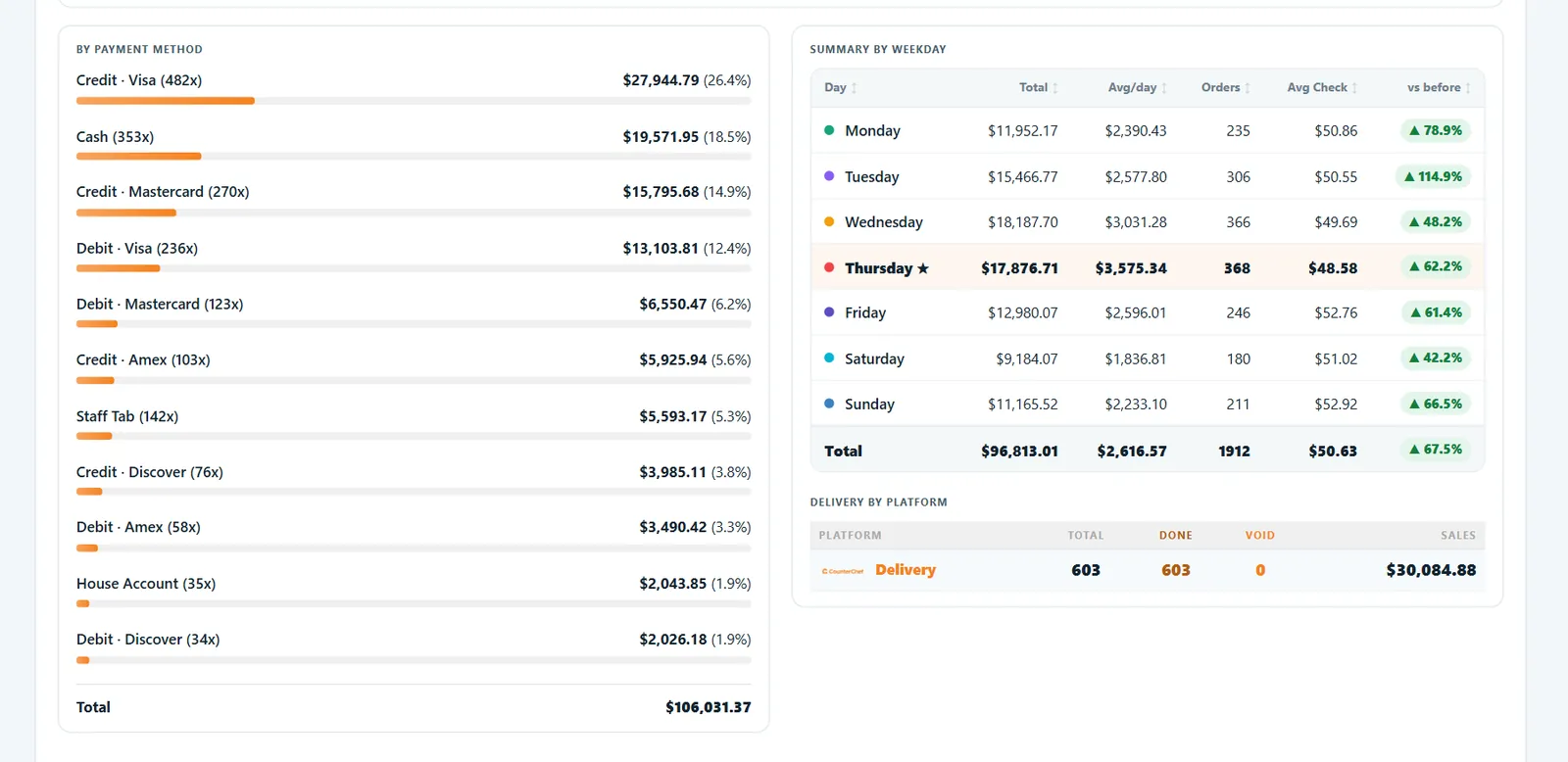
Don't improve the percentage by making the restaurant worse
Prime cost is useful, but it can be manipulated unintentionally by actions that damage the guest experience.
Avoid these shortcuts:
- Cutting portions without checking whether the dish still meets the menu promise.
- Removing scheduled staff when the remaining team cannot serve guests properly.
- Skipping cleaning, maintenance, or prep.
- Buying lower-quality ingredients without tasting and testing them.
- Pushing employees to work off the clock.
- Ignoring overtime, break requirements, wage rules, or other labor obligations.
Labor and scheduling rules vary by state and city. Confirm applicable requirements with your local labor authority or a qualified professional before changing policies.
A healthy reduction comes from eliminating unnecessary waste, improving execution, making schedules fit demand, and selling a menu that the kitchen can execute consistently.
Use this Monday checklist to turn the percentage into action
Copy this into your weekly manager meeting notes. The goal is to finish the review in roughly 15-20 minutes once the figures are ready.
Monday Prime Cost Review
Reporting period: Monday-Sunday
| Metric | This week | Last week |
|---|---|---|
| Net sales | $________ | $________ |
| Food & beverage cost | $________ | $________ |
| Labor cost | $________ | $________ |
| Prime-cost dollars | $________ | $________ |
| Prime-cost percentage | ________% | ________% |
Review questions
- Are sales and costs from the same dates?
- Was inventory counted or estimated consistently?
- Did food cost, labor, or both move?
- What was the dollar value of the change?
- Was there an unusual event, menu mix, staffing issue, or delivery timing?
- What is the one operational change we will test this week?
- Who owns it?
- When will we review the result?
Action owner: ____________________
One action this week: ____________________
Review date: ____________________
A useful meeting ends with one specific task, not a vague promise to "watch costs."
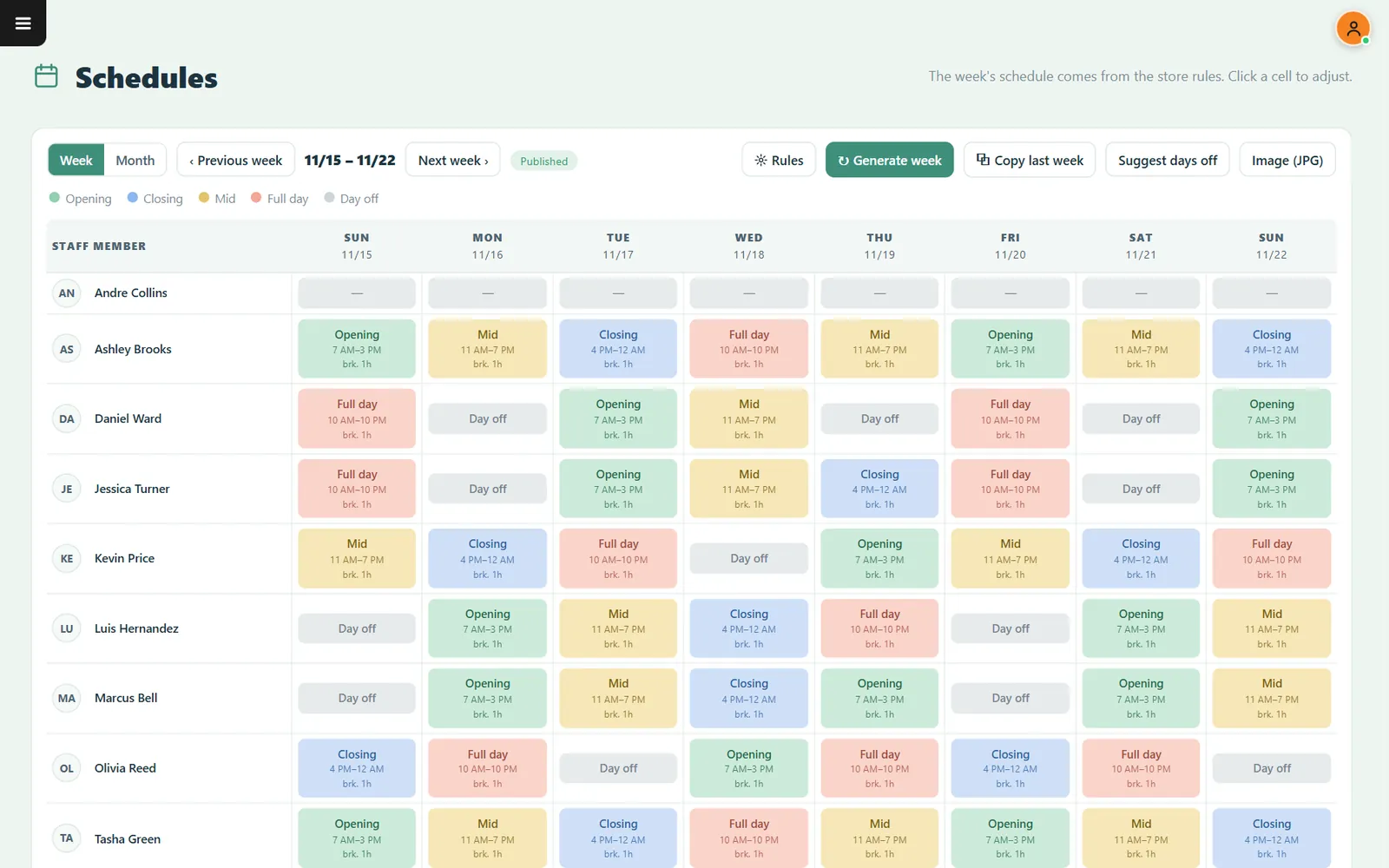
Establish a target that fits your restaurant, not somebody else's spreadsheet
Prime-cost targets vary by concept, service style, location, menu mix, rent, wage structure, and operating model. A full-service restaurant, a bakery, a bar, and a fast-casual operation do not have identical cost structures.
Ranges found online are often presented as if every restaurant should hit the same number. Treat any general range as a rule of thumb, not a universal standard.
Start with your own financial history. Review several comparable weeks, ideally separating unusual periods from normal operating weeks. Look at the business's actual contribution after prime cost and whether the remaining dollars can cover occupancy, utilities, insurance, repairs, administrative costs, debt obligations, and other expenses.
If you are newly opened, use your budget as a starting point, but revise it as real operating patterns emerge.
The objective isn't to chase the lowest prime-cost percentage. It's to find a cost structure that allows your restaurant to serve its guests consistently and remain financially viable.
Use your operating system to make Monday's numbers easier to review
When your sales, employee hours, menu costs, and inventory information are scattered across different records, the Monday ritual becomes another administrative chore.
CounterChef runs on iPad, Android tablet, iPhone, and computer. It includes a kitchen display with ticket timers, table maps and server phones for dine-in, employee clock-ins on a tablet or computer, built-in scheduling, tip sharing by percentage or hours worked, inventory and recipe costing that show the cost of each dish, loyalty points and gift cards, sales tax rates with up to three decimals and by category, and reports by day, item, and employee. Restaurants can also use their own online menu for pickup and delivery, with delivery areas set by ZIP code, each with its own fee and estimated time.
The value of a reporting workflow is that the owner can connect sales patterns, menu performance, staffing, and daily execution to the same weekly conversation. The software doesn't replace counting inventory, observing service, or making decisions; it helps keep the underlying information organized.