
Restaurant Loyalty Program Ideas: Rewards That Protect Your Margins and Bring Guests Back
A restaurant loyalty program should give guests a reason to choose your restaurant again without quietly giving away the profit you worked to earn. The best programs are built around repeat visits, carefully priced rewards, and a simple way to tell whether customers are spending more often, not simply collecting discounts they would have received anyway.
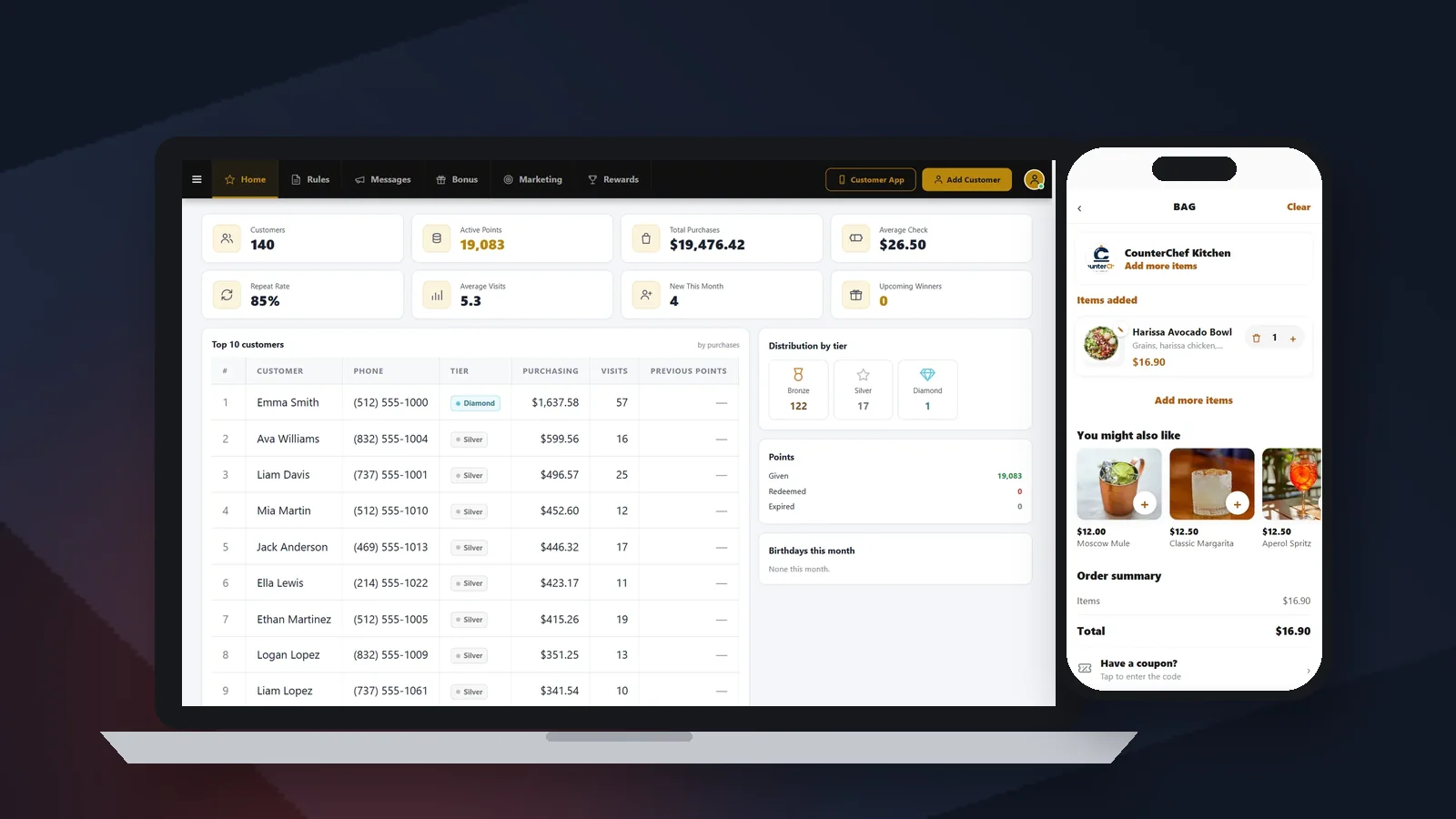
Start with the behavior you want to change, not the reward
Before choosing points, stamps, discounts, or freebies, decide what behavior your program is supposed to encourage.
An independent restaurant might want to:
- Bring lunch guests back one more time each month.
- Turn weekend-only customers into weekday regulars.
- Encourage guests who order one entree to add a drink or dessert.
- Increase the number of direct pickup orders.
- Give first-time guests a reason to return within two weeks.
- Reward regulars without discounting every visit.
- Fill quieter shifts without giving rewards during already-busy periods.
These are different problems. A program designed to increase visit frequency should not necessarily reward the same behavior as one designed to raise average check.
Write one objective in plain language: "We want customers who currently visit once a month to visit twice." Then decide what customer action qualifies, how you'll reward it, and how you'll measure the change.
Avoid launching a program simply because customers ask whether you have one. A loyalty system that has no clear objective can become another expense to reconcile, explain, and honor.
Choose a loyalty structure your staff can explain in ten seconds
Most independent restaurants don't need a complicated rewards catalog. They need something customers understand without asking a server to explain five rules.
Visit-based rewards
One qualifying visit earns one stamp. After a defined number of visits, guests receive a reward.
Best for: coffee shops, sandwich shops, bakeries, casual lunch restaurants, and concepts with predictable repeat visits.
Spend-based points
Guests earn points based on eligible dollars spent and redeem them for menu items or discounts.
Best for: restaurants with varying check sizes, families, and customers who order different combinations of items.
Tier-based loyalty
Customers unlock additional benefits after reaching spending or visit milestones.
Best for: restaurants with a meaningful base of frequent regulars and enough operational consistency to deliver the promised perks.
Occasion-based rewards
Birthday treats, anniversary offers, welcome-back rewards, or a special perk after a customer's first return visit.
Best for: creating a reason to return at a specific moment rather than discounting all year.
You can combine structures, but every additional rule makes the program harder to explain and increases the chance that a customer or employee misunderstands it.
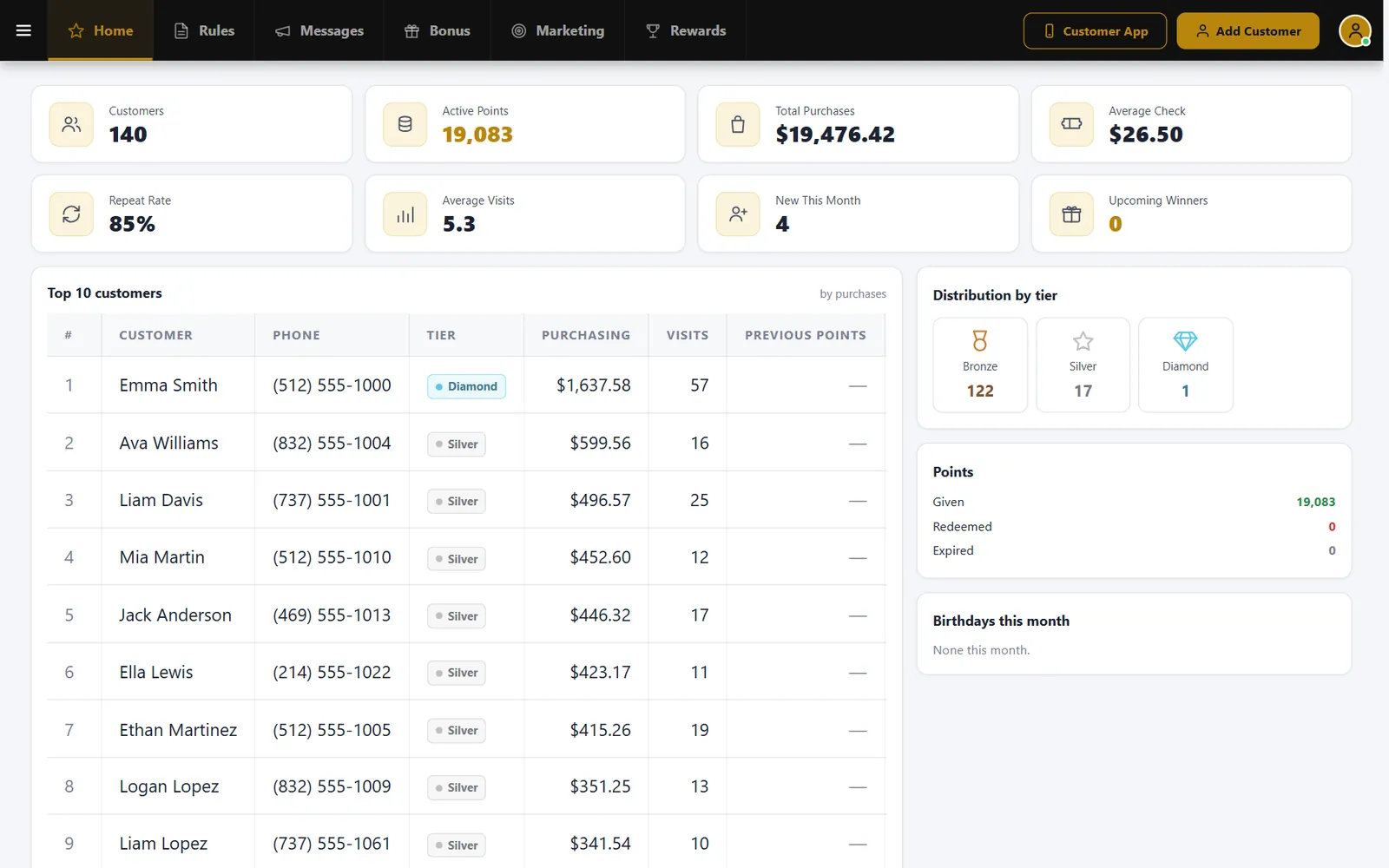
Price every reward using the cost of what the guest actually receives
The biggest mistake in loyalty design is pricing a reward using its menu price instead of its actual cost.
A $12 reward may not cost you $12 in ingredients, but its cost is not automatically negligible. You must also account for the sales you gave up if the customer would have purchased that item anyway.
Start with this formula:
Reward cost = ingredient cost + incremental packaging or labor cost + other variable costs
Then calculate the contribution margin on the sales that earned the reward.
Contribution margin = eligible sales − variable costs associated with those sales
For loyalty purposes, be particularly careful about the reward's redemption conditions. A reward that can be used on any item is harder to control than a reward restricted to a low-cost side, a selected beverage, or a specific item with a healthy margin.
A good reward can have a high perceived value while costing relatively little to fulfill. A small side dish, a selected drink, a topping, or an upgrade may feel generous without sacrificing the contribution of your most expensive entree.
Three loyalty program designs with the math worked out
All numbers in the following examples are hypothetical. They are illustrations of the calculation method, not industry benchmarks or expected results.
Design 1: Buy nine qualifying visits, receive a selected item
Suppose a neighborhood lunch restaurant wants to reward frequency.
Hypothetical assumptions:
- Average qualifying visit sales: $18.00
- Food and other variable costs per qualifying visit: $7.20
- Contribution per qualifying visit: $10.80
- Required visits: 9
- Reward menu value: $6.00
- Reward ingredient and variable fulfillment cost: $2.10
The customer earns the reward after generating:
9 visits × $18.00 = $162.00 in eligible sales
Contribution before reward:
9 × $10.80 = $97.20
Contribution after reward cost:
$97.20 − $2.10 = $95.10
Reward cost as a percentage of qualifying sales:
$2.10 ÷ $162.00 = 1.30%
This reward is relatively inexpensive in this hypothetical model. The important question is whether it actually creates additional visits.
If the customer would have visited nine times anyway, the program has paid for a reward without generating incremental business. If it causes the customer to visit an additional time, the extra contribution may comfortably cover the reward.
Operator improvement: Restrict the free item to a specific list of sides, desserts, or beverages with known costs, and make redemption require a qualifying purchase.
Design 2: Earn points on dollars spent, redeem for a menu reward
Suppose a casual restaurant awards 1 point per $1 spent and offers a $10 reward for 200 points.
Hypothetical assumptions:
- Points earned: 1 per eligible $1
- Reward threshold: 200 points
- Reward menu value: $10.00
- Reward food cost: $3.00
- Eligible sales needed to earn reward: $200.00
- Average contribution margin before loyalty rewards: 60%
Contribution from the $200 in eligible sales:
$200 × 60% = $120.00
Reward cost:
$3.00
Contribution remaining after reward cost:
$120 − $3 = $117.00
Reward cost relative to eligible sales:
$3 ÷ $200 = 1.50%
This calculation is encouraging, but the redemption menu matters. If the $10 reward can be used toward an item that costs $8.50 in ingredients, the economics change substantially.
The program's rules should specify whether points accrue on tax, tips, redeemed amounts, discounts, gift cards, or excluded items. Keep the calculation simple enough that employees can answer customer questions consistently.
Design 3: A two-tier program for regulars
Suppose a restaurant creates two levels: Regular and Neighborhood Favorite.
Hypothetical assumptions:
- Regular tier: $300 in eligible spending over a rolling period.
- Favorite tier: $600 in eligible spending over that same period.
- Regular benefit: a selected reward with a variable cost of $3.00.
- Favorite benefit: two selected rewards with a combined variable cost of $6.00.
- Contribution margin before rewards: 60%.
For the Regular tier:
$300 × 60% = $180.00 contribution
After reward:
$180 − $3 = $177.00
For the Favorite tier:
$600 × 60% = $360.00 contribution
After rewards:
$360 − $6 = $354.00
In this hypothetical model, both tiers have modest reward costs compared with their eligible spending. But tier benefits should not become permanent entitlements that are expensive to serve or impossible to explain.
Instead of unlimited discounts, consider priority access to a seasonal special, a selected complimentary item, or an invitation to a tasting. A tier should make the guest feel recognized, not create a promise your team resents fulfilling.
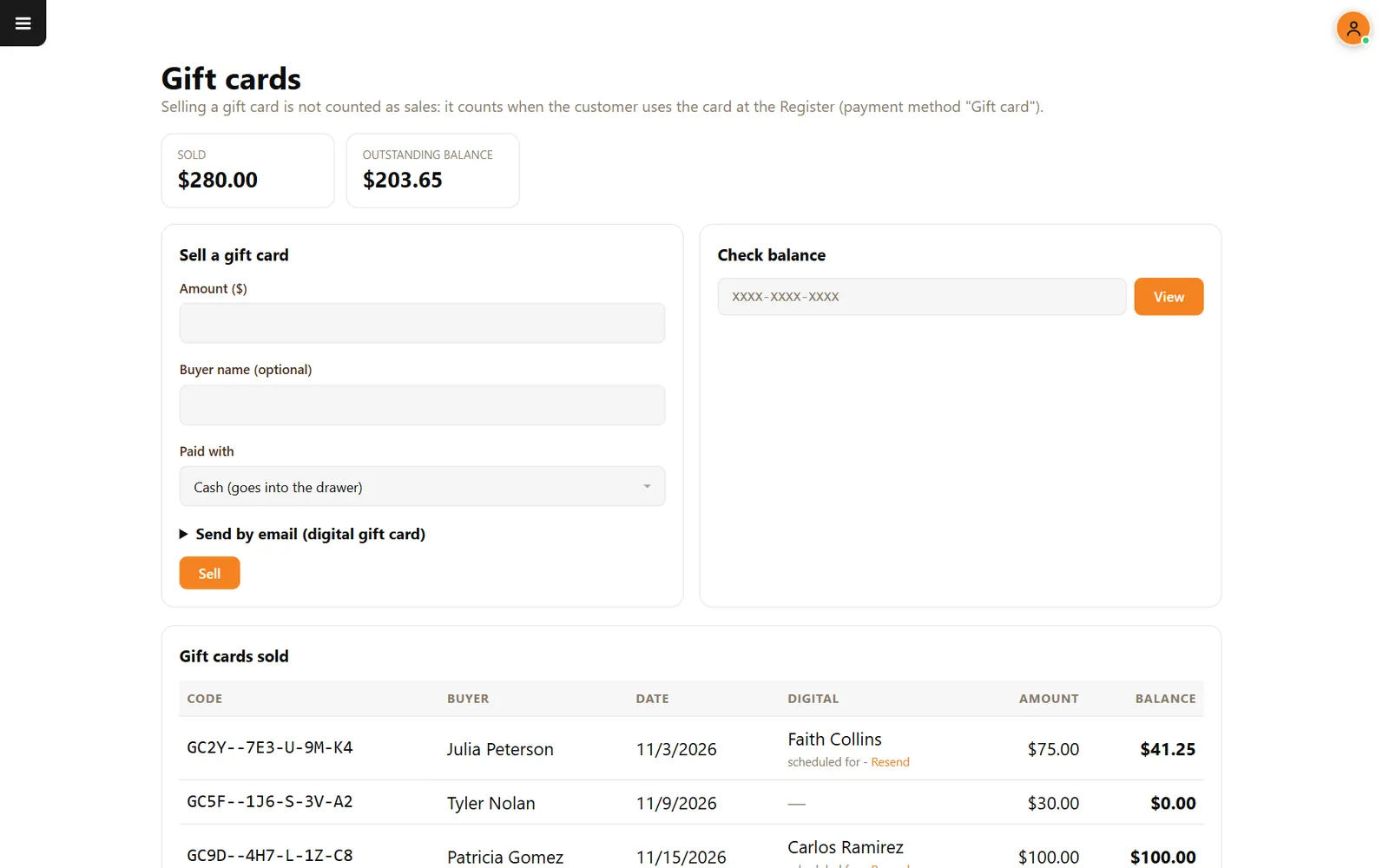
Use rewards to steer guests toward items with better contribution
A reward should not automatically be your best-selling entree. It should be an item that makes the guest happy and makes sense for your kitchen and margin.
Build a reward shortlist from your recipe costs:
| Reward candidate | Hypothetical menu value | Hypothetical variable cost | Why it may work |
|---|---|---|---|
| House side | $5 | $1.50 | Low cost, easy to fulfill |
| Dessert | $7 | $2.40 | Adds an occasion and perceived value |
| Selected beverage | $4 | $1.10 | Encourages another visit |
| Premium topping | $3 | $0.80 | Creates an upgrade experience |
| Signature entree | $16 | $6.80 | Strong perceived value, higher reward cost |
These figures are illustrative, not actual restaurant costs.
Before adding a reward, check its portion size, ingredient availability, preparation time, packaging needs, and whether it slows service during peak hours. A reward that requires a separate station or complicated modification may cost more operationally than its recipe suggests.
A practical rule: use a reward menu rather than an unrestricted dollar credit when you can. Give customers a few appealing choices while protecting the items that carry higher costs.
Set redemption rules before your first customer earns points
The rules need to be clear enough for guests to understand and staff to apply without calling a manager.
Decide these details before launch:
- What purchases qualify?
- Does a visit require a minimum purchase?
- Can points be earned on discounted purchases?
- Are points earned on tax or tips?
- Can customers earn points on gift card purchases?
- Can rewards be combined with other promotions?
- Can a reward be redeemed on pickup orders?
- Can rewards be redeemed during peak periods?
- Do points expire, and if so, when?
- Can points or rewards be transferred?
- What happens when a customer refunds an eligible purchase?
- Is there a limit to how many rewards can be redeemed per transaction?
Keep restrictions reasonable. A loyalty program with a long list of exclusions feels less like a benefit and more like a contract.
If you choose expiration dates, communicate them clearly and confirm applicable state and local rules regarding gift cards, promotional credits, stored value, and unclaimed balances. Have a qualified professional review the program where necessary.
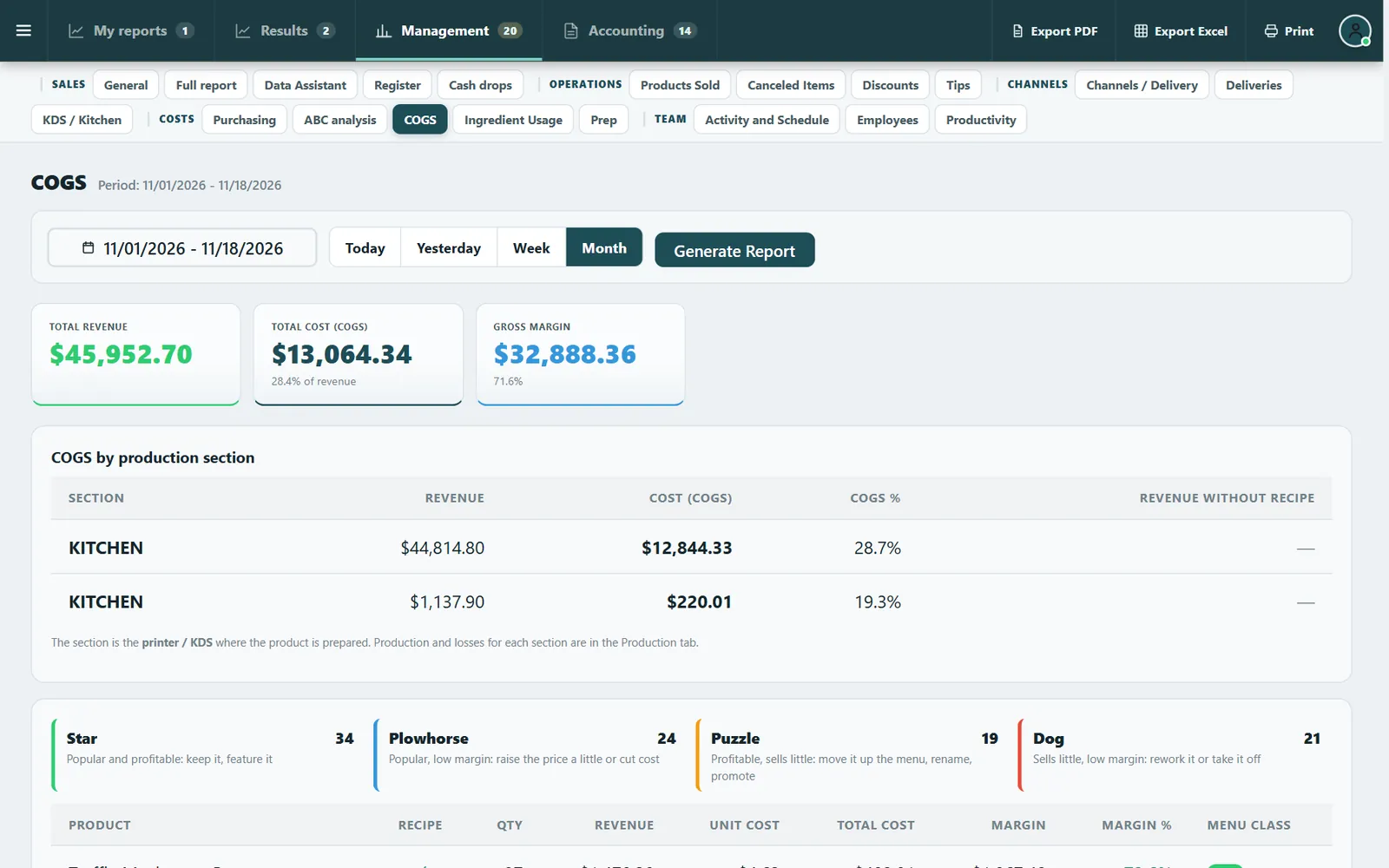
Make the first reward reachable without making the program unprofitable
A customer who signs up and sees that the first reward requires months of visits may never participate.
The first milestone should feel attainable for your normal customer. But don't make it so easy that the reward is issued before the program has generated enough contribution to pay for it.
Think about the gap between the customer's first visit and their second visit. A welcome offer or small milestone reward can be more useful than a large reward that takes a year to earn.
Consider a two-stage approach:
- A small first-return incentive after the initial purchase.
- A more valuable reward after several qualifying visits.
- An optional milestone for regulars who continue beyond the first reward.
This structure creates more than one reason to return. It also lets you evaluate whether the first reward is actually changing behavior.
Try three loyalty experiments this week that don't require a major launch
Most loyalty articles focus on choosing a platform and announcing the program. Owners can learn a lot before investing time in a full rollout.
1. The slow-shift reward test
Pick one genuinely slow daypart. Offer a selected reward only when a guest visits during that period.
For example, a hypothetical restaurant could test a complimentary $1.40-cost side with a qualifying weekday lunch purchase, redeemable Tuesday through Thursday from 2 p.m. to 4 p.m.
Record the number of redemptions, sales during the period, and contribution after reward cost. Compare with a similar period without the offer, accounting for differences such as weather, holidays, or local events where possible.
The point is not to give away food during a shift you already fill. It's to test whether the reward changes demand.
2. The "one more visit" invitation
At checkout, invite a customer who has just completed their first visit to return within a defined period.
A ready-to-use staff script:
"Thanks for stopping in today. We're trying to make it easier for first-time guests to come back. If you visit us again before [date], we'll have [selected reward] waiting with your next qualifying order. Would you like to join?"
The offer should have a specific end date and a clear qualifying purchase. Track how many offers were given and how many resulted in a return visit.
This is useful because it tests the timing of the second visit rather than simply measuring signups.
3. Reward the item you need guests to discover
Pick one dish that has healthy contribution but low sales, perhaps a seasonal special or a side customers rarely order.
Rather than discounting your popular entree, let guests unlock a small sample, side, or upgrade related to that dish after qualifying purchases.
Track whether the promoted dish appears on reward redemptions and whether customers buy it again at full price later.
If the item needs a long explanation, poor preparation consistency, or an ingredient you struggle to stock, don't use it as a reward. Loyalty should help your operation, not add a new problem.
Train the team to invite guests without making checkout awkward
The program will fail if employees either forget it or pressure every customer to sign up.
Give staff one sentence to use consistently. Keep it short, make participation optional, and avoid asking for personal information before explaining the benefit.
Example:
"Would you like to earn rewards when you visit? You earn [points or stamps] and can use them for [specific reward]."
Employees should know:
- How to enroll someone.
- How to check the customer's reward balance.
- How to apply a reward correctly.
- What items are excluded.
- What to do if a reward is missing.
- How to handle refunds or corrections.
- Who can approve exceptions.
Never make employees improvise reward substitutions. If an item is unavailable, provide an approved alternative with a similar or lower fulfillment cost, or explain when it will be available again.
Measure incremental profit, not enrollment totals
Signups are a useful operational metric, but they don't prove the program is profitable.
Track the following each month:
| Metric | What it tells you |
|---|---|
| New loyalty members | Whether enrollment is growing |
| Active members | Whether customers are actually participating |
| Repeat visit rate | Whether members return |
| Time between visits | Whether return behavior is changing |
| Average check | Whether members spend more per visit |
| Reward redemption rate | Whether rewards are being used |
| Reward cost | What the restaurant is giving up |
| Contribution from member sales | Whether sales leave enough margin |
| Incremental contribution | Whether the program created additional profit |
The most useful comparison is between participating customers' behavior before and after joining, or between a test group and a reasonably comparable group that did not receive the offer.
Be careful with attribution. A customer may sign up during a visit they would have made anyway. The entire check from that visit is not automatically incremental loyalty revenue.
A simplified program evaluation:
Incremental contribution = estimated additional contribution from changed customer behavior − reward costs − program operating costs
For example, if a hypothetical promotion generates $500 in additional contribution, costs $120 in rewards, and requires $80 in additional operating effort, then:
$500 − $120 − $80 = $300 estimated incremental contribution
All three numbers are hypothetical. Your estimate of additional contribution should reflect a defensible comparison, not simply total sales from members.
Create a weekly loyalty review that takes fifteen minutes
Don't wait until the end of the year to discover that customers are earning rewards faster than you expected.
Every week, review:
- Number of new members.
- Number of returning members.
- Rewards issued.
- Rewards redeemed.
- Total cost of redeemed rewards.
- Which reward items were most popular.
- Whether redemptions occurred on targeted days.
- Any customer or employee confusion.
- Any reward that caused inventory, prep, or service problems.
Make one decision from the review: keep the program as-is, adjust the reward, change the qualifying behavior, or pause the offer.
A loyalty program should be a controlled experiment that improves as you learn. Don't make five changes at once, or you won't know which one affected the result.
Use this launch checklist before you enroll your first guest
Copy this checklist into your opening or weekly management notes.
| Checklist | Complete |
|---|---|
| Program has one clearly defined business goal | ☐ |
| Reward cost is calculated from actual recipe cost | ☐ |
| Reward menu protects high-cost items | ☐ |
| Qualifying purchase rules are written | ☐ |
| Points, stamps, or visit milestones are easy to explain | ☐ |
| Redemption restrictions are clearly disclosed | ☐ |
| Refund and correction procedures are documented | ☐ |
| Staff have a short enrollment script | ☐ |
| Staff know how to redeem rewards | ☐ |
| First milestone is achievable for regular guests | ☐ |
| Rewards have been tested for kitchen impact | ☐ |
| Baseline repeat visits and sales have been recorded | ☐ |
| A weekly review owner has been assigned | ☐ |
| A date has been set to evaluate the program | ☐ |
If several boxes remain unchecked, delay the launch. A smaller, well-run program is more valuable than a complicated program that employees cannot explain.
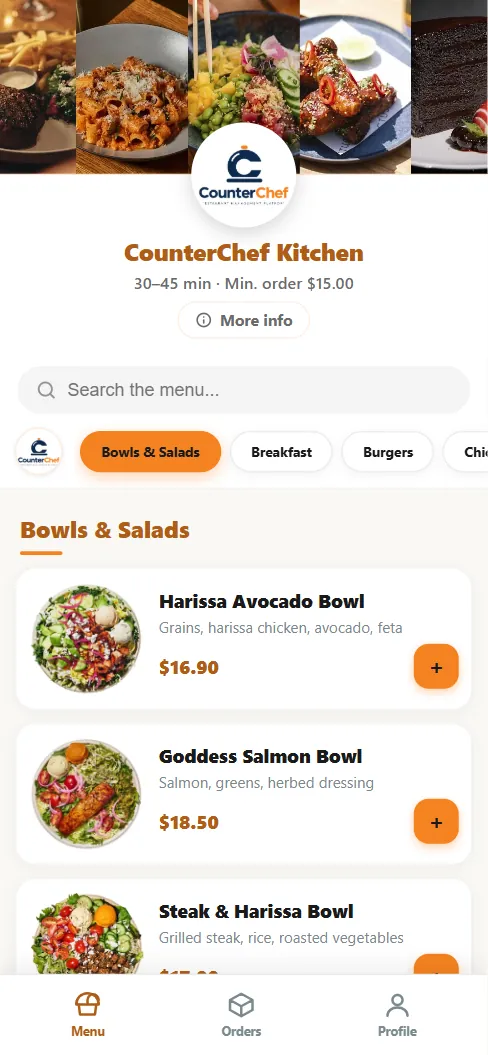
CounterChef can keep loyalty and restaurant operations together
CounterChef runs on iPad, Android tablet, iPhone, and computer. It includes loyalty points and gift cards, inventory and recipe costing that show the cost of each dish, reports by day, item, and employee, a kitchen display with ticket timers, a table map and server phones for dine-in, an online menu for pickup and delivery with delivery areas by ZIP code, each with its own fee and estimated time, schedules and employee clock-in on a tablet or computer, tip sharing by percentage or hours worked, and sales tax rates with up to three decimals and by category.