
Restaurant Gift Cards: Build a Year-Round Sales Plan That Brings Guests Back
Restaurant gift cards can bring in cash before a meal is served, introduce new guests to your restaurant, and help fill seats during slower periods, but only when you plan how to sell, redeem, and account for them. The goal is to build a gift card calendar that captures holiday demand, turns outstanding balances into visits during quiet months, and keeps the accounting clean enough that you know what the money actually means.
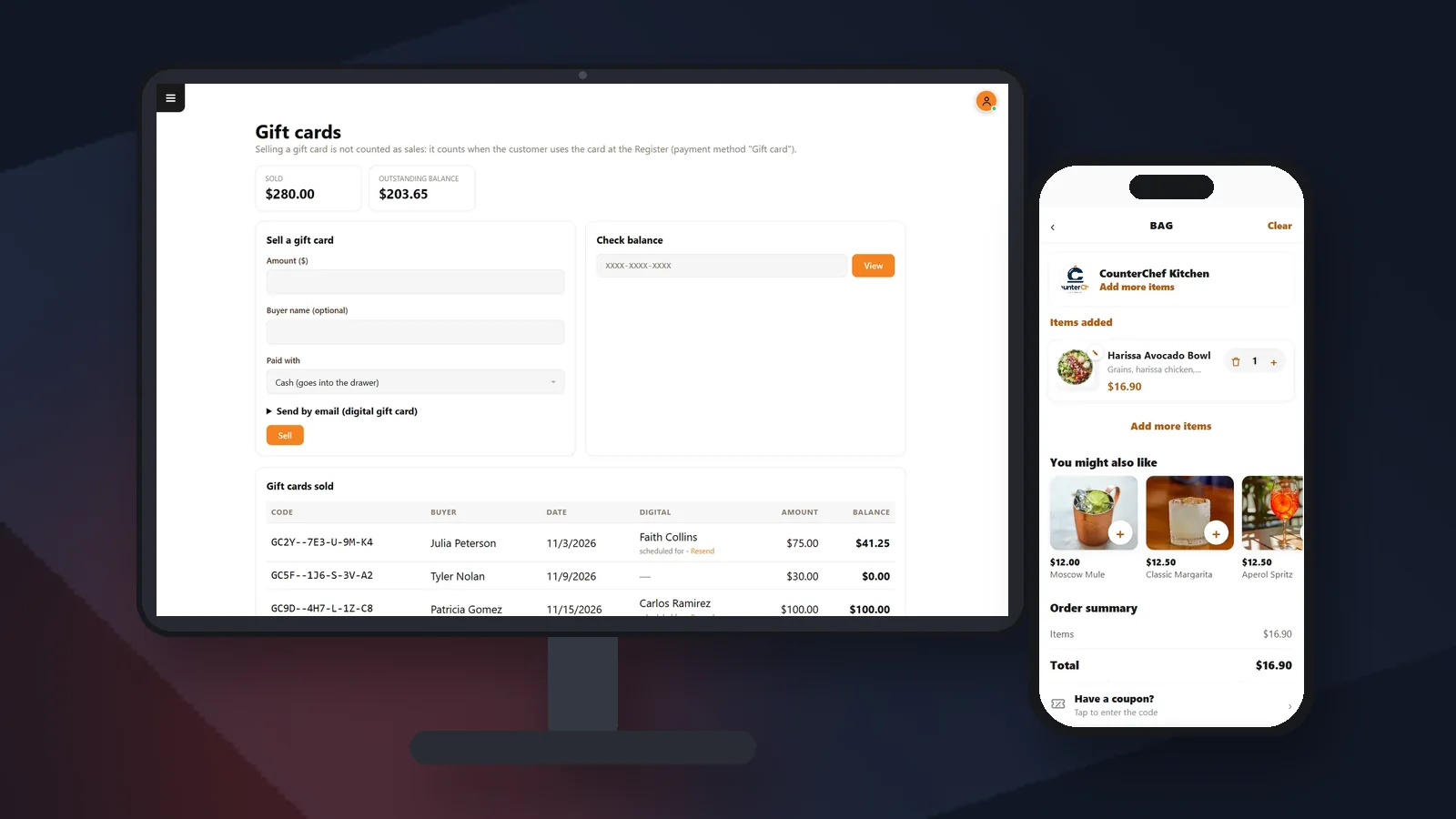
Treat gift cards as a year-round sales channel, not a holiday promotion
Most independent restaurants see gift card demand cluster around holidays, birthdays, graduations, anniversaries, and corporate gifting. December may be the biggest opportunity, but planning only for December leaves money on the table.
A gift card is a sale of a future dining experience. It creates cash today, but it also creates an obligation to provide food, service, and hospitality later.
Plan your gift card year around three objectives:
- Sell: Capture purchases when people are actively looking for gifts.
- Redeem: Encourage recipients to visit when you have capacity, especially in slower periods.
- Repeat: Give the recipient a reason to return and become a regular, not just a one-time visitor.
A calendar makes those objectives easier to manage.
| Period | Gift card focus | Operational goal |
|---|---|---|
| January-February | Valentine's Day, winter birthdays, date nights | Bring guests in during slower weeks |
| March-April | Easter, spring celebrations, graduations | Sell cards for upcoming events |
| May-June | Mother's Day, Father's Day, graduations | Capture family and celebration purchases |
| July-August | Summer birthdays, local events, back-to-school | Maintain visibility and prepare fall offers |
| September-October | Fall gatherings, corporate gifting preparation | Build business gift relationships |
| November-December | Thanksgiving, holiday gifting, year-end | Maximize gift card sales and prepare redemption capacity |
Put the dates into your marketing calendar early. If you wait until the week before a holiday, you're competing for attention with every other restaurant and retailer.
Make buying a gift card easy in person and online
A customer who wants to buy a gift card should not have to ask three employees how to do it.
In the restaurant
Place physical cards where customers can see them before paying, ideally near the host stand or checkout. Keep a few examples visible with a simple explanation of how they work.
Train staff to mention them naturally during relevant interactions:
- A guest celebrating a birthday may want a card for the next celebration.
- A customer paying for a large family dinner may want to give a card to another family member.
- A regular picking up takeout may be buying dinner for someone else.
A short script works better than a sales pitch:
"We have gift cards available if you'd like to give someone a meal here. You can pick one up at the counter or order one online."
Keep physical cards stocked, protected from damage, and easy to activate. Assign someone to check inventory and replenish the display. Cards should not leave the restaurant unactivated unless your process explicitly supports that arrangement.
Online
Your online gift card page should answer the basic questions immediately:
- What amounts can I purchase?
- Can I send it directly to someone?
- Can I schedule delivery?
- Can I add a personal message?
- Can I use it for dine-in, takeout, or both?
- How do I check the remaining balance?
- What happens if the recipient loses it?
Offer a straightforward path from your restaurant's website, social profile, and email campaigns. Avoid making guests search through menus or reservation pages to find the gift card option.
Digital cards are particularly useful for last-minute gifts. Physical cards serve customers who want something to hand over in a birthday envelope or holiday package. Both should be easy to purchase and equally straightforward to redeem.
Choose denominations that match your menu and guest occasions
Do not select gift card amounts arbitrarily. Start with the average guest check, your menu prices, and the kinds of occasions people celebrate at your restaurant.
Consider offering a small number of clear denominations rather than a long list.
For example, a neighborhood restaurant might offer:
- $25: lunch, appetizer and drinks, or a smaller gift
- $50: a casual dinner for one or two guests, depending on the menu
- $100: a couple's dinner or family contribution
- $150: a special occasion or group gift
These are hypothetical suggested denominations, not industry benchmarks. Adjust them to your own menu and check averages.
You can also offer custom amounts. The advantage of preset denominations is that they make the buying decision faster; custom amounts help customers who have a specific budget.
Avoid designing the denomination ladder around your cheapest item. Design it around the experience you want a recipient to have.
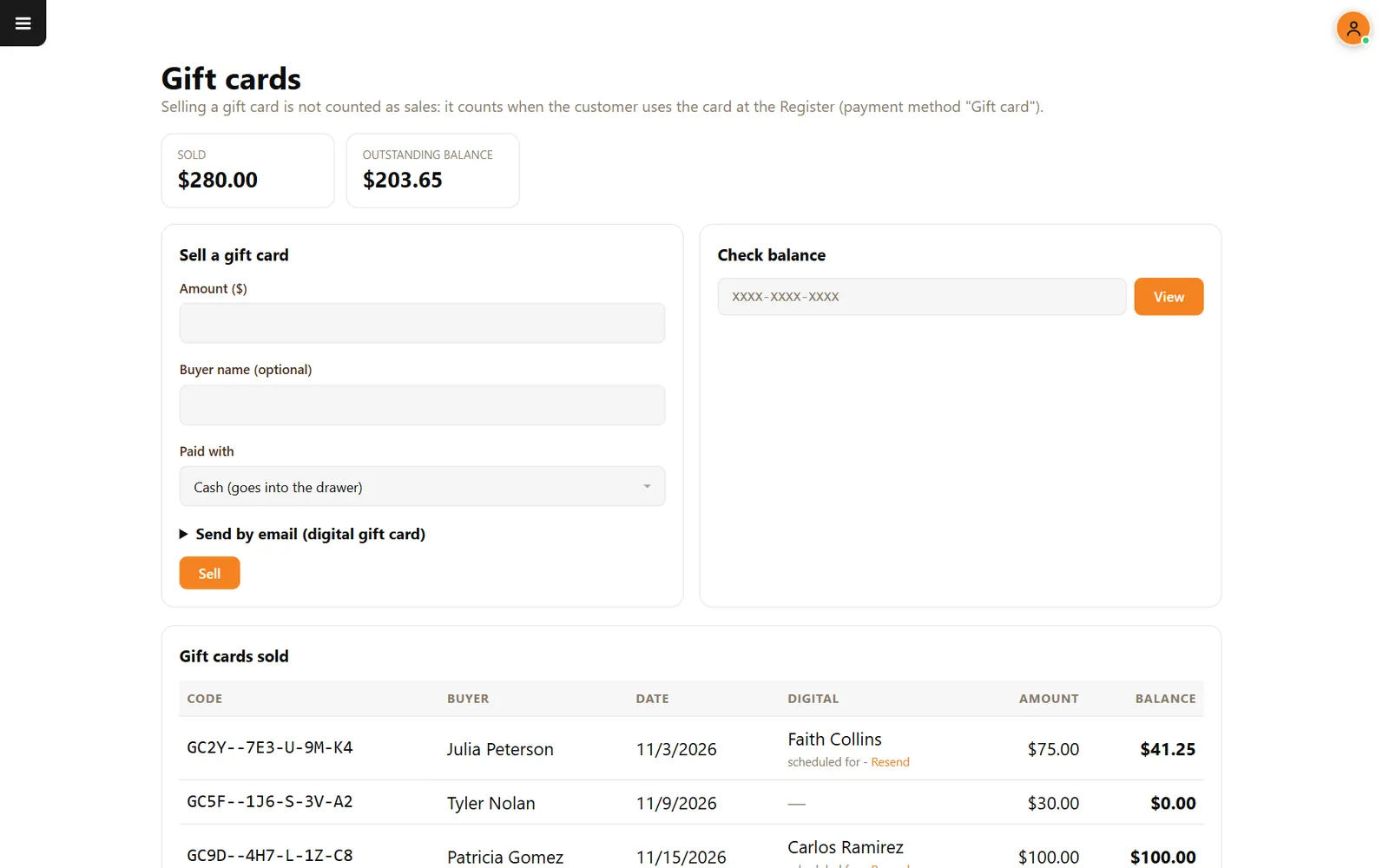
Schedule promotions around demand and redemption capacity
Gift card promotions should be planned based on the economics of the offer and the restaurant's capacity, not simply because a holiday is coming.
A promotion that discounts a gift card can reduce the value of the future visit. A bonus card, however, may be more attractive because it feels like additional value while keeping the purchased amount intact.
For example, you might offer a $10 bonus card with a $100 gift card purchase during a defined holiday period. This is a hypothetical promotion; whether it makes sense depends on your margins, restrictions, redemption patterns, and local rules.
Before running any offer, calculate:
- The amount of cash collected.
- The value of the obligation created.
- The cost of the bonus or discount.
- The expected redemption timing.
- Whether the promotion encourages visits on days you need business.
- Whether the terms are clear and compliant with applicable laws.
Do not offer a bonus card that can only be redeemed during a period when you are already fully booked. Instead, use carefully written terms that encourage redemption during appropriate periods, subject to legal review.
Use gift cards to fill slow months without discounting the entire menu
The strongest redemption strategy is not "Come in and get 20% off." It is to give gift card holders a reason to choose your restaurant on a date when you have empty tables.
Identify your actual slow periods using sales by day, meal period, and season. The pattern might be Tuesday dinner, weekday lunch, January, or a specific period after local events end.
Then design a reason to visit.
Ideas include:
- A limited winter menu available on quieter evenings.
- A pairing or tasting experience that uses existing inventory.
- A weekday family dinner occasion.
- A seasonal dish that is not available on busy weekends.
- A reservation reminder that makes gift card redemption feel like a special occasion.
The gift card is already paid for. Your job is to turn it into a profitable visit, not necessarily to give away additional margin.
Make the recipient's first visit count
A gift card recipient may be visiting for the first time. Treat that table as a customer acquisition opportunity.
Train the server to welcome the guest without making them feel like a transaction:
"Welcome in. Are you celebrating something, or did someone introduce you to us with a gift card?"
This opens a conversation without pressure. If they enjoy the meal, invite them to join your email list or loyalty program with permission, and explain upcoming seasonal events.
The gift card may have been purchased by someone else, but the person redeeming it can become a future paying customer.
Give card holders a reason to visit before their balance gets forgotten
Gift cards are easy to lose track of. A recipient may put one in a drawer, forget about it, or assume they need to wait for a special occasion.
You can reduce that friction without sending constant promotional emails.
Try these three practical tactics:
1. The post-holiday welcome message. If you collect gift card recipient email addresses with consent, send a message after the major gifting period with a warm invitation to visit. Include your current menu, booking link, hours, and a few dishes worth trying. Do not make the message sound like a warning that their balance is expiring.
2. The quiet-night reservation nudge. If your customer communication system can identify gift card recipients who opted in, send an invitation ahead of a slower service. Make the invitation about the experience: a seasonal menu, a chef's special, or an evening worth planning. Keep the message focused on one action, reserve a table.
3. The redemption-to-repeat card. When a guest redeems a gift card, place a small printed invitation with the check or takeout bag encouraging their next visit. It could introduce a new menu item, a weekday occasion, or your loyalty program. Do not require a second purchase to use the remaining gift card balance.
These tactics work because they reduce the distance between receiving a gift and choosing a restaurant.
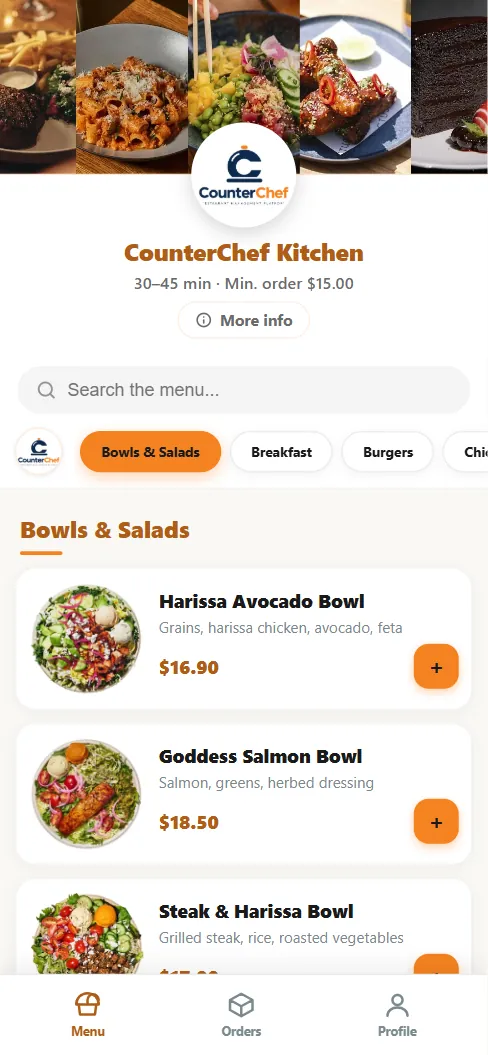
Use a promotion that shifts demand instead of eroding margins
A common mistake is to reward gift card purchases with too much additional value and then redeem the promotion during already-busy services.
Instead, build the offer around your restaurant's capacity.
Imagine you have a quieter weekday service with unused tables and a menu item you want more guests to discover. A promotion could reward purchasing a gift card while encouraging a future visit during that quieter period.
Potential structures include:
- A bonus redeemable for a specified menu item.
- A bonus available only during selected service periods.
- A small complimentary add-on that has low food cost but perceived value.
- A seasonal experience that is easier to execute during slower services.
The important calculation is incremental contribution, not just revenue.
If the guest would have visited anyway, the offer may simply reduce what they pay. If the offer brings in a visit that otherwise would not have happened, the incremental contribution may justify the promotion.
Track the offer separately from ordinary gift card redemptions so you can judge its performance.
Work out whether a gift card promotion pays for itself
Here is a worked example using hypothetical figures only. It illustrates how to think about a bonus card promotion; it is not a prediction of actual restaurant performance.
Hypothetical promotion
A restaurant offers a $10 bonus gift card when a customer purchases a $100 gift card.
| Item | Hypothetical amount |
|---|---|
| Purchased gift card | $100 |
| Bonus gift card | $10 |
| Total future redemption value | $110 |
| Hypothetical incremental food and beverage cost on redemption | $33 |
| Hypothetical incremental labor cost | $12 |
| Hypothetical other variable cost | $3 |
| Total hypothetical incremental costs | $48 |
| Hypothetical contribution before promotion expense | $62 |
The calculation:
- Hypothetical redemption revenue: $110
- Hypothetical variable costs: $48
- Hypothetical contribution before promotion expense: $62
However, the bonus is not automatically a $10 expense in the same way as cash discounting a sale. The restaurant needs to understand its accounting treatment, the redemption behavior, and the actual incremental cost of the bonus items or meals.
The $62 contribution above is a simplified hypothetical illustration. It does not account for the accounting liability, payment processing, fixed overhead, taxes, customer substitution, or the possibility that the customer would have spent money anyway.
A better test is to compare promoted gift card visits with similar non-promoted visits during the same slow period. Look at total check, food and beverage cost, labor, and whether the promotion brought additional guests into the building.
Make gift card redemption simple for the guest and the staff
Redemption should be a routine payment step, not a manager intervention.
Train employees to:
- Ask whether the guest has a physical or digital gift card before closing payment.
- Confirm the card is valid and the balance is available.
- Apply the card to the correct check.
- Tell the guest the remaining balance if the card is not fully used.
- Process the difference using the guest's preferred payment method.
- Never discard a physical card simply because the balance was partially used.
- Escalate unreadable, damaged, duplicated, or disputed cards according to a written procedure.
If a gift card does not cover the entire check, the guest should be able to pay the remaining amount normally. If the check is lower than the card balance, the remaining balance should stay available, subject to applicable law and the card's terms.
Test redemption before each major sales campaign. Buy or activate a test card, use it on a sample transaction, check the partial balance, and verify that your reports record the transaction correctly.
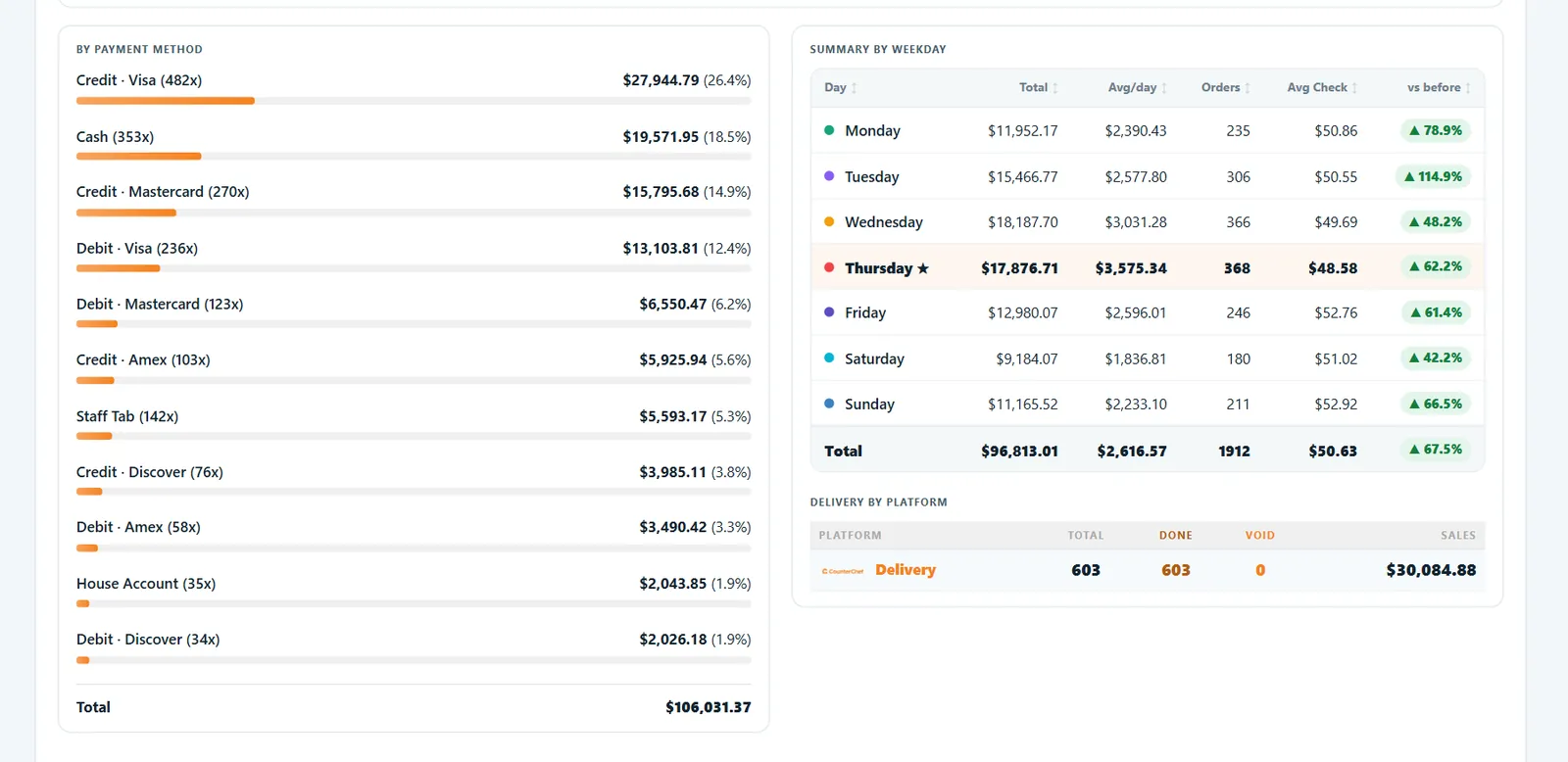
Keep a gift card register and reconcile it every month
The accounting mistake that causes the most confusion is treating gift card sales as restaurant revenue immediately.
In general, selling a gift card creates a liability because you owe the customer goods or services later. When the customer redeems it, the liability is reduced and revenue is recognized according to the applicable accounting rules.
A simple accounting illustration:
| Transaction | Debit | Credit |
|---|---|---|
| Gift card sold | Cash or payment clearing | Gift card liability |
| Gift card redeemed | Gift card liability | Sales revenue, as applicable |
| Unredeemed balance recognized as breakage, if permitted | Gift card liability | Breakage revenue, as applicable |
Your accountant should determine the correct treatment for your business, including tax timing, sales tax, breakage, and any applicable financial reporting rules.
What to reconcile every month
Compare your gift card system report against your accounting records and payment deposits.
Your reconciliation should include:
- Opening gift card liability.
- Gift cards sold during the month.
- Gift cards redeemed during the month.
- Refunds, voids, and corrections.
- Promotional bonus card activity.
- Breakage recognized, if applicable.
- Closing gift card liability.
- Outstanding card balances and unusual adjustments.
The ending liability should be explainable. If your gift card system says you have one balance and your accounting records show another, investigate the difference before carrying it forward.
Common causes include cards activated without payment, duplicate transactions, incorrect refunds, promotional cards recorded as paid cards, manual adjustments, and redemption transactions posted incorrectly.
Understand breakage without treating unredeemed cards as free money
Breakage is the portion of gift card value that is ultimately not expected to be redeemed.
It can be tempting to count old unredeemed balances as profit, but the treatment depends on accounting requirements and state law. Gift card expiration restrictions, unclaimed property rules, and consumer protections vary by jurisdiction.
Do not assume a card is expired simply because it has not been used for a long time.
Work with your accountant to determine whether breakage can be recognized, how it should be estimated, and when it may be recognized. Consult your state or city requirements, and confirm whether any unclaimed property obligations apply.
Operationally, track dormant balances by age. A simple report grouping balances by the date of the last activity helps identify cards that have not been used in a long time, but the report should be used for planning and compliance, not automatically for removing liabilities.
A practical policy is to review old balances periodically, document your accountant's guidance, and apply the same process consistently.
Protect gift card sales from fraud and operational mistakes
Gift cards are attractive to fraudsters because they can be purchased quickly and redeemed without the buyer being present.
Put basic controls in place:
- Restrict who can activate, void, refund, or manually adjust gift cards.
- Require a reason for manual balance changes.
- Review unusually large purchases, repeated failed transactions, and refund patterns.
- Keep activation records tied to the sale whenever possible.
- Avoid displaying full gift card numbers or access codes in public areas.
- Make sure staff understand how to handle a lost or stolen card inquiry.
- Verify that a refund goes through the appropriate process instead of issuing cash from the register without documentation.
If a customer reports a missing card, follow your established identity and transaction verification procedure. Whether you can replace a card depends on the records available, the card terms, and applicable law.
Also establish a policy for gift cards purchased with disputed payments. A card should not be casually activated, refunded, or reissued when the underlying payment is unresolved.
Build a corporate gift card program before businesses need it
Local employers, real estate offices, professional firms, schools, and neighborhood organizations may need gifts for employees, clients, volunteers, or events.
Do not wait for December to introduce yourself.
Prepare a simple corporate gifting sheet that explains:
- Available denominations or custom amounts.
- Physical and digital delivery options.
- How bulk purchases are handled.
- Whether personalized messages are available.
- How to arrange pickup or delivery.
- Who handles the order.
- How receipts are provided.
Make one person responsible for corporate orders. Bulk sales can involve multiple cards, different recipients, payment approvals, and delivery deadlines. A clear process prevents the host stand from being overwhelmed with administrative work.
An original idea worth trying this week: create a list of nearby businesses whose employees regularly work in your neighborhood, then visit a handful with a simple one-page gift card sheet. Offer an easy way to place repeat orders, but avoid building an elaborate discount structure before you understand the demand.
Measure the entire gift card cycle, not just sales
Gift card sales alone can make a campaign look successful even if redemption is poorly managed or the promotion costs too much.
Track the following figures every month:
| Metric | What it tells you |
|---|---|
| Gift card sales | How much future dining value was sold |
| Number of cards sold | Whether more people are purchasing |
| Average card value | Whether buyers are choosing larger gifts |
| Redemption value | How much gift card value was used |
| Remaining liability | How much value is still outstanding |
| Redemption by day or period | When recipients are visiting |
| Promotional card redemption | How the bonus offer is being used |
| New guests from gift cards | Whether the program is introducing new customers |
| Repeat visits after redemption | Whether recipients are becoming regulars |
A particularly useful measure is redemption during slow periods. Compare the value redeemed on quieter services with your total sales on those services, and review whether gift card guests spend beyond their card balance.
If you can identify gift card recipients who opt in to marketing, measure how many return for a second visit without using another gift card. That helps you evaluate the long-term value of the program.
Use the restaurant's systems to keep sales, redemption, and reporting connected
Gift card operations are easier when the selling, redemption, and reporting process fits into the restaurant's regular workflow instead of being handled through disconnected spreadsheets.
CounterChef runs on iPad, Android tablet, iPhone and computer; it includes loyalty points and gift cards, an online menu for pickup and delivery with delivery areas by ZIP code, each with its own fee and estimated time, a kitchen display with ticket timers, a table map and server phones for dine-in, employee clock-ins on a tablet or computer with schedules built in, tip sharing by percentage or hours worked, inventory and recipe costing showing the cost of each dish, sales tax rates with up to three decimals and by category, and reports by day, item and employee.
Whatever system you use, make sure gift card activity can be reviewed, reconciled, and explained without relying on one employee's memory.
Put this checklist into your weekly manager routine
Use this checklist to catch problems before the next gift card campaign.
Weekly gift card operations checklist
- Physical cards stocked and display presentable
- Online gift card purchase path tested
- Recent activations reviewed for errors
- Refunds, voids, and manual adjustments checked
- Redemption transactions reviewed for accuracy
- Staff know how to process partial balances
- Promotional terms visible and understood
- Upcoming seasonal campaign ready
- Slow-service redemption opportunity identified
- Outstanding guest issues assigned to a manager
Once a month, add the accounting reconciliation and a review of dormant balances. Before each major holiday, test the entire purchase-to-redemption process.
Gift cards are most valuable when they do three jobs well: bring cash in ahead of the visit, introduce new people to your restaurant, and help you turn a quiet service into a profitable one. Build your calendar around those jobs, keep the accounting honest, and make the recipient's experience good enough that they come back after the card is empty.