
Reduce Restaurant Wait Times by Finding the Longest Bottleneck First
Restaurant guests experience four distinct waits: getting seated, placing an order, receiving food, and paying the check. Instead of trying to speed up everything at once, measure each wait on a busy shift, identify the longest delay, and fix the operational cause before moving to the next one.
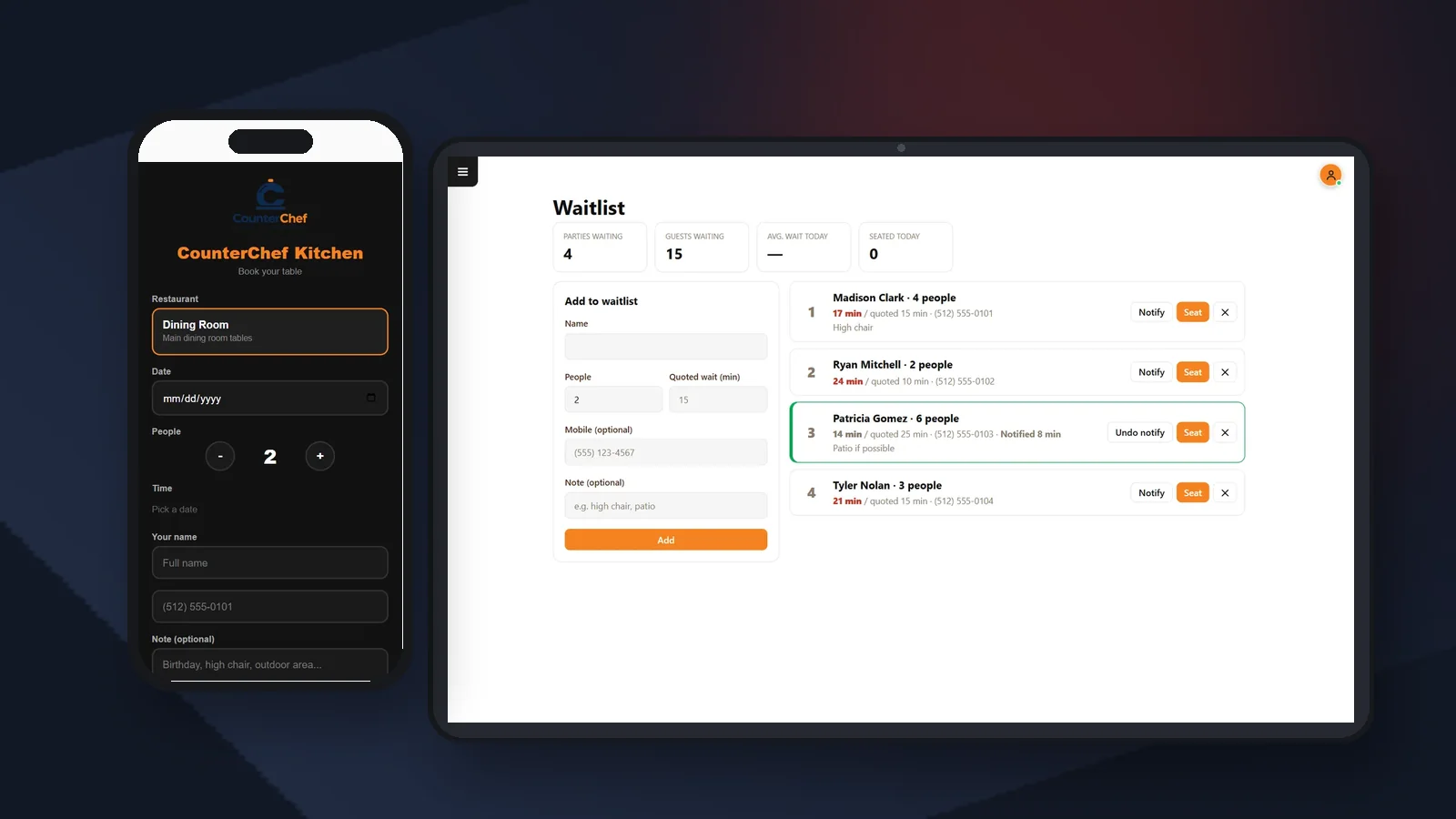
The four waits tell you where service is actually breaking down
A guest does not experience your restaurant as a collection of departments. They experience one continuous visit, and every delay adds to the impression that the restaurant is either organized or struggling.
Break the visit into four waits and measure them separately.
| Wait | Start point | End point | What usually causes delays |
|---|---|---|---|
| Door-to-seat | Guest arrives and joins the queue | Guest is seated | Host coverage, table readiness, seating decisions, uneven table turnover |
| Seat-to-order | Guest sits down | Order is entered or confirmed | Slow greeting, menu questions, understaffed sections, unavailable items |
| Order-to-food | Order is submitted | Guest receives the food | Kitchen overload, ticket sequencing, prep bottlenecks, poor communication |
| Check-to-payment | Guest asks for the check | Payment is completed and guest can leave | Check retrieval, payment processing, server availability, unclear checkout procedure |
These are not the only delays a guest experiences. Drinks, refills, corrections, restroom waits, and waiting for a second course all matter. Start with these four because they cover the main flow of a restaurant visit and give you a practical way to locate the biggest operational problem.
Don't assume the kitchen is responsible for every complaint about slow service. A guest who waited fifteen minutes to order may blame the food for taking too long, even if the kitchen prepared it promptly.
Run a stopwatch audit on a Friday night without disrupting service
You don't need a consultant, a complicated spreadsheet, or a new reporting system to start. You need a clock, a pen, and a few observations made during a representative busy shift.
Choose a Friday night when business is reasonably normal. Avoid using a night with an unusual event, a major staffing shortage, or a completely different menu as your baseline.
The stopwatch method
- Pick a sample of arriving parties throughout the busy period, not just the first guests or the worst-looking queue.
- Record when each party arrives, sits, places its order, receives its first food, and requests its check.
- Record when payment is completed, where practical.
- Note party size, whether the party had a reservation, and any unusual event that affected the visit.
- Write down the reason for any obvious delay while it is happening.
You can do this yourself, or assign a trusted shift lead to observe while you run service. Avoid asking servers to record detailed timestamps while they're already struggling with a busy section.
A simple observation sheet is enough:
| Party | Arrived | Seated | Ordered | First food | Check requested | Paid | Notes | --- | --- | --- | --- | --- | --- | --- | A | 6:05 | 6:12 | 6:20 | 6:39 | 7:15 | 7:19 | Drinks delayed | B | 6:11 | 6:14 | 6:21 | 6:35 | 7:02 | 7:06 | Normal flow | C | 6:18 | 6:29 | 6:43 | 7:04 | 7:39 | 7:44 | Host and server coverage |
|---|
Every timestamp in this table is hypothetical and illustrative, not actual restaurant data
Calculate each wait separately. For Party A, the hypothetical door-to-seat wait is 7 minutes, seat-to-order is 8 minutes, and order-to-food is 19 minutes. That is much more useful than simply saying the party waited 34 minutes for its first food after arriving.
Keep the observations anonymous. You're measuring the process, not grading individual employees.
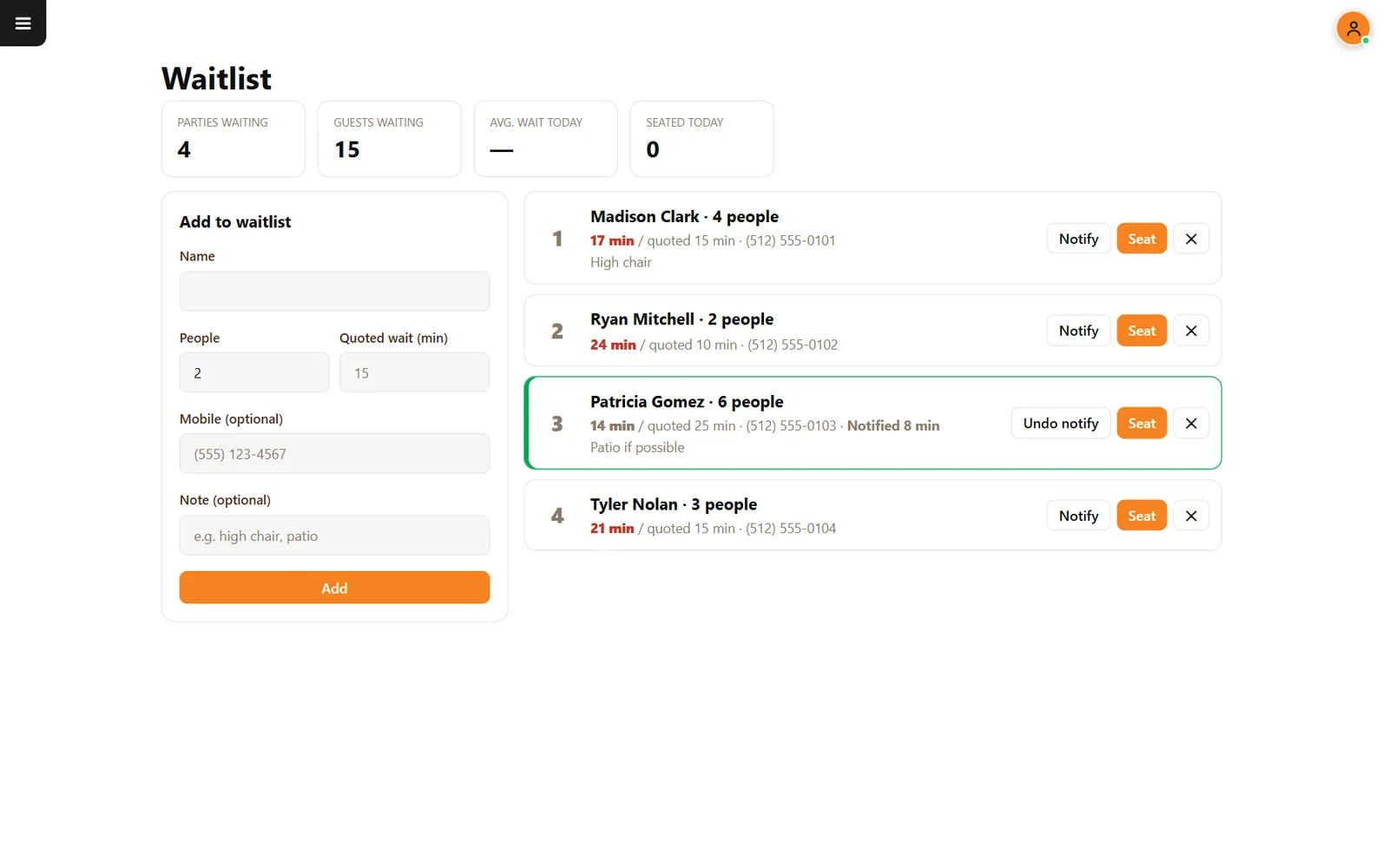
Fix the door-to-seat wait by managing table readiness and seating decisions
A long wait at the entrance can happen even when empty tables are visible. Those tables may not be clean, may not be configured for the arriving party, or may be in a section whose server is already overloaded.
Start by checking whether your host is making decisions with accurate information.
Separate occupied, dirty, clean, and ready tables
A table should not simply be marked "open" because guests have left. Give your team a clear progression:
- Occupied
- Guest departed
- Needs bussing
- Being reset
- Ready to seat
The host needs to know which tables can genuinely accept guests. A dirty table that looks empty creates false capacity.
Make the seating plan reflect server workload
A rigid rotation can create an imbalance. One server might receive three parties close together while another has a large table finishing dessert.
Give the host discretion to account for workload, party size, and table configuration. Define when it is appropriate to skip a section and when the host should ask the floor manager before doing so.
Try a table-reset handoff
This week, assign one person during the busiest seating window to monitor tables that have just been vacated and communicate readiness to the host.
The assignment doesn't have to mean hiring someone. Depending on your staffing and layout, it may be a busser, a runner, or a manager who temporarily owns the reset queue.
The important change is that table readiness becomes an actively managed process instead of something the host discovers by walking around.
Shorten seat-to-order time by making the first contact predictable
Guests can tolerate reading a menu while waiting for the rest of their party. They become frustrated when they cannot tell whether anyone knows they're there.
The first interaction doesn't need to be a complete sales presentation. It needs to establish ownership.
Give every new table a clear first-contact owner
Define who greets new tables when a server is handling another party. Depending on the restaurant, that may be the assigned server, a section partner, a host, or a manager.
A brief acknowledgment, water service, and an honest expectation about when someone will return can prevent the table from feeling abandoned.
Don't create a greeting standard that employees cannot meet during the actual rush. If the floor plan or staffing makes the standard unrealistic, fix the coverage rather than telling staff to work faster.
Identify menu friction before guests sit down
Look for questions that repeatedly slow order-taking:
- Which dishes take longer to prepare?
- Which items are unavailable but still appear on the menu?
- Which modifiers require kitchen clarification?
- Which dishes have confusing descriptions?
- Which dietary questions require a manager or chef?
Make the answers available to hosts and servers before service begins. Remove unavailable items promptly and review confusing descriptions after the shift.
Try a pre-shift "three questions" drill
Before Friday service, ask staff to answer three questions about the menu:
- Which dish is likely to take longer tonight?
- Which item is unavailable or has a special limitation?
- Which menu question are guests most likely to ask?
This takes little time but reduces repeated conversations that begin with an employee searching for information.
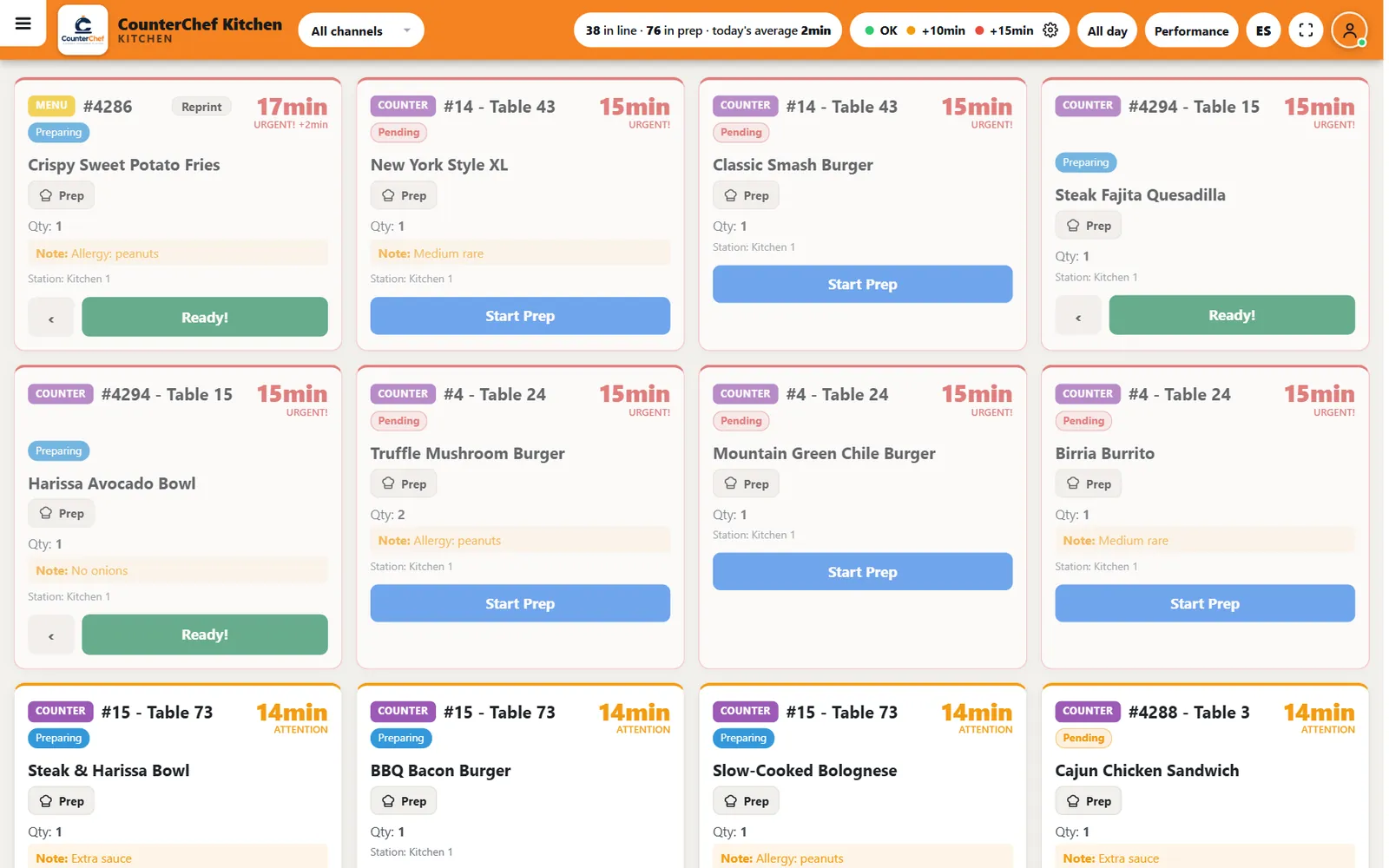
Reduce order-to-food wait by finding the kitchen's actual constraint
The kitchen is not a single machine. Grill, fryer, oven, cold station, expo, prep, and dishwashing can each affect the pace of service.
If the grill is backed up, adding another person to the fryer may not improve ticket times. If food is ready but sitting at the pass, adding another cook may make the problem worse.
Track tickets by station, not just total ticket time
For several tickets during the rush, note:
- When the ticket was received
- When each station started its work
- When each component was ready
- When the order was complete
- When it left the pass
You don't need to track every ticket indefinitely. A small sample that shows where orders repeatedly stall can point to the constraint.
Ask the kitchen team what they are waiting for. Is it equipment space, ingredients, another station's component, a missing modifier, or an expo decision?
Look for menu combinations that overload one station
A menu can be profitable on paper and difficult to execute during peak service.
For example, several popular dishes may all depend on the same fryer. A large order containing those dishes can create a station bottleneck even when the rest of the kitchen is available.
Review your busiest combinations, not just individual dish popularity. Consider whether a prep adjustment, batch timing, station reassignment, or menu modification can distribute the workload more evenly without sacrificing quality.
Protect the pass from interruptions
The expo station needs a clear view of what is ready, what is incomplete, and what needs attention.
During the rush, establish who can interrupt expo and for what reasons. Routine questions about table status, substitutions, or missing utensils should not repeatedly pull the person coordinating outgoing food away from that job.
If the expo person has to answer every question from the dining room, food can become ready but remain unserved.
Reduce check-to-payment wait by making checkout a defined service step
The end of a meal often receives less attention than the greeting and food delivery. But guests can be ready to leave while the server is busy taking orders at another table.
Measure the time from the guest's request for the check to the check actually being presented, then the time from payment request to completed payment.
Those are two different problems.
Separate check retrieval from payment completion
If the delay is getting the check to the table, the problem may be server workload, POS access, check splitting, or uncertainty about who owns the table.
If the check is already presented but payment takes too long, investigate the payment process itself.
Make sure staff know how to handle common requests without needing a manager for every routine transaction, while keeping your approval and security procedures intact.
Anticipate the check without pressuring guests
When guests appear finished, servers can offer dessert, another drink, or the check. The point is to give guests control of the next step.
Avoid automatically presenting the check in a way that makes guests feel rushed. A faster checkout should be better service, not a way to push people out.
Try a checkout ownership rule
This week, test a simple rule: if a guest requests the check while the assigned server is occupied, another authorized employee acknowledges the request and either retrieves the check or tells the guest who is handling it.
The guest shouldn't have to repeat the request to three people.
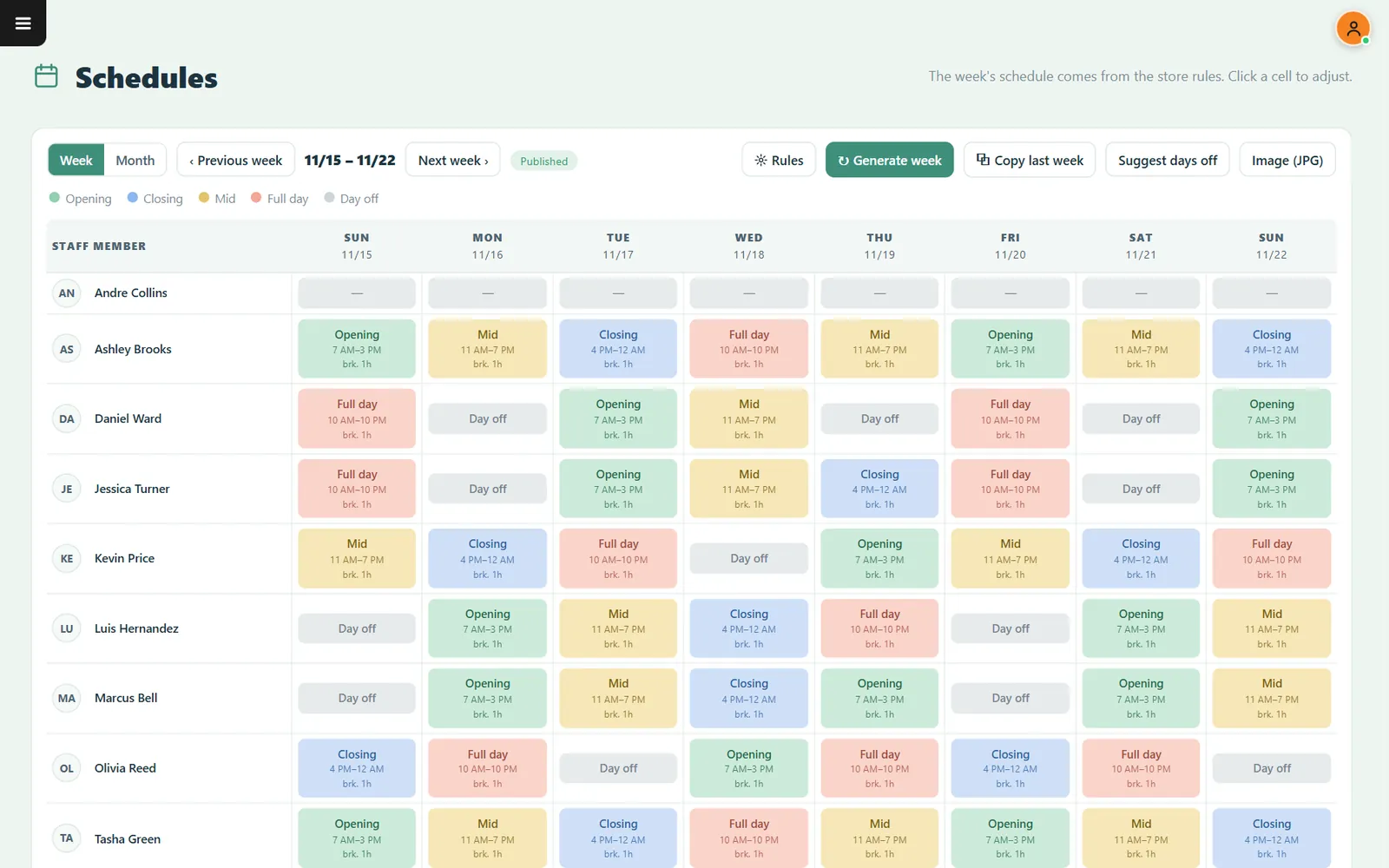
Attack the longest wait first instead of launching four projects
After your stopwatch audit, compare the four average waits. Also examine the longest observations, because a small number of unusually delayed parties may reveal a recurring failure.
Don't assume that the largest average is automatically the best target. Consider how many guests experience it, how often it occurs, and whether the delay causes other problems downstream.
Use this simple prioritization:
| Bottleneck | How often it occurs | Guest impact | Operational cause | First test |
|---|---|---|---|---|
| Door-to-seat | Repeated during peak | Guests wait before ordering | Tables not reset promptly | Assign reset ownership |
| Seat-to-order | Several new tables at once | Guests feel ignored | First-contact coverage | Add greeting backup |
| Order-to-food | Kitchen rush | Late food, cold components | Station overload | Adjust prep and station flow |
| Check-to-payment | At shift peak | Guests cannot leave | Checkout ownership unclear | Backup check handling |
The entries above are examples of how to organize your findings, not measured results.
Choose one problem, make one operational change, and measure again on a comparable shift. If you change seating, staffing, menu prep, and payment procedures simultaneously, you won't know which change helped.
Use the delay to improve the guest experience instead of hiding it
Sometimes you cannot immediately eliminate a wait. Equipment breaks, a cook calls out, a large party arrives, or a popular dish sells out.
A well-managed delay is better than silence.
Train managers and servers to communicate three things:
- Acknowledge the delay without arguing.
- Give a realistic update based on what the team actually knows.
- Offer a reasonable next step when appropriate.
Don't promise a specific arrival time unless the kitchen can support it. An inaccurate promise followed by another delay damages trust more than an honest update.
When the delay affects multiple tables, the manager should communicate consistently instead of having each server improvise a different explanation.
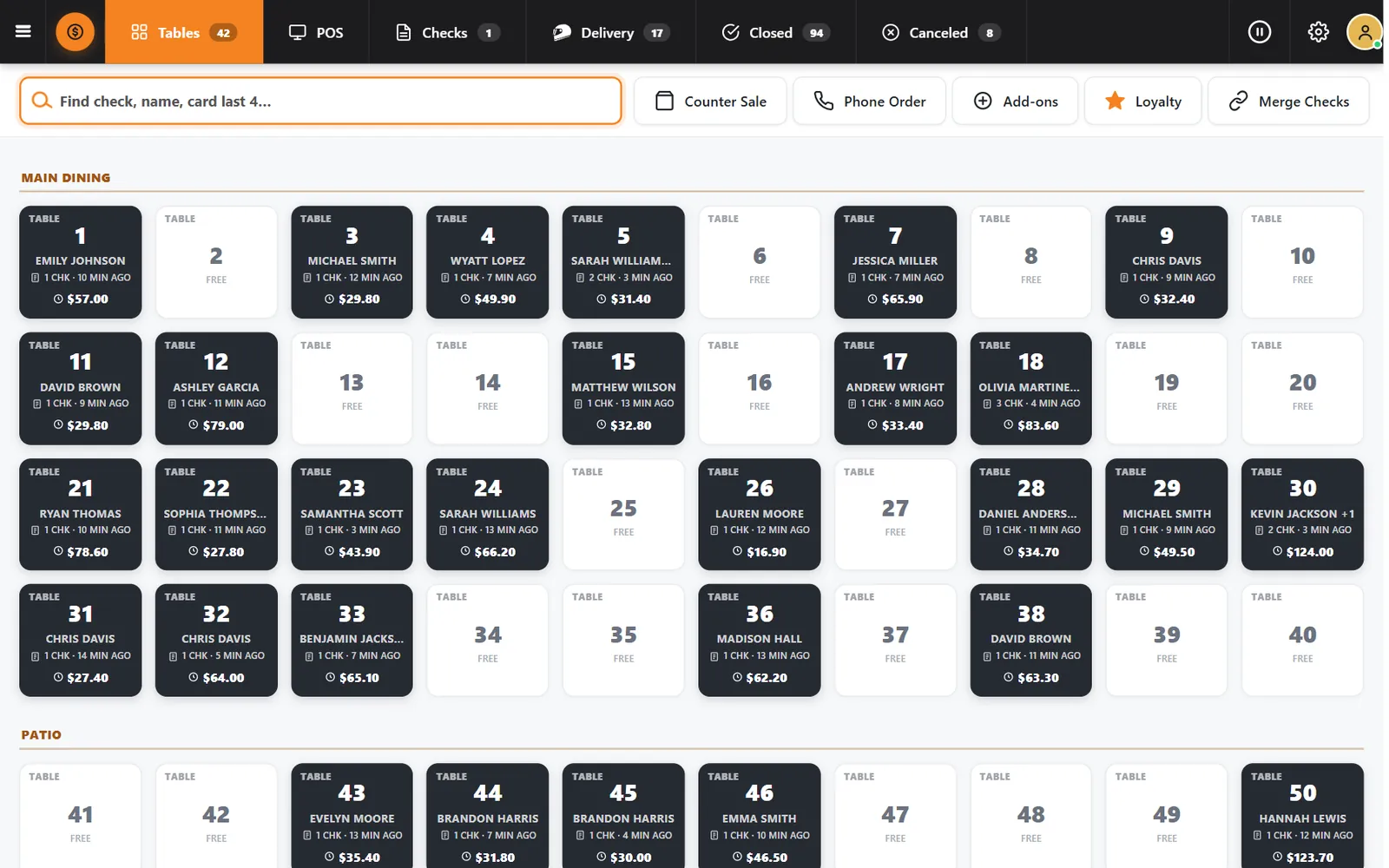
Use this Friday-night checklist to make the audit repeatable
Copy this checklist into your shift notes and use it for the first audit.
Friday wait-time audit
Before service
- Choose a normal busy shift.
- Assign the observer.
- Review the four wait definitions.
- Confirm table-status communication.
- Identify unavailable menu items and likely station bottlenecks.
- Tell the team the goal is to improve the process, not blame individuals.
During service
- Record arrival and seating.
- Record seating and order placement.
- Record order submission and first food arrival.
- Record check request and check presentation.
- Record payment completion when practical.
- Note the cause of unusually long waits.
- Watch for repeating patterns across parties.
After service
- Calculate the four waits.
- Identify the longest wait.
- Review the three longest observations.
- Identify one likely operational cause.
- Choose one change to test.
- Assign an owner.
- Repeat the audit on a comparable shift.
Worked example: A hypothetical restaurant fixes the door bottleneck
Imagine an independent neighborhood restaurant that believes its kitchen is too slow. The owner audits a hypothetical Friday shift and discovers that the biggest issue is actually getting guests seated and acknowledged.
The following figures are all hypothetical, solely for illustration.
| Measure | Hypothetical baseline | Hypothetical test shift |
|---|---|---|
| Door-to-seat average | 12 minutes | 6 minutes |
| Seat-to-order average | 9 minutes | 8 minutes |
| Order-to-food average | 22 minutes | 21 minutes |
| Check-to-payment average | 6 minutes | 6 minutes |
The owner makes one change: a designated floor employee owns table resets during the peak seating period, while the host receives direct updates on which tables are ready.
The owner does not add staff or change the menu for this test. The restaurant then repeats the observation on a comparable shift.
In this hypothetical example, door-to-seat wait falls by 6 minutes, while the other waits change little. The result suggests that the reset handoff helped, but it doesn't establish that the improvement will persist. The owner should repeat the test and confirm the change doesn't create a new problem elsewhere.
If the next audit shows that order-to-food wait is now the biggest remaining delay, the kitchen becomes the next improvement project.
Give your wait-time audit a permanent home in the operating routine
The stopwatch exercise is useful because it reveals a problem that may otherwise remain a vague complaint. It becomes more valuable when the restaurant repeats it periodically and connects the observations to actual operating decisions.
CounterChef runs on iPad, Android tablet, iPhone and computer; it includes an online menu for pickup and delivery with ZIP-code delivery areas, individual fees and estimated times, a kitchen display with ticket timers, a dine-in table map and server phones, employee clock-ins and schedules, tip sharing by percentage or hours worked, inventory and recipe costing, loyalty points and gift cards, sales tax rates with up to three decimals and by category, and reports by day, item and employee.
Use whichever tools fit your operation, but keep the underlying practice the same: observe the wait, identify the cause, assign responsibility, make a change, and measure again.